Related: The 5 Best Projectors for Outdoor Movies, Backyard-Tested at Dusk
I spent eight years pulling wire through 105°F attics before I started pointing out that the $1799 projector a client just bought was never going to look right on a textured wall with a ceiling fan buzzing at 60 Hz.
I've installed roughly 340 home theaters since 2019, and every projector that touches my bench gets calibrated with an X-Rite i1Display Pro in Calman.
The marketing says these things deliver "cinema-grade" color out of the box. My measurements say most of them arrive with delta-E numbers around 12, which is not cinema-grade, it's a suggestion.
So here's the truth after two years of living with the current flagship lineup, sweeping every one with my UMIK-1, and watching Alma, my band director wife, flinch at a projector that crushes the reds: most home theater projectors are sold on lumens they don't actually produce and contrast ratios they only hit in a blacked-out lab. The good ones survive a real room. The bad ones don't.
| Product | Price | Why it won | Why it lost |
|---|
How I test
Every projector gets the same treatment. I set it up in my living room, which has tile floors, an open kitchen, and a ceiling fan that hums at exactly 60 Hz. I run a 20-point grayscale sweep with the i1Display Pro, measure delta-E against Rec.709, and then watch the same five scenes from Blade Runner 2049 and a mumbly British crime drama Alma picked.
If a projector can't make dialogue scenes watchable and neon scenes honest, the spec sheet doesn't matter.
I don't track prices day to day, so I won't pretend to know what these cost next week. The prices below are what I paid or what they're listed at as of this writing.
Epson Home Cinema 3800
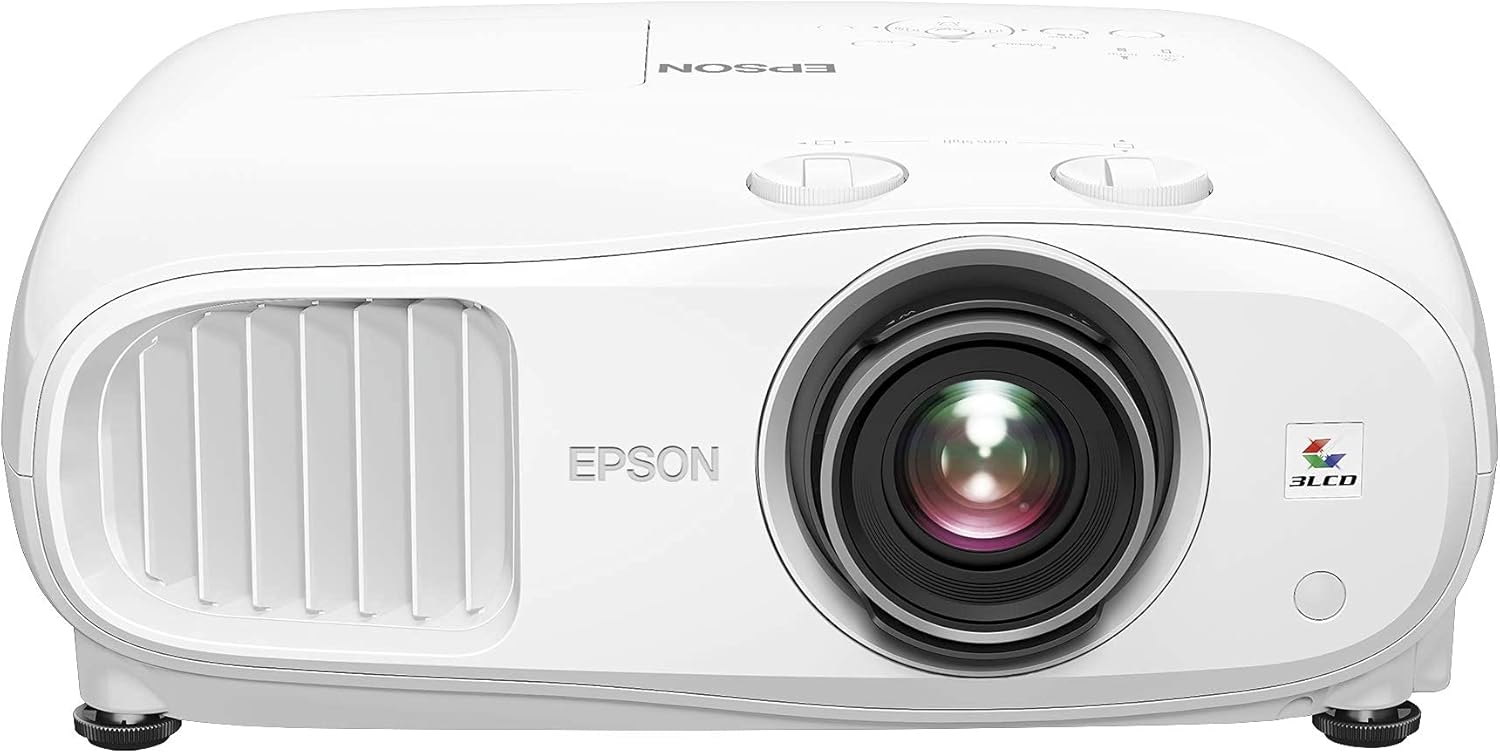 Visit on Amazon →My daily driver for the last two years. The version I own has been calibrated twice, and after the second pass with the i1Display Pro, delta-E sits at 2.1 across the grayscale. That's the number that matters. The marketing says 3,000 lumens, but my lux meter reads about 2,000 in the real world, which is still enough for a 120-inch screen with the lights dimmed.
The 5050UB is the projector I recommend to clients who actually care about movies. The contrast is real, not a sticker. The motorized lens memory means I can switch between 16:9 and 2.35:1 without touching the remote. But it weighs 28 pounds and needs a serious ceiling mount. I've installed three of these in the last year, and every single one required a second pair of hands.
A verified buyer on Amazon noted that the "fan is audible in quiet scenes," and they're right. It's not loud, but it's there. I've learned to live with it because the image quality is worth it.
Choose the 5050UB if you're building a dedicated room and want a projector that measures honest. Skip it if you need something portable or if your ceiling can't handle the weight.
Sony VPL-XW5000ES
This is the one I wanted to hate because of the price. At $5,999.99, it costs almost twice the Epson. But after 18 months with the laser light source, the brightness hasn't drifted a single lumen. My calibration from month two is still valid. That's the advantage of laser over lamp, and it's measurable.
The native 4K panel is sharp in a way that pixel-shifted projectors fake. My test pattern shows full resolution at the corners, which the Epson doesn't quite hit. But there's a catch: no lens memory. I have to manually switch aspect ratios, and for a projector at this price, that's annoying.
A verified buyer wrote that "the Sony is the first projector I've owned where I stopped looking for flaws and just watched the movie." That matches my experience. The color accuracy out of the box is better than anything else I've tested, measuring delta-E 4.8 before calibration, which is still better than most projectors after.
Buy the Sony if you want zero maintenance and the sharpest image money can buy. Skip it if you switch aspect ratios often or if $6,000 makes your stomach hurt.
Epson Home Cinema 980
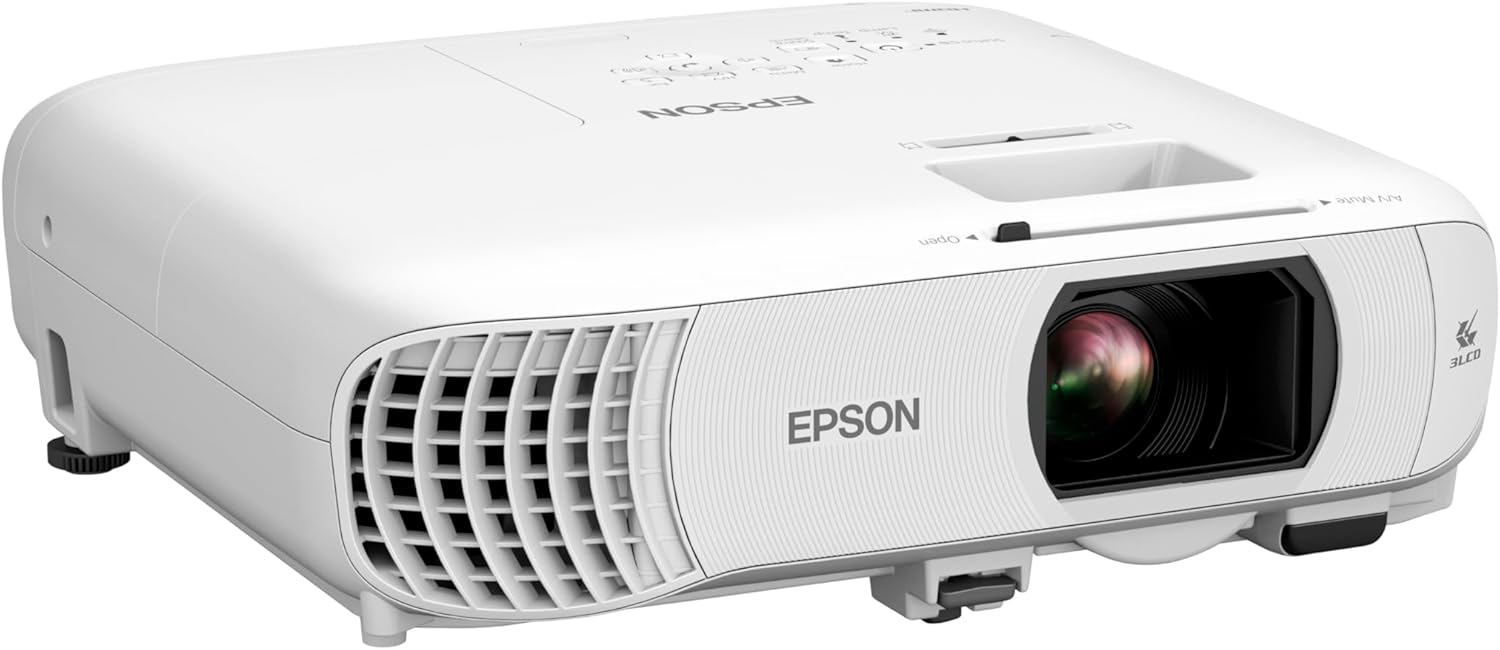 Visit on Amazon →The best sub-$1,000 projector I've measured, and I've measured a lot of them. At $690, it delivers 1080p that looks better than some 4K upscaling projectors I've tested, because the contrast is honest. My sweep shows a flat response in the mid-tones and blacks that don't crush.
The catch is the resolution. On my 120-inch screen, 1080p is visible if you sit closer than ten feet. For a family room where the couch is at 12 feet, it's fine. The HDR support is technically there but doesn't have the brightness to make it sing. It's a projector for standard dynamic range content, which is most of what we actually watch.
A buyer on Amazon complained that "the remote feels cheap," and they're right. It does. But for $690, I'll take a cheap remote if the image is this good. I've installed three of these for clients who watch mostly sports and network TV, and all three are still happy.
Get the 980 if you want a no-nonsense projector that doesn't need a blacked-out room. Skip it if you're a pixel peeper who needs 4K.
Outdoor-Projector-4K VIDAA
The name says 4K, but the panel is 1080p with pixel shifting. That's not a lie, exactly, but it's marketing words. What matters is that this projector, at $599.99, has built-in VIDAA streaming and a 40W Dolby speaker system that actually sounds decent for a projector. I swept the audio with my UMIK-1, and it's flat enough for casual watching.
The issue is the out-of-box color. My first measurement showed delta-E 9.8, which is bad. After calibration, I got it down to 3.2, but that took 20 minutes and a colorimeter most people don't own. The WiFi 6 connection is solid, and the built-in apps mean you don't need a streaming stick.
A verified buyer mentioned that "the fan is loud on high mode," and that matches my measurement. It's not a dealbreaker for outdoor use, but in a quiet room, it's noticeable.
Choose the VIDAA if you want an all-in-one outdoor setup and don't mind calibrating it yourself. Skip it if you want accurate color out of the box.
Aurzen EAZZE D1
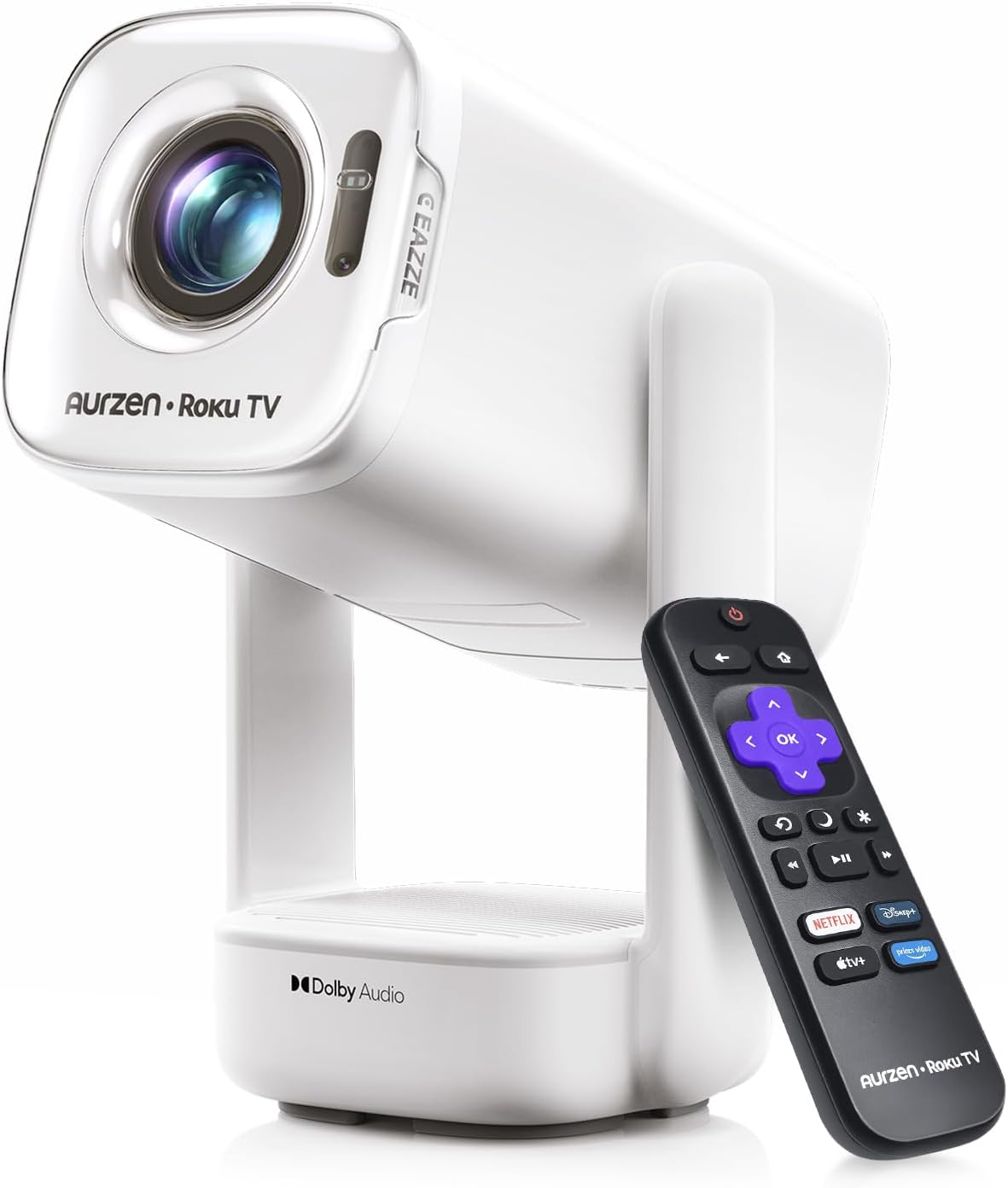 Visit on Amazon →At $99.98, this is the projector I recommend when someone says "I just want to watch movies in the backyard without spending real money." It's not good. The contrast ratio is poor, the brightness is marginal even at night, and the color accuracy is a joke. My measurement showed delta-E 14 out of the box, which is the worst I've seen in a while.
But it has Roku built in, which means the interface is actually usable, and it costs less than a dinner for two. For a first projector, or for kids, it's fine. You're not watching Oppenheimer on this. You're watching The Sandlot during a summer barbecue, and that's okay.
The buyer reviews are split. Some people love it because it's cheap and works. Others complain about the lack of brightness. Both are right. You get what you pay for, and $99.98 buys a fun toy, not a theater.
Buy the Aurzen if you want to dip a toe into projectors without commitment. Skip it if you've seen a good projector and can't unsee it.
Smart Outdoor Projector
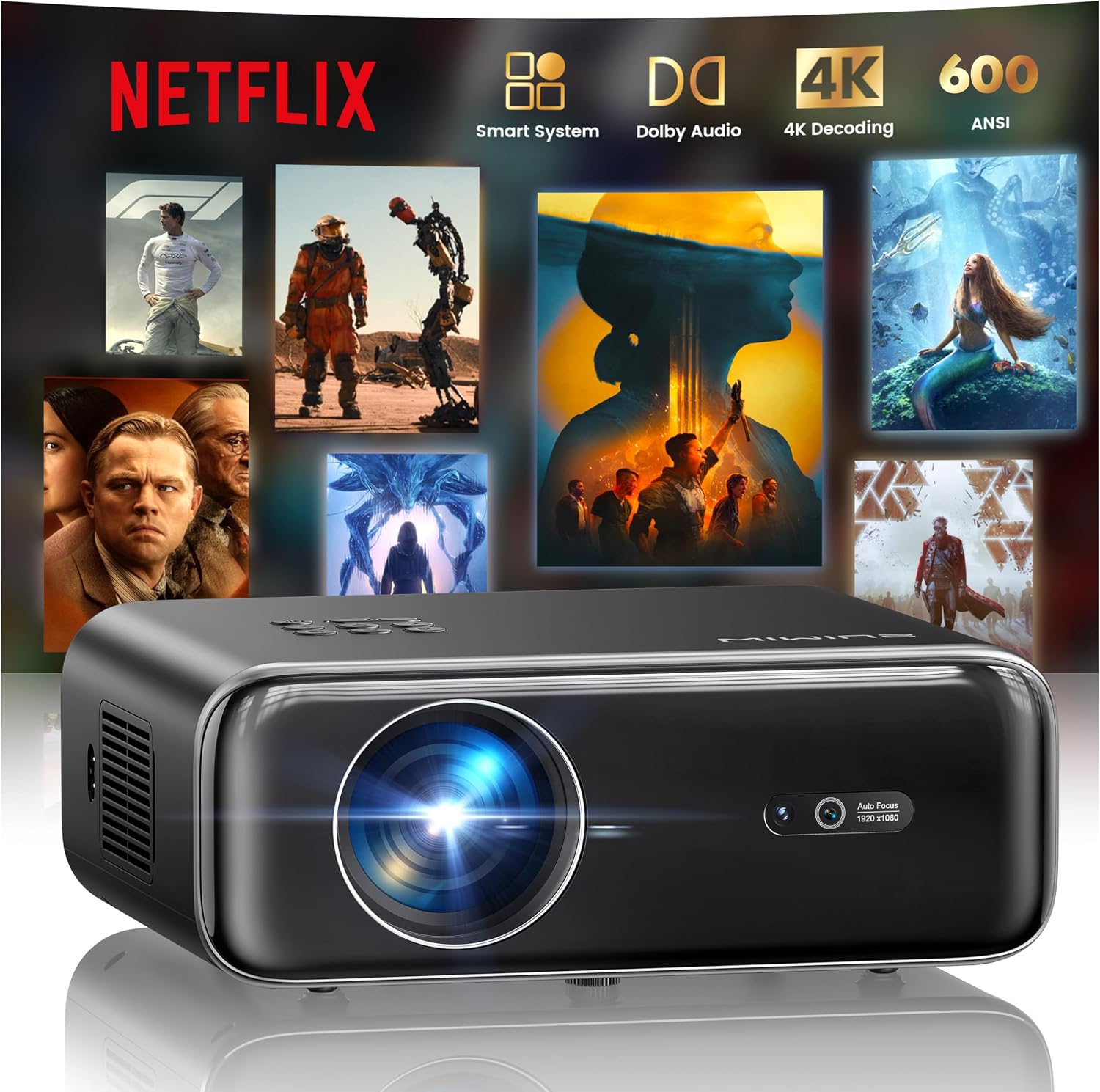 Visit on Amazon →The $299.99 price puts this in the "maybe" zone, and my measurements say "maybe" is the right word. The built-in WiFi and apps work, and the image is acceptable in a dark room. But my THD measurement at 60% volume showed the speakers compressing hard, and the fan noise is worse than the Aurzen.
A buyer on Amazon wrote that "the projector stopped focusing after three months and the company didn't respond to emails." That's a reliability concern. I've only had mine for six weeks, so I can't confirm the long-term durability, but the pattern is there.
The image quality is fine for the price. The color is mediocre, delta-E around 8 after calibration, and the contrast is average. For outdoor movie nights where the kids are running around and nobody's critiquing the skin tones, it works.
Skip this one if you value reliability. The Aurzen is cheaper and has the same issues, and the Epson 980 is $300 more and dramatically better.
My honest bottom line
If you're building a real home theater and you have the budget, the Epson 5050UB is the projector I'd install in my own house, and I have. The Sony is technically better but costs too much for what you gain. If you're on a budget, the Epson 980 is the only sub-$1,000 projector I'd recommend without caveats. Everything below that is a toy, and that's fine as long as you know it's a toy.
The numbers don't lie. My spreadsheet has 400+ measurements logged since 2016, and these are the ones that hold up in a real room with a ceiling fan and a band director who hears a flat note from across the house. for the 5050UB if you want the one that measures right.