I have been pulling wire through Austin attics since before I went independent in 2019, and about 340 installs later the question I get most is not which product to buy. It is which one to buy first. That is what this home theater projector and soundbar comparison is for: three very different boxes, judged by the job each one does in a room with a tile floor, an open kitchen, a ceiling fan that hums at exactly 60 Hz, and my wife Alma, a band director who can hear a flat note from across the house. Nothing here gets evaluated in a carpeted lab. If a product cannot survive my living room, it does not get recommended to a client.
The short answer: the Epson Home Cinema 1080 changes the most movie nights for the money, the Bose system rescues the most bad rooms, and the Aurzen EAZZE D1 is the one that gets used most weekends because it lives in a closet instead of on a ceiling. The order you buy them in matters more than the boxes themselves, and I get to that below.
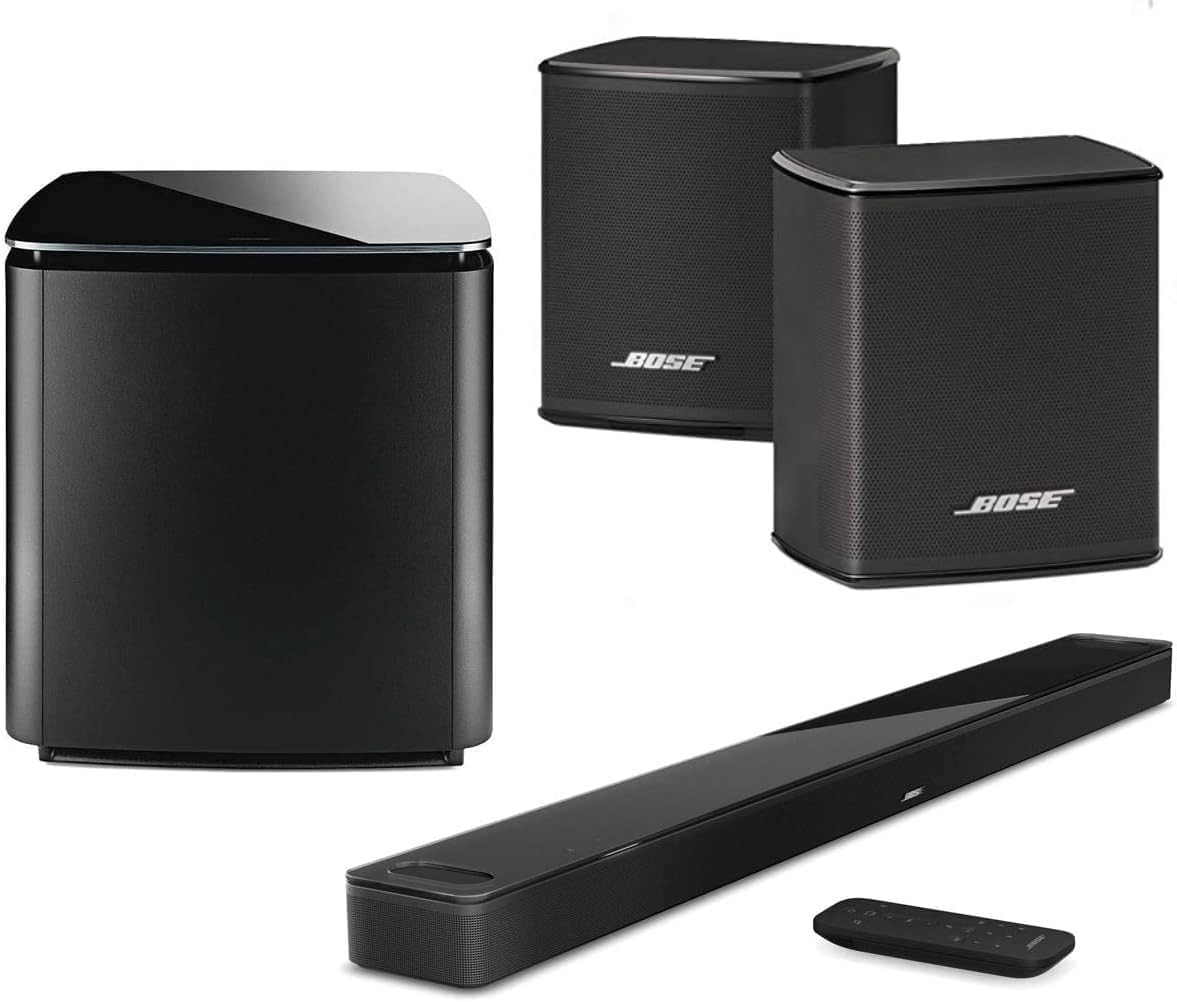
Bose Home Theater System Smart Ultra Dolby Atmos Soundbar, Bass Module 700 2X Wireless Surround Speaker, (Black)
Solves surround sound in rooms where you cannot run wire to the back wall
Costs more per channel than separates, and you cannot upgrade it one piece at a time
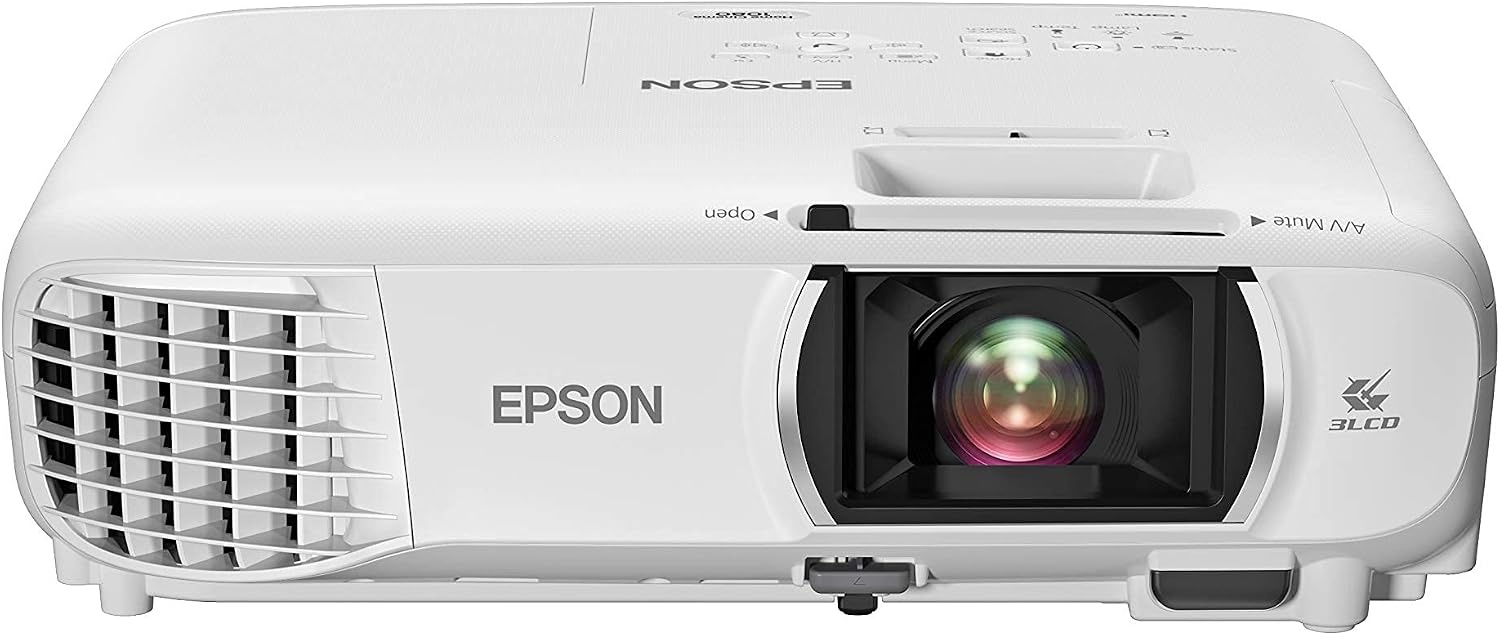
Epson Home Cinema 1080 3-Chip 3LCD 1080p Home Theater Projector
Biggest visible upgrade per dollar when the room can be darkened
Needs a mount, a screen, a controlled room, and a cable run that passes a full-length test
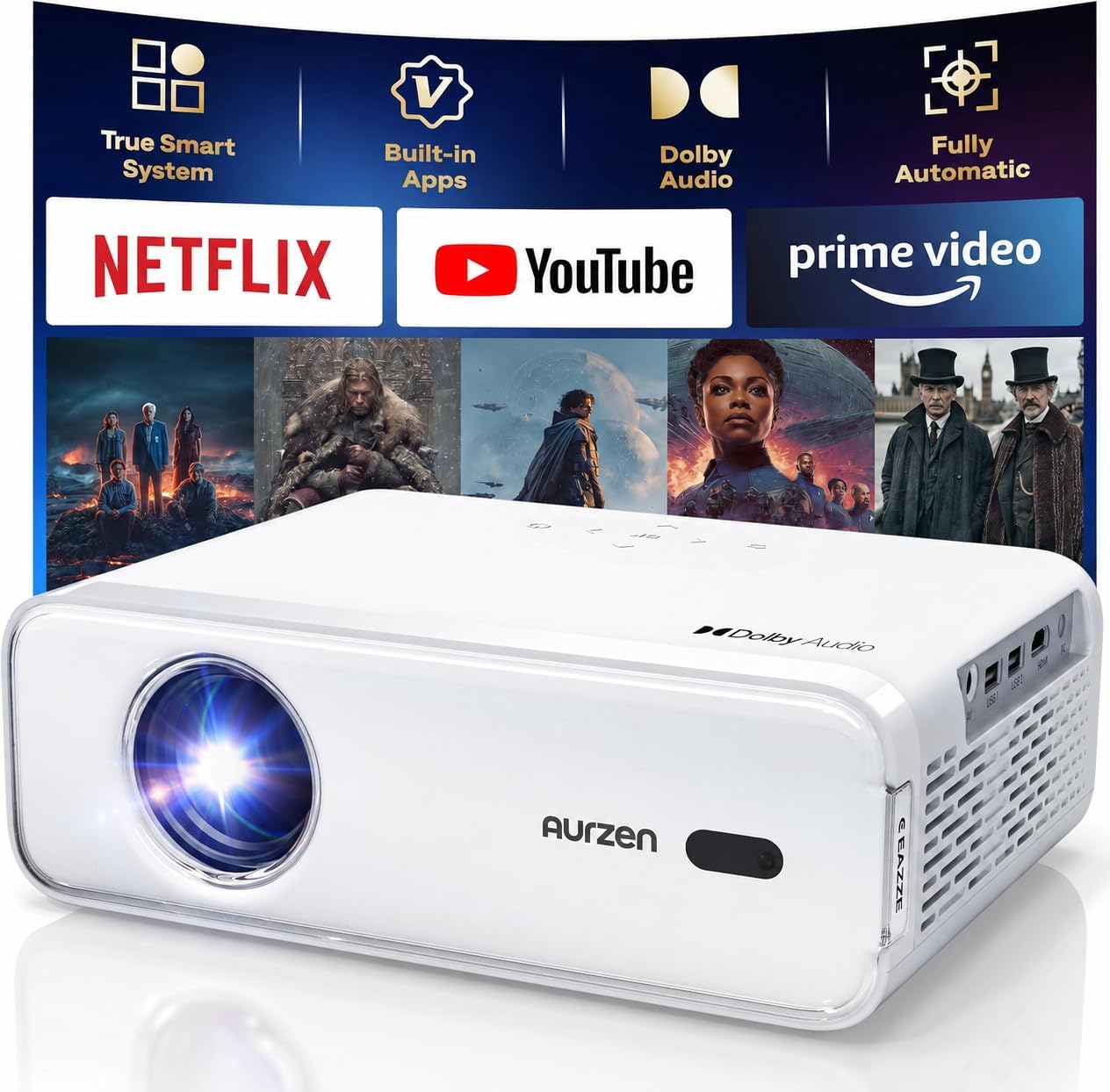
Aurzen EAZZE D1 Smart Portable Outdoor Projector with WiFi and Bluetooth
Fits in a closet, sets up in ten minutes, gets used on a Tuesday
Gives up output and contrast for portability, so ambient light is the enemy
Prices and availability were captured from Amazon Creators API and may change.
How I compare three products that do not do the same job
Two of these are projectors and one is a sound system, so a spec-for-spec table would be nonsense. What I can compare is the job each one is hired to do, and what it costs you in installation, in room treatment, and in the arguments that follow.
My protocol does not change because the product changed. Every sound system gets a UMIK-1 sweep from the actual couch, before and after its room correction runs, because correction can flatten a bass hump and cannot manufacture headroom. Every projector gets an i1Display Pro pass in Calman against Rec.709, because delta-E under 3 is the bar I publish and "cinema-grade" is a phrase, not a number. Every install gets a 48 Gbps pattern test on the HDMI run, which is how I learned that a 30-foot cable can fail at the 24-foot mark and eat an entire afternoon.
Bose Home Theater System: the pick when the room fights back
The Bose package is a Dolby Atmos soundbar, a Bass Module 700, and two wireless surround speakers in one purchase. That combination solves the most common problem in the houses I work in: the couch is against the back wall, there is no attic access above it, and nobody in the family wants to see speaker cable stapled along the baseboard.
Wireless surrounds are not just a convenience feature. In a shared living room they are often the difference between having rear channels and not having them, and I will take real surround channels over a louder front stage every single time.
What it loses is price per channel and the upgrade path. A receiver and separates let you replace one piece at a time, and a bar system is a single organism. It also loses on honesty about what room correction can do: the DSP will flatten what the room did to the response, and it cannot invent headroom that was never there. When I sweep a system like this from the couch, I check two things. Where the 1 to 4 kHz presence band sits, because that is where dialogue lives and where a mumbly British crime drama exposes a scoop. And what happens at 60% volume, because that is where THD climbs on boxes that printed a big wattage number and shipped a small power supply.
Visit on Amazon → on the Bose system if your room has a hard floor, a humming ceiling fan, and no tolerance for wire. It is also the one I would not put in a dedicated theater room, because real speakers still beat any bar there and I say so even when it costs me the sale.
Epson Home Cinema 1080: the pick when the picture is the point
The Epson Home Cinema 1080 is a 3-chip 3LCD 1080p home theater projector, which is a mouthful that translates to one practical advantage. Three LCD panels means no spinning color wheel, so there are no rainbow artifacts to chase across the screen, and the design tends to hold up better than single-chip approaches at the same brightness class.
This is the piece that changes movie night the most, because it is the piece that changes the size of the image. Once a client watches a projected picture with the lights down, the TV in the corner starts looking like furniture.
What it needs from you is honesty about the room. A projector wants a mount, a screen, a controlled light environment, and a cable run that survives a full-length bandwidth test. I just re-terminated a 30-foot run for the third time because it failed at the 24-foot mark, and that hidden labor is what separates a projector install from a TV purchase.
It loses on portability and on showroom bravado. It is not the box you carry to the yard, and it is not the box that wins a spec argument under fluorescent light against whatever resolution is being advertised this year. It wins in a dark room, calibrated to Rec.709, where the numbers I actually care about live.
Visit on Amazon → on the Epson if movie night is an event at your house rather than background noise.
Aurzen EAZZE D1: the pick for the yard, not the media room
The Aurzen EAZZE D1 is the odd one out, and it is the one I recommend most often to families with a yard and a garage. It is a smart portable projector with WiFi and Bluetooth built in, which tells you exactly who it is for: someone streaming from a phone, on a patio, with no interest in running cable or hanging a screen.
Portable projectors make a trade. You give up output, contrast, and the uniformity that a fixed installation buys you, and you get a box that fits on a shelf and takes ten minutes to set up. In a dark room it can look genuinely good. At 4 p.m. in a bright yard, no portable projector wins, and anyone who tells you otherwise has not tried it.
This is the pick for the driveway movie night, the football game on the patio, the sleepover in the garage, and the backyard birthday party. It is not the pick for the media room, and it is not the pick if most of your viewing happens before sunset.
One more thing: with a portable, the audio plan is a separate decision. The built-in driver gets you through a movie and not much further, which is why the Bluetooth radio matters more than the spec sheet suggests.
Visit on Amazon → on the Aurzen if your best viewing room is outdoors.
The tests each one has to pass
For the Bose system: a UMIK-1 sweep at the couch, before and after room correction, then a check of where the presence band sits and how dialogue holds up. Then a 50 Hz sine and a tape measure, moving the sub to four corners to find where the low end actually lands in that specific room. Then the 60% volume test, because a system that compresses before it gets loud is a system with a wattage sticker that lied.
For the Epson: an i1Display Pro pass in Calman against Rec.709, with a target of delta-E under 3 and a published number either way. Then a light-control check at the hour the client actually watches. Then the HDMI run test at 48 Gbps over the full length, not a three-foot bench cable that flatters every product.
For the Aurzen: a realistic ambient light check at the time of day it will be used, and a look at how the picture holds up at the edges, because affordable portables are usually fine in the middle and soft at the corners. Then the Alma test, which is the one that matters most: "is that supposed to sound like that?"
The trade-offs nobody puts on the box
First, price per channel. A bar system looks expensive next to another bar and cheap next to separates. The Bose package is the only one of these three that solves surround sound in a room where you cannot run wire, and that is worth real money to the right buyer and worth nothing to the wrong one.
Second, the portability tax. The Aurzen costs a fraction of what the other two cost, and it earns that by giving up output and contrast. That is not a knock, it is a different product for a different night of the week. Buying it and expecting Epson behavior in a bright room is how people end up disappointed by a perfectly good projector.
Third, the calibration gap. Every projector I touch gets measured, because out of the box most of them land nowhere near Rec.709, and every sound system gets swept, because placement and room correction decide more of the result than driver count does. Spec sheets are optimistic fiction until a microphone says otherwise.
If you have a dedicated theater room, my honest advice is to skip all three sound options and buy real speakers. It costs me affiliate money to say that, and I will keep saying it.
Which one first?
If your living room is shared space and you watch more television than movies, buy the sound system first. Dialogue intelligibility ruins more evenings than anything else in this hobby, and the Bose package addresses it without asking anyone to approve speaker wire.
If movie night is an event and you can control the light, buy the Epson first. A projector plus a dark room is the biggest visible upgrade in this entire comparison, and it is the one guests actually notice.
If you have kids, a yard, and a garage, buy the Aurzen first and stop overthinking it. It is the projector that gets used on a Tuesday, and the one that spends the least time in a box.
If you can only buy one and you want the safest answer: sound first, projector second, portable third, unless your viewing happens outside the house.
What I am testing next
On the bench right now is a wave of room correction firmware updates that changed two things I care about. One update fixed a bass hump I had been fighting with placement for a year, and another broke a dialogue curve that had been fine. Both are logged in a spreadsheet that has been running since 2016 and now holds more than 400 measurements.
The other project is that HDMI run, which is on its third re-termination and gets retested at the full 30 feet before it goes back in the wall.
When there is a number worth publishing, it goes on ScreenPerch with the measurement attached. Until then, the table above is what I would buy and the reasoning behind it, and that reasoning is the part I am willing to defend.