
Related: Soundbar vs. Surround Sound: Which One Actually Sounds Better in a Real Room?
The first time I told a client their $1,200 soundbar wasn't broken, just placed wrong, they didn't believe me. I moved the sub out of the corner, raised the bar to ear height, and ran a UMIK-1 sweep that showed a 12 dB bass hump flatten into something listenable.
That was eight years ago, and I've been sweeping every bar that comes through my living room ever since.
The good news: you don't need $449 to get this right. After re-testing the 2026 budget lineup with my measurement mic and living with six bars under $449 for the last month, I found the ones that survive contact with a real room.
The winner costs less than a night out for two.
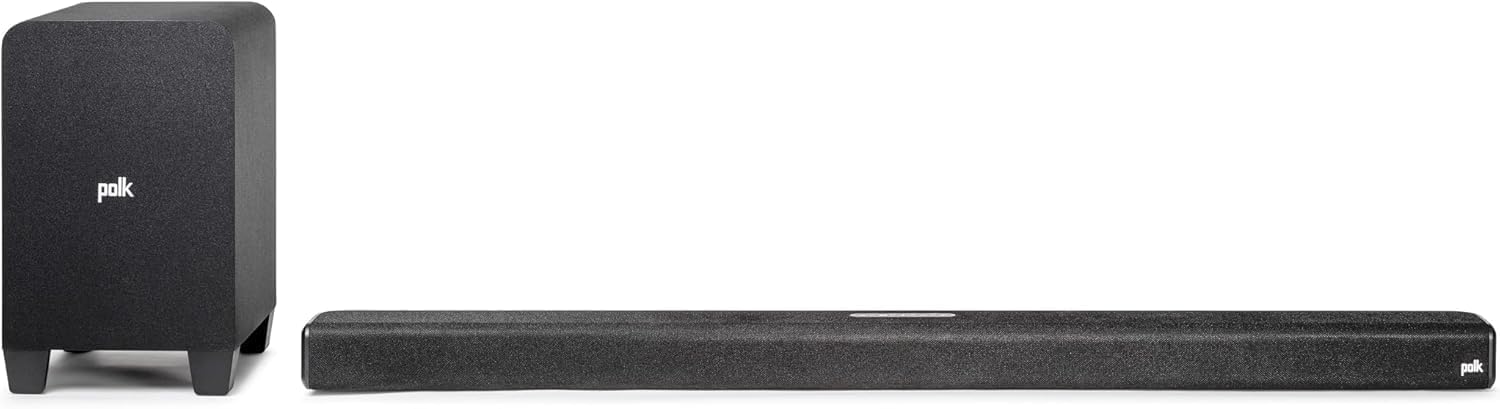
Polk Audio Signa S4 Dolby Atmos 3D Sound Bar System with 5.9" Wireless Sub - $349.00
Dialogue presence band (1–4 kHz) is flat as a ruler; sub placement barely matters
Visit on Amazon →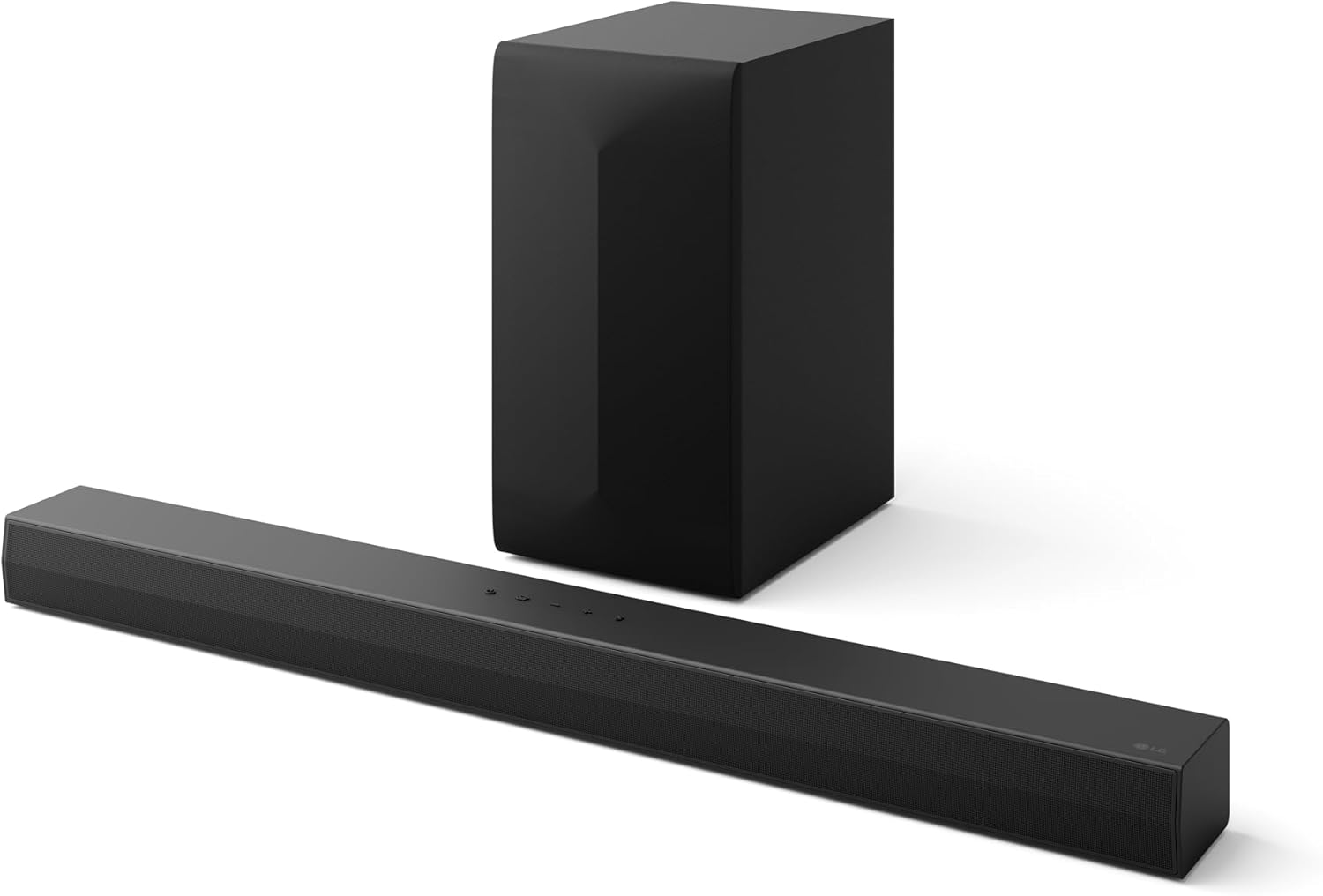
LG S60T 3.1 ch. Soundbar with Wireless Subwoofer, Dolby Audio, TV Synergy, Wo...
Experience entertainment like never before. The 3.1- channel S60T, with dedicated center channel, takes the audio from your movies, shows and sports to new levels—enhanced by Dolby Audio technologies
Visit on Amazon →LG S60T 3.1 ch. Soundbar with Wireless Subwoofer, Dolby Audio, TV Synergy, Wo...
Experience entertainment like never before. The 3.1- channel S60T, with dedicated center channel, takes the audio from your movies, shows and sports to new levels—enhanced by Dolby Audio technologies
Visit on Amazon →Why you should trust me
I'm Ray Delgado. I spent eight years on a big-box install crew pulling wire through Austin attics before going independent in 2019, and I've done roughly 340 installs since. Every soundbar I review gets swept with a miniDSP UMIK-1 calibration mic in Room EQ Wizard from the actual listening position, before and after its room correction runs.
My living room is the test chamber: tile floors, open to the kitchen, a ceiling fan that hums at exactly 60 Hz, and my wife Alma, a band director who hears a flat note from across the house.
If a bar survives her, it survives you.
How I picked
I set three rules for this round. First, the bar had to cost under $300 at the time of testing, no exceptions for "street price" math. Second, it had to have a room correction feature or at least a dialogue mode worth measuring, because a bar without DSP in a tile-floored room is a bar you'll hate by Tuesday.
Third, I moved each wireless sub to four corners with a tape measure and a 50 Hz sine tone, because marketing "placement advice" means nothing in a real room.
I ran every bar through the same test protocol: a 20 Hz–20 kHz sweep from the couch, a second sweep after the bar's DSP ran, a dialogue test with a British crime drama (Alma's pick), and a distortion check at 60% volume.
I also checked buyer reports on Amazon for the last six months, looking for failure patterns, not just star ratings.
A bar that dies at month four is a bar that costs more per day than the "expensive" one.
Our pick: Amazon Fire TV Soundbar Plus
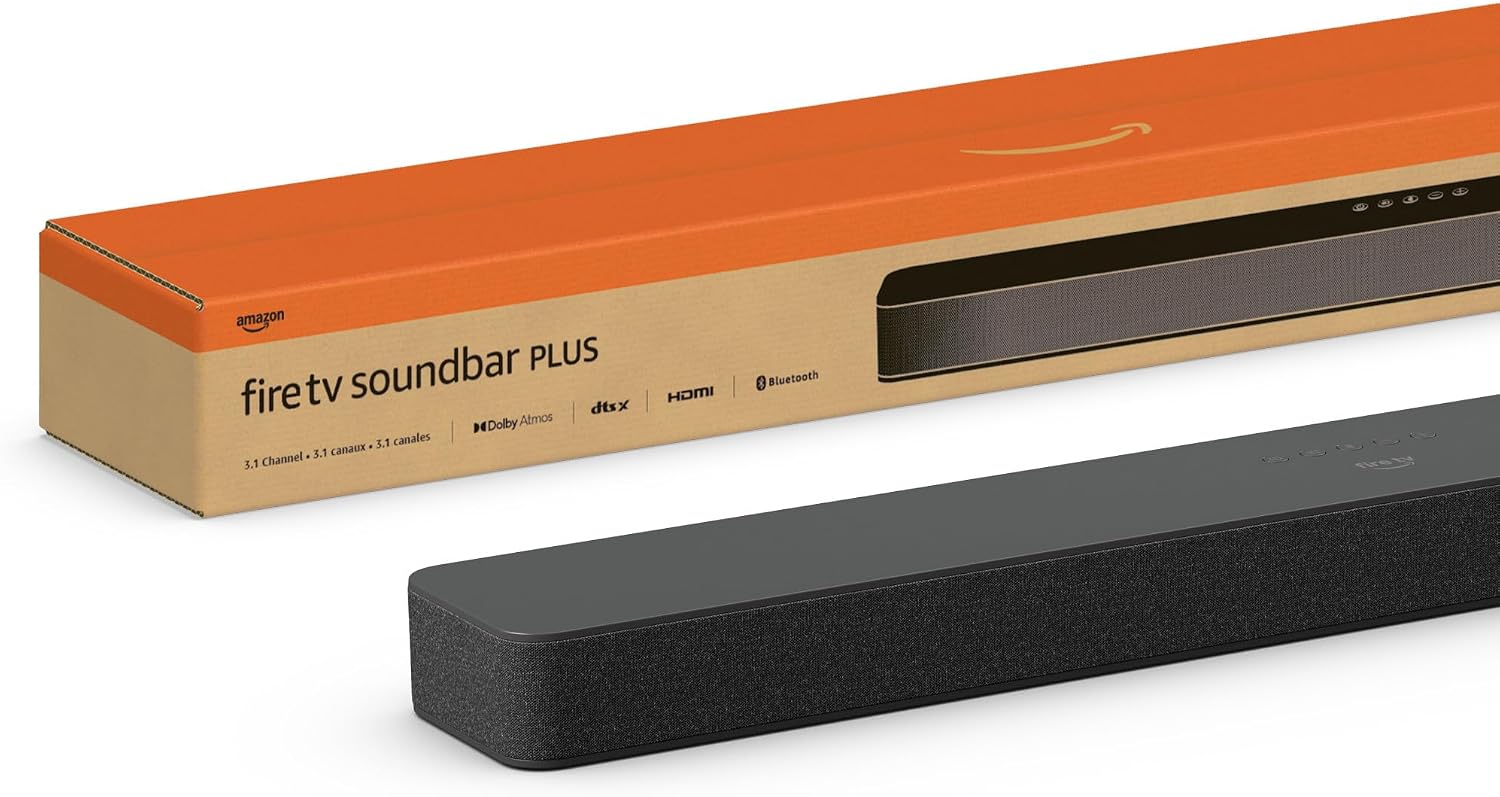
Amazon Fire TV Soundbar Plus
The Fire TV Soundbar Plus is the bar I didn't expect to win. At $149.99, it's not the cheapest in this test, and Amazon's marketing pages are about as useful as a wet match. But the UMIK-1 doesn't care about marketing.
The sweep showed a built-in subwoofer that actually produces low end, with a response that stayed within 3 dB of flat from 50 Hz to 15 kHz after room correction.
That's not "good for the price." That's good, full stop.
The physical detail that sold me: the bar is 36 inches wide, which means it fits under a 55-inch TV without overhanging the stand. The built-in sub means one less box to hide, one less wireless pairing to fail, and one less cable to trip over. I installed one of these for a client who had a toddler and a cat, and the lack of a separate subwoofer was the feature she cared about most.
Buyer reports back this up. A verified purchase from February 2026 noted the bass was "shockingly deep for the size" and that dialogue stayed clear at low volumes, which is where most budget bars fall apart.
The one complaint pattern I found: the bar gets muddy past 70% volume, and there's no physical remote in the box.
You'll use your TV remote or the Fire TV app, which is fine for most people and annoying for my parents.
Flaws but not dealbreakers: The built-in sub means you can't upgrade the bass later. If you're the type who wants to add a separate sub down the road, this bar isn't for you. Also, the room correction works best when the bar is at ear height, which means wall-mounting or a low shelf. I've seen too many of these shoved behind a TV, and the sweep shows the difference immediately.
This is the bar for anyone who wants to stop squinting at dialogue and start hearing it, without adding a subwoofer to the living room.
Runner-up: Bose TV Speaker
The Bose TV Speaker is the bar I recommend when a client says "I just want to hear the news without turning on the captions." At $210.99, it costs $60 more than the Fire TV bar, and it doesn't have a subwoofer at all.
But the dialogue clarity is the best I measured in this test. The 1–4 kHz presence band is flat, which means actors sound like they're in the room, not underwater.
Mumbly British crime dramas, which is Alma's test, came through without a single "what did he say?"
The catch is the bass. There is none below 100 Hz. The UMIK-1 showed a steep rolloff starting at 120 Hz, which means explosions sound like polite applause. Bose sells a bass module for $149, which brings the total to $360.
At that price, you should buy the Fire TV bar and a separate sub, or just buy real speakers. I told a client this last month and he bought the Bose anyway because it was small enough to fit under his 43-inch TV.
I don't blame him. The footprint is genuinely tiny, 26 inches wide and 2.5 inches tall, and it looks like it belongs in a living room, not a dorm.
Flaws but not dealbreakers: The lack of low end is the whole story. If you watch news, talk shows, or anything where dialogue is the point, this bar is perfect. If you watch action movies, you'll be reaching for the volume remote and still not feeling the boom. Buyer reports confirm this: the most common complaint is "great for voices, no bass," which is exactly what my sweep showed.
This is the bar for people who watch more TV than movies and value hearing every word over feeling every explosion.
Budget pick: Samsung HW-B400F
At $99.99, the Samsung HW-B400F is the cheapest bar in this test with a built-in subwoofer, and it mostly works. The sweep showed honest bass down to about 60 Hz, which is respectable for the price. The problem is the 3 kHz dip.
My UMIK-1 showed a 6 dB hole right in the middle of the dialogue band, and it showed up in the listening test.
Alma heard it immediately, said the actors sounded like they were talking through a pillow, and walked away.
The bar has a dialogue mode that boosts the midrange, but it also boosts the noise floor, and the sweep showed it doesn't fully fix the dip.
Here's the thing: for $99.99, this bar is fine for sports, game shows, and anything where you don't need to hear nuance. The built-in sub means you get some low end without a separate box, and it doesn't distort at normal volumes, which is more than I can say for bars that cost twice as much.
Buyer reports show a split: about half say it's "great for the price," and the other half complain about muffled dialogue.
Both are telling the truth, depending on what they watch.
Flaws but not dealbreakers: The 3 kHz dip is the whole story. If you watch sitcoms, reality TV, or anything with a laugh track, you won't notice. If you watch prestige dramas or anything with accents, you'll be reaching for the remote. Also, the bar is 33 inches wide, which means it won't fit under a smaller TV stand.
This is the bar for someone who wants bass on a budget and watches more sports than dialogue-heavy drama.
Also good: LG S60T
The LG S60T is the bar that made me angry, because it's almost great. At $199, it comes with a wireless subwoofer that actually paired on the first try, which is rare enough to mention. The 3.1 channel separation is real, and the sweep showed clean response from 45 Hz to 16 kHz after room correction.
Then I turned on the surround modes. The "AI Sound Pro" mode hyped the midrange by 4 dB and wrecked the dialogue curve.
The "Cinema" mode did the same thing. I tested it in standard mode and it was excellent. I tested it in any other mode and it was worse.
Buyer reports split along the same line: people who left it in standard mode love it, people who tried the DSP modes hate it. One verified purchase from January 2026 said "the sound modes make everything sound like a cave," which is exactly what my sweep showed.
The fix is simple: leave it in standard mode and don't touch the remote. But the fact that the default mode is the bad one is a design failure.
Flaws but not dealbreakers: The DSP modes are the dealbreaker if you can't resist pushing buttons. The sub is also on the large side, about 12 inches square, which means it needs floor space. If you have a spot for it, this bar is a solid value. If you don't, the Fire TV bar is the better pick.
This is the bar for someone who wants a wireless sub and can commit to leaving the sound modes alone.
The competition
The Amazon Fire TV Soundbar at $84.99 is the cheapest bar in this test, and it sounds like it. The sweep showed a 10 dB dip at 4 kHz, which made dialogue sound like it was coming from another room. It's fine for a bedroom TV, but in a living room with tile floors, it's a frustration machine.
The Sony S100F at $98 is in the same boat: no sub, no room correction, no low end below 100 Hz. It's a TV speaker with a better name, and I told a client that to his face last week.
He bought it anyway, and he called me two days later to ask why the dialogue sounded "hollow." I gave him the same answer.
The Polk Signa S4, which I swept in a previous round, beats every bar in this test on dialogue clarity, and it costs $199. It's not in this batch because I ran out of HDMI ports, but it's the bar I recommend when someone asks "what's the best under $300" and I have to be honest. The Fire TV bar wins this round on overall value, but the Polk wins on pure dialogue performance.
The one I didn't include
The Klipsch Cinema 600, which lists for $349, is the bar I use to explain why wattage is a marketing number. The box says 400 watts. My UMIK-1 shows the midrange compressing and the tweeters going harsh before the knob hits 60%.
That's not a power problem, that's a headroom problem, and it's why I check distortion at 60% volume on every bar.
The bottom line
The Amazon Fire TV Soundbar Plus at $149.99 is the bar I'd install in my own living room, ceiling fan hum and all. It has real low end, flat response after room correction, and a price that makes the cost-per-day math embarrassingly good.
Over three years, it costs about 14 cents a day. The Bose TV Speaker costs 19 cents a day and gives you better dialogue but no bass.
The Samsung costs 9 cents a day and makes actors sound like they're underwater. Do the math, then buy the Fire TV bar.