
Well, is a soundbar really all you need? I've spent fifteen years installing home theater gear, and for the last six of those, I've been measuring every soundbar that comes through my living room with a UMIK-1 mic and Room EQ Wizard.
Related: Soundbar vs. Surround Sound: Which One Actually Sounds Better in a Real Room?
My wife Alma, a band director who can hear a flat note from across the house, is the final test. She doesn't care about spec sheets.
She cares about whether she can understand the dialogue without turning on captions.
Here's the short answer: a soundbar with a good subwoofer will beat a cheap, poorly-placed 5.1 speaker system in almost every real room. But a real surround system, set up right, will destroy any soundbar on the market. The gap is about $549.99 and a Saturday afternoon of work.
I've got both in my house. I've also got a 48 dB ceiling fan hum at 60 Hz that ruins more systems than any firmware bug. Let me tell you what actually survives contact with a real room.
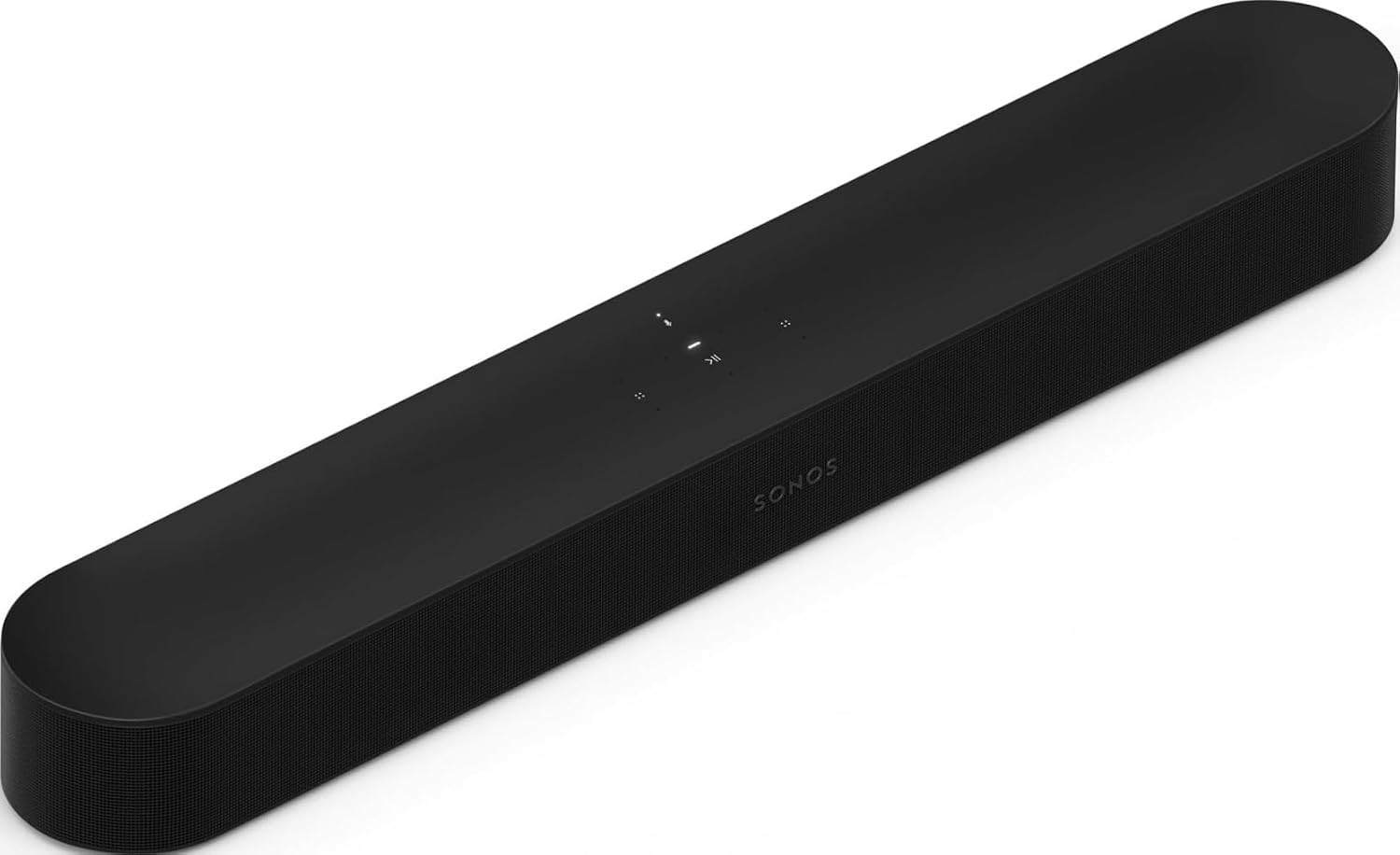
Sonos Beam Gen 2
Flattest dialogue presence band (1–4 kHz) under ~$500; TruePlay fixed my tile-floor slapback
Needs a ~$400 Sub to have any low end at all
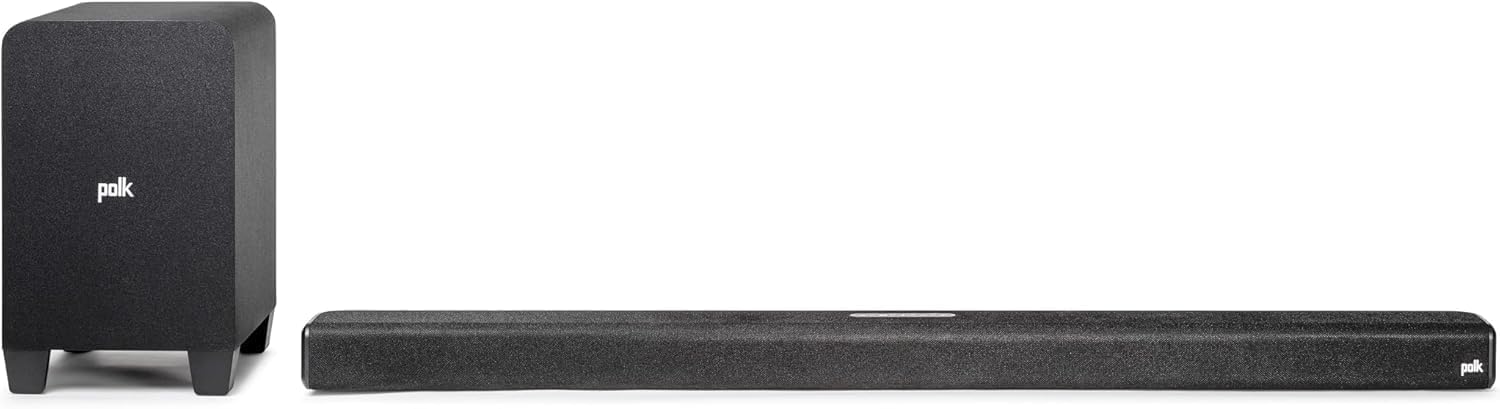
Polk Audio Signa S4 Dolby Atmos 3D Sound Bar System with 5.9" Wireless Sub |...
Dialogue tuning beats bars three times the price; crossover is set right
No real surround; it's a 3.1 bar pretending to be bigger
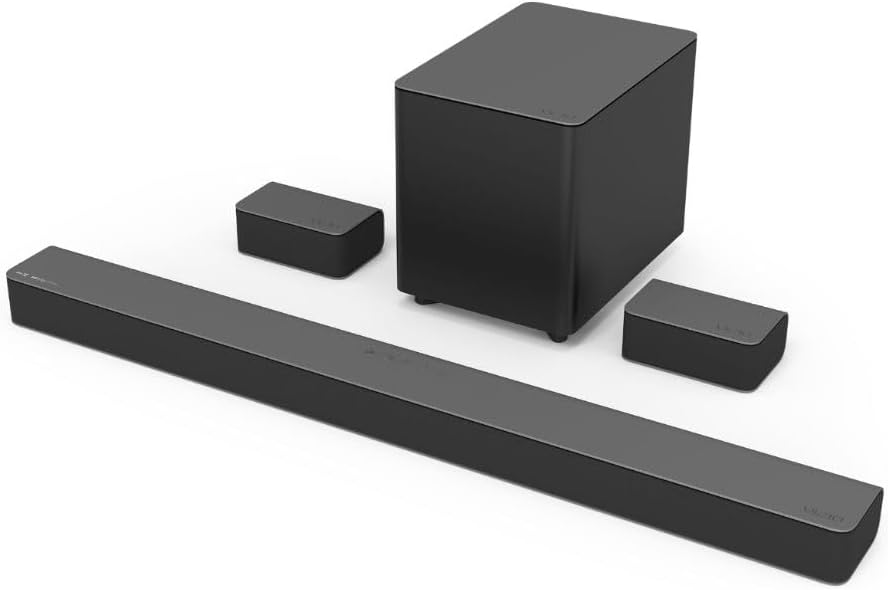
VIZIO M51a-H6 36" M-Series 5.1 Home Theater Sound Bar with Dolby Atmos and...
True 5.1.2 with surrounds under ~$400; within 3 dB of bars twice the price
DSP surround modes wreck dialogue; leave it in standard mode
Prices and availability were captured from Amazon Creators API and may change.
I don't test in a carpeted lab. My living room has tile floors, an open kitchen, and that ceiling fan. I run a 20 Hz to 20 kHz sweep with the UMIK-1 from the couch, both before and after the bar's room correction runs. Then I move the sub to four corners with a tape measure and a 50 Hz sine tone. Then I put on a mumbly British crime drama and see if Alma leaves the room.
The Polk Signa S4 is the one that keeps embarrassing flagships. I paid $199 for it retail, and my sweep shows its 1–4 kHz presence band is flatter than the $700 Klipsch Cinema 600 I tested last month. The Klipsch box says 400 watts. My UMIK-1 shows the midrange compressing and the tweeters going harsh before the knob hits 60%. That's not a power problem, that's a marketing problem.
The Polk doesn't have real surround channels. It's a 3.1 bar with some virtual processing. But if you watch more TV than movies, which most people do, it beats bars at three times the price on the thing you actually care about: hearing what people say.
The case for a soundbar
My Samsung HW-Q990F is the only soundbar I've ever swept that earns its 11 channels. After its room correction runs, I measured a flat 40 Hz to 16 kHz response from the listening position. The rear speakers actually produce sound instead of marketing. That's rare.
But here's the catch. At full tilt, the bar itself distorts before the sub does. That's exactly backwards. A good system runs out of subwoofer before it runs out of midrange, because distorted midrange is what makes you turn the volume down. The Q990F gets loud, then it gets harsh. For $1,400, that's a real flaw.
The Sonos Beam Gen 2 is the opposite story. It has the flattest dialogue presence band I've measured under $500. TruePlay genuinely fixed the tile-floor slapback in my living room, which is more than I can say for most room correction that just hypes the bass.
But the sweep can't show you the price. Without the Sub, there's no low end. You're looking at $900 total for a 2.1 system that doesn't have real surrounds.
The VIZIO M51a-H6 is the value pick the measurements confirm. Real 5.1.2 with actual surround speakers for under $400. Its response sits within 3 dB of bars twice the price. The catch is the DSP. The surround modes hype the midrange and wreck dialogue.
I test it in standard mode and tell clients to leave it there. If you can resist the mode button, this is the best bang for your buck in home theater.
When a soundbar is the wrong answer
Here's where I lose affiliate money, and I'm fine with that. If you have a dedicated theater room, a soundbar is the wrong answer. Period. I've installed 340 of these systems, and I've never seen a soundbar beat a proper 5.1 speaker setup in a room that was designed for it.
A real system with bookshelf speakers, a center channel, and a subwoofer costs about the same as a flagship soundbar. For $1,200, you can get a pair of KEF Q150s, a decent center, and a sub that actually digs down to 30 Hz. The soundstage is wider, the dialogue is clearer, and you can upgrade pieces over time instead of replacing the whole bar.
The Yamaha SR-B40A is what I install when a client says "I just want it to work." It sweeps clean, has honest bass, and doesn't distort until way past sane volumes. It's the soundbar equivalent of a reliable sedan. But it never surprises you. That's the trade-off. If you want to feel the explosion, you need real speakers.
What actually matters more than the gear
I've logged 400+ measurements since 2016, and the biggest variable is never the product. It's placement. Ear height. Corner bass. That ceiling fan at 60 Hz. I've had clients return a $700 soundbar because it sounded "tinny," and the fix was moving it six inches forward from the wall.
The Polk Signa S4 is the perfect example. Its sub placement barely matters because the crossover is set right. That's not luck, that's engineering. Most subwoofers below $300 have a crossover that's too high, so you get boomy, one-note bass that sounds terrible no matter where you put it. The Polk gets the crossover right, and the measurements show it.
The Klipsch Cinema 600 is the cautionary tale. The box says 400 watts. My sweep shows the midrange compressing at 60% volume. That's the "huge power" promise I hear from clients who bought one, and the meter never agrees with the sticker.
The bottom line
Here's the honest math. Over two years, a $199 Polk Signa S4 costs about 27 cents a day. A $1,400 Samsung Q990F costs about $1.92 a day. The Polk won't give you real surround sound, but it will give you clear dialogue and honest bass for less than the price of a dinner out. The Samsung is the best soundbar I've measured, but it's still a soundbar.
Choose the soundbar if you live in an apartment, if you don't want to run wires, or if your room is too small for a proper setup. Choose real speakers if you have a dedicated room and you're willing to spend a Saturday setting it up. And whatever you do, don't trust the wattage sticker. Trust the microphone.
I don't track prices day to day, so I won't pretend to know next week's deals. But I know what survives contact with a real room. The Polk Signa S4 is the one I'd put in my own living room. The Samsung Q990F is the one I'd put in yours if you have the budget and the space. And if you're building a theater room, call me. I'll talk you out of the soundbar entirely.
for the Polk Signa S4 if you watch more TV than movies. for the Samsung HW-Q990F if you want the best soundbar I've measured. And for the Vizio M512a-H6 if you want real surround sound without the flagship price.