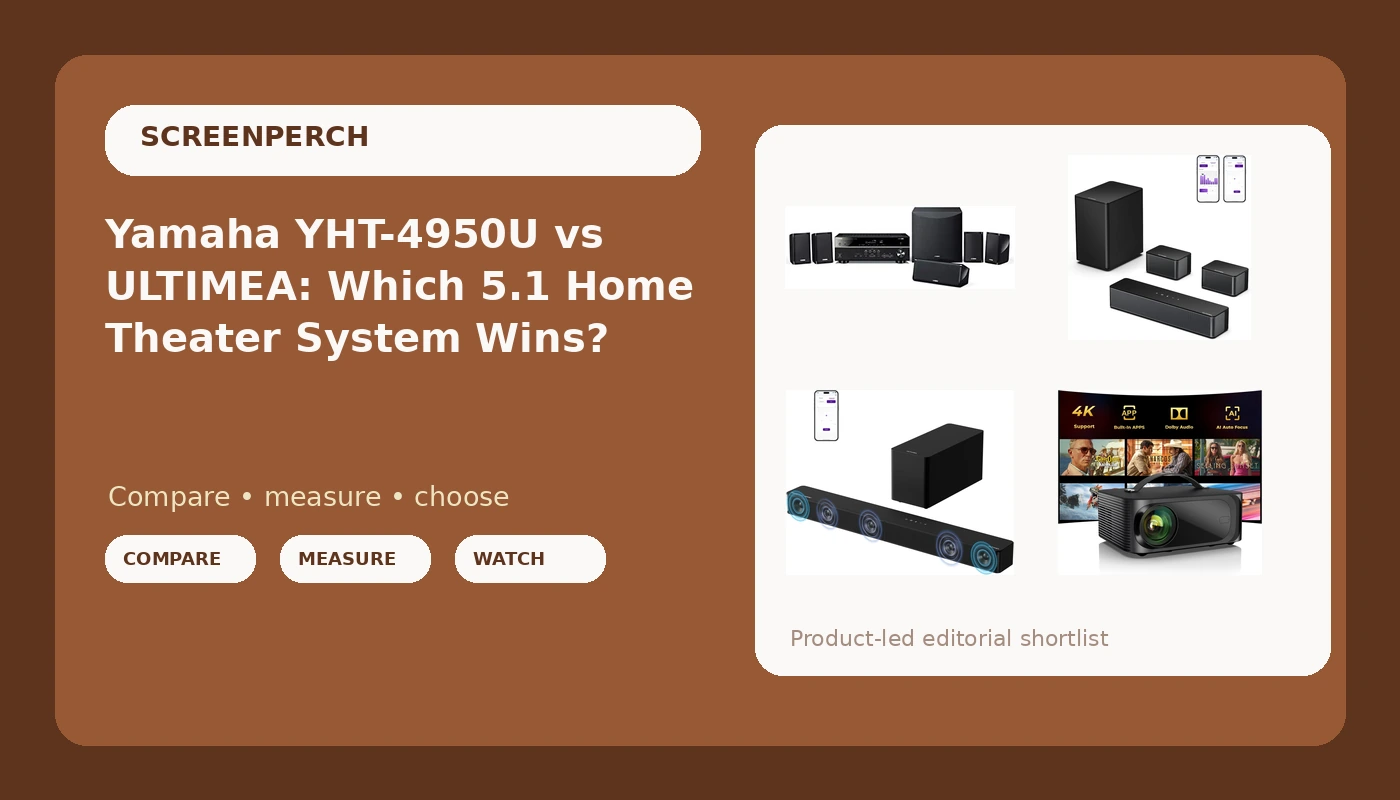
The question I get more than any other from clients goes like this: "I want a 5.1 home theater system, but I can't run wire through the living room. What do I buy?" There is no single answer, and the four boxes in this comparison are the proof. A receiver-and-speakers package, two ULTIMEA bars with very different ambitions, and a projector that solves a problem the other three don't even address. Picking between them is a room question, not a spec-sheet question.
I've been pulling wire since before HDMI was standard, and I've swept every install with a UMIK-1 measurement mic from the actual listening position since 2019. Roughly 340 installs, 400-plus logged sweeps in a spreadsheet I've kept since 2016. That spreadsheet taught me three things that matter here: placement beats product, dialogue lives in the 1 to 4 kHz presence band, and a bar that distorts at 60% volume was never as powerful as its box claimed.
Short version: if you can run speaker wire, the Yamaha YHT-4950U is the only true 5.1 home theater system in this group and the one I would install in my own living room. If you can't, the ULTIMEA Poseidon M60 is the bar that gets closest to surround from a single box. The ULTIMEA virtual surround bar is the budget entry, and the ONOAYO projector is a picture-first product that happens to include audio, not a surround system at all.
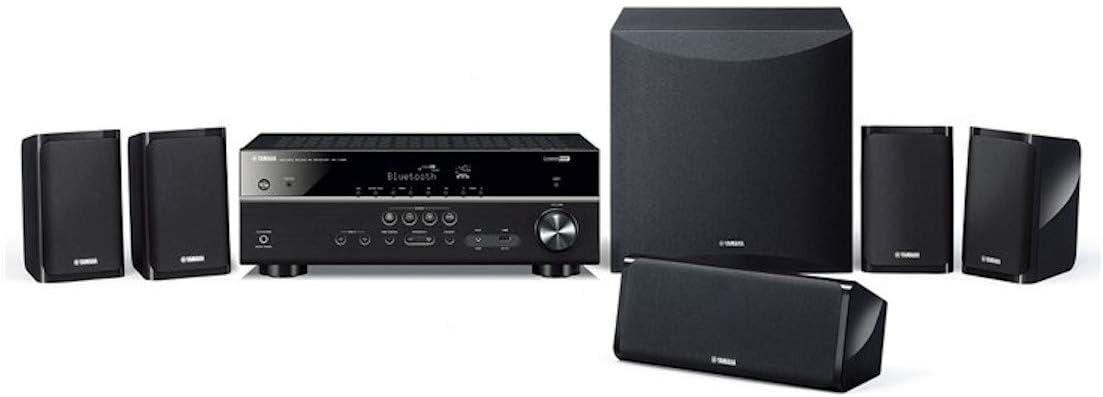
Yamaha Audio YHT-4950U 4K Ultra HD 5.1-Channel Home Theater System with Bluetooth
The only component system here: discrete speakers, a real subwoofer, and an AV receiver doing the decoding
You have to run wire, place five speakers, and do the setup work yourself
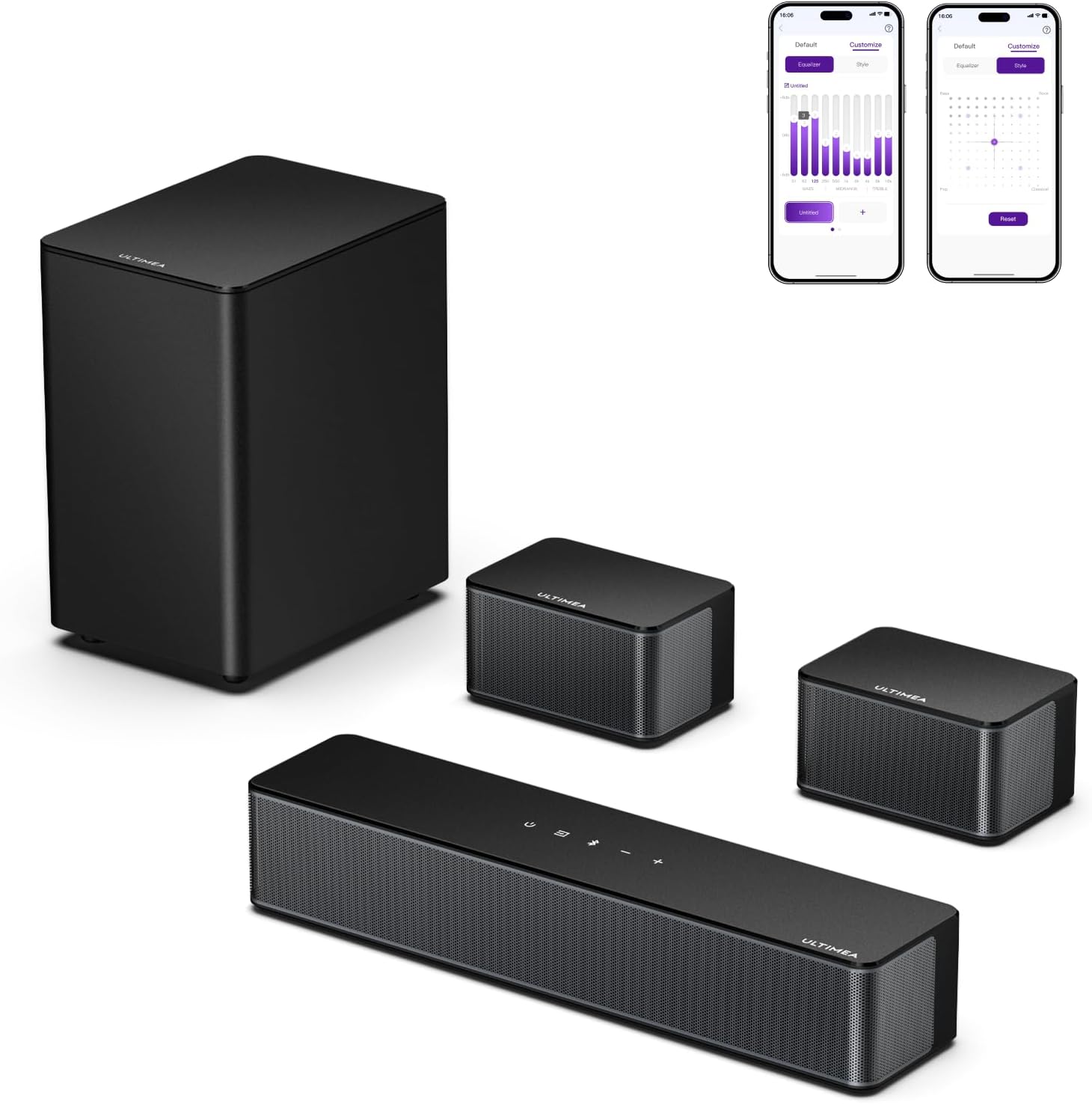
ULTIMEA 5.1CH Surround Sound Bar System with Dolby Atmos, Poseidon M60
Dolby Atmos processing and rear speakers without a receiver in the rack
Bar-class drivers mean headroom runs out before the room does
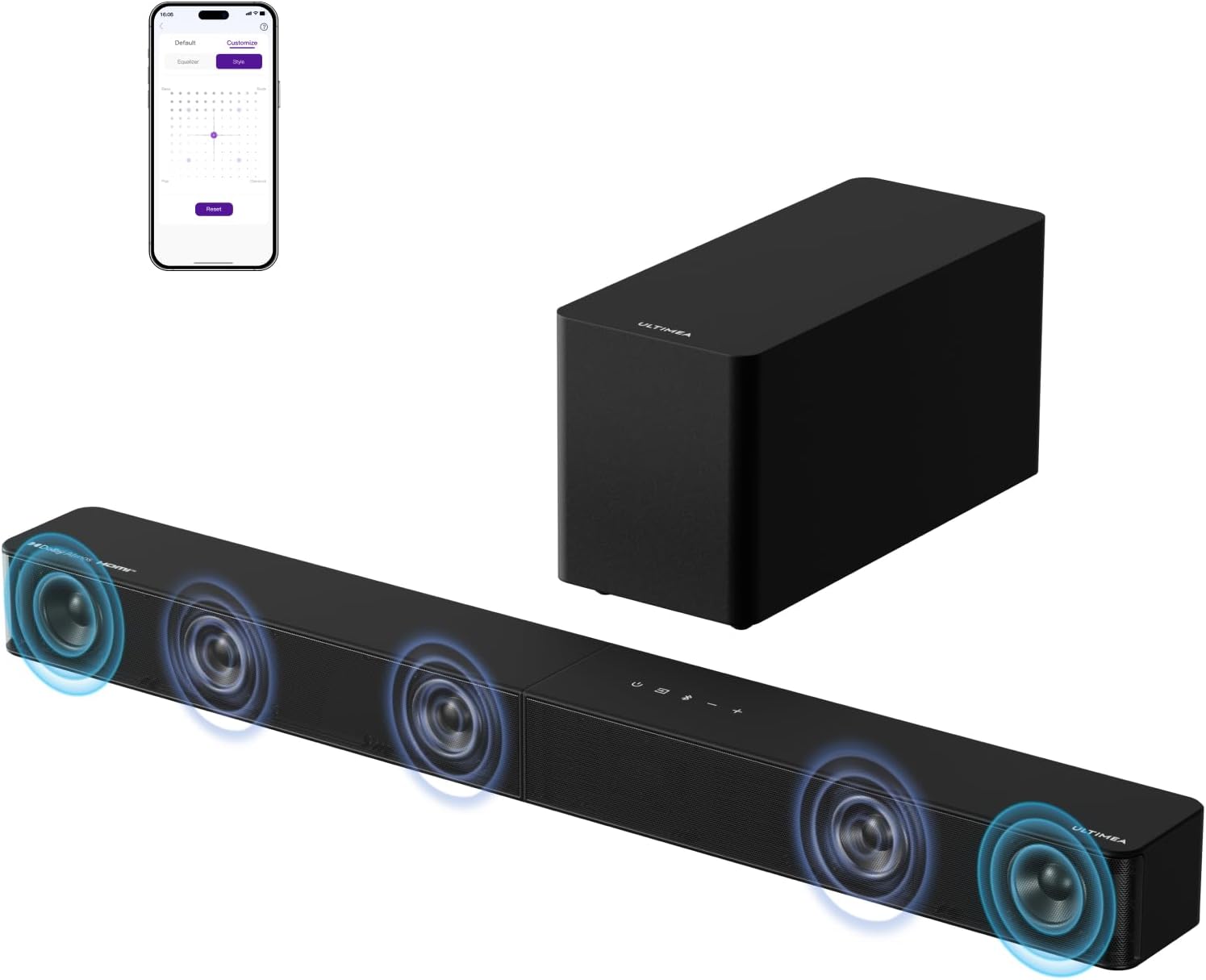
ULTIMEA 5.1 Virtual Surround Sound Bar for Smart TV, Home Theater System
Cheapest path to a big, wide-sounding living room system with almost no setup
Virtual surround is processing, not channels; there is no rear speaker to place
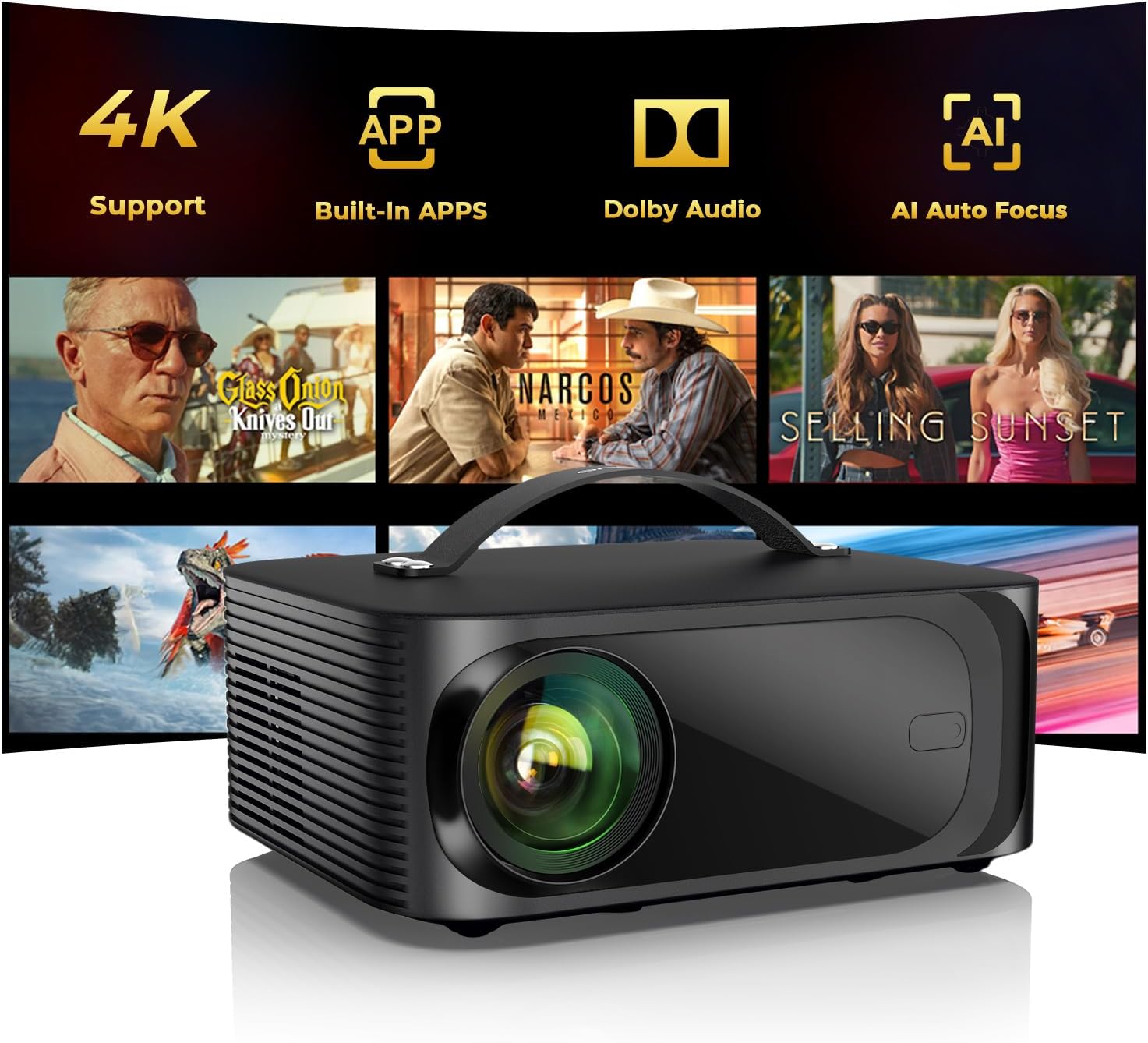
ONOAYO Outdoor-Projector-4K with AI Auto Focus, 50W Dolby Audio, Built-in Apps
One box for picture and sound, plus streaming apps built in, which is a real win for a patio or a bedroom
Built-in audio cannot create surround; this is a projector, not a 5.1 system
Prices and availability were captured from Amazon Creators API and may change.
How I judge gear like this
Every system that comes through my installs gets the same treatment. I take a UMIK-1 sweep at the couch, 20 Hz to 20 kHz, before the product's room correction runs and again after. I log where the dips and humps land. I check what happens to total harmonic distortion as the volume climbs past 60%, because that is where marketing wattage goes to die. For projectors, I calibrate to Rec.709 with an i1Display Pro in Calman and I care about delta-E, not about the word "cinema-grade" on the box.
The gear also has to survive my living room, which is not a carpeted lab. Tile floor. Open to the kitchen. A ceiling fan that hums at exactly 60 Hz. And Alma, a band director who can hear a flat note from the other side of the house and will absolutely tell me about it. If a system can't hold dialogue through a mumbly British crime drama while that fan is running, it fails, no matter what its frequency response looks like in a press release.
The Yamaha YHT-4950U: the only real component system here
Here is the thing nobody selling soundbars wants to admit. Real speakers in real positions beat every bar on this list, and the Yamaha YHT-4950U is the only product in this comparison that gives you actual speakers to position. Five of them, plus a subwoofer, plus a receiver handling the decoding and the HDMI switching. Bluetooth is along for the ride, and the package carries 4K Ultra HD pass-through for your sources.
Why that matters is placement. A bar fires from under the TV, which means the left and right channels arrive from a two-foot-wide strip of wall. Discrete speakers let you put the front three at ear height and spread them to the width of the screen. That alone fixes more "bad sound" complaints than any DSP ever will. My whole worldview in one sentence: most bad sound is placement, not product.
The cost is labor. You are running wire, or paying someone like me to run it. You are doing a sub crawl with a 50 Hz sine and a tape measure, because subwoofer placement advice from a marketing page is worthless in a room with a corner and a hallway. And at this price point you are not getting the automatic room correction that the higher-end receivers include, so the sweep at the couch is on you. If you are willing to do that work, nothing else here is close. See the Yamaha system on Amazon.
ULTIMEA Poseidon M60: Atmos without a receiver
The Poseidon M60 is the interesting one, because it is a 5.1-channel bar system with Dolby Atmos processing and rear speakers in the box. No receiver, no speaker terminals, no wire fishing through the attic. If a client tells me the spouse vetoed visible speakers, this is the bar I put on the short list.
Atmos in a bar is a processing claim, not a physics claim, and I want to be straight about that. Height information is being steered and reflected, not launched from a speaker bolted to your ceiling. It can sound genuinely wide when the room cooperates. It falls apart in a room with a low, flat ceiling or with furniture that swallows the reflection, which describes a lot of living rooms.
The other thing I would check first on any bar in this class is headroom. My rule is simple: if THD climbs noticeably before the volume knob reaches 60%, the wattage on the box was a lie, and the fix is not a firmware update. Bars live or die on whether dialogue survives a quiet scene at low volume and whether an explosion makes the midrange compress. The M60's rear speakers are a real advantage over the virtual bar below it, because a speaker behind you produces sound instead of simulating it. Check the ULTIMEA Poseidon M60 on Amazon.
ULTIMEA 5.1 Virtual Surround bar: the budget door
The ULTIMEA virtual surround bar is the cheapest way into this conversation, and I want to be fair to it instead of dismissive. Virtual surround processing has gotten good. It widens the image, it pushes effects out past the edges of the TV, and it does it from a single box with essentially zero setup. For a bedroom, a small apartment, or a client who wants better dialogue than the TV speakers provide and nothing more, it does the job.
What it cannot do is put a speaker behind your head. There is no rear channel, so there is no rear channel. Effects get steered forward and sideways, and on a good sweep you can hear the processing working, a slight hardening in the presence band where the DSP is doing its tricks. If dialogue clarity is the goal, this bar is fine. If you want the plane to fly over your shoulder, you need the M60 or the Yamaha, full stop.
My advice on any bar with surround modes: test it in standard mode and leave it there. The "surround" presets on budget bars tend to hype the midrange, which is exactly the range where dialogue lives, and a hyped midrange makes actors sound like they are talking through a paper towel tube. Check the ULTIMEA virtual surround bar on Amazon.
ONOAYO Outdoor-Projector-4K: a different job entirely
The ONOAYO projector is in this comparison because people ask me about it in the same breath as soundbars, and it deserves an honest answer: it is not a 5.1 system and it is not pretending to be one. It is a projector with AI auto focus, a 50W Dolby Audio speaker system, and streaming apps built in. One box, one power cable, picture and sound together.
That is genuinely useful for a patio, a garage, a kid's room, or a rental where you are not drilling anything into a wall. AI auto focus matters more than people think outdoors, because you are constantly moving the unit and re-aiming it, and manual focus on a 100-inch image is a chore.
Two things I would flag before you buy. First, "4K" on a projector label is a claim, not a measurement, and my rule is that color accuracy is marketing until a meter says otherwise. Out-of-box delta-E on budget projectors is frequently high, and unless you are calibrating, you may be looking at skin tones that run green or magenta. Second, the 50W of built-in Dolby audio is a real speaker system, but it is still a speaker system at the back of a projector, which means sound comes from behind the image. It will beat a TV's built-in speakers comfortably. It will not create a surround field. Check the ONOAYO projector on Amazon.
The trade-offs the table cannot show
Two things decide these purchases in real houses, and neither shows up in a spec sheet.
The first is wire. Every system here except the Yamaha is a no-wire solution, and that is not a small convenience, it is the entire reason the soundbar category exists. If your living room has a tile floor over slab and no attic access, the Yamaha is a non-starter no matter how much better it measures. Be honest about that before you fall in love with a frequency response curve.
The second is your ceiling and your subwoofer corner. Atmos reflections need a flat, reflective ceiling at the right height. Bass needs a corner that is not a hallway opening. I have watched a genuinely excellent bar sound mediocre in a room with a soffit and a fan, and I have watched a cheap bar sound shockingly good in a plain rectangular room with a solid wall behind the couch.
What I would install, and where
If this is your main room, you watch movies seriously, and you can run wire or pay to have it run: Yamaha YHT-4950U. No hesitation. Real speakers, real positions, real headroom, and a system you can upgrade one piece at a time instead of replacing wholesale.
If wire is off the table and you want actual surround effects: ULTIMEA Poseidon M60. It is the only bar here with rears and Atmos processing, and it is the closest a single box gets to the component experience.
If you want a big improvement over TV speakers for the least money and the least fuss: the ULTIMEA virtual surround bar, run in standard mode, placed at ear height, not tucked into a cabinet.
And if the picture is the point, or the venue is outdoors: the ONOAYO projector, with your expectations set correctly about color and about what 50W of built-in audio can and cannot do.
One last thing, and it is the free upgrade nobody takes. Put the bar or the center speaker at ear height, pull it forward to the front edge of the furniture, and sweep the room before you blame the product. I have fixed more systems with a tape measure than with a return label, and that is the whole job in one sentence.