Related: How to Place a Subwoofer So It Actually Works
A home theater projector setup has three jobs: throw a picture that survives a lamp-lit room, put dialogue where a human can actually hear it, and keep working when somebody bumps the table. I have spent fifteen years and roughly 340 installs getting paid to fix those three things after the gear was already bought, and the same failures show up every time. A projector that measures a delta-E of 12 out of the box. A soundbar shoved into a corner. A wireless sub sitting in the one spot where it cancels itself out.
So here are four pieces that cover both halves of a room: two fixed 4K projectors, two portables you can carry outside, and one Dolby Atmos soundbar. Two of these get mounted once and never touched again. Two are meant to travel, run off USB-C, or land in a backyard on a Friday night.
I am not going to tell you a spec sheet is a lie and then hand you another spec sheet. What I will do is tell you which numbers I trust, which ones I verify with my own meter before a client spends money, and which of these four earns a spot in a room where a ceiling fan hums at exactly 60 Hz.
The Room Anchor: BenQ TK710
This is the piece you hang on a shelf and forget about. The BenQ TK710 is a 4K HDR laser projector, and the supplied spec claims 3200 lumens, which is the number you want in a room with windows rather than a dedicated cave. A laser light source also means no lamp to replace every couple of years, which matters if the projector is going to run every night for the next five years.
The claim I would verify before signing off on it is the color. Out of the box, projectors in this class routinely measure a delta-E well above 10, which reads as skin tones drifting orange and greens going neon. The bar I hold any projector to is delta-E under 3 against Rec.709 after a calibration pass with my i1Display Pro in Calman. If a review of this unit does not include a measured delta-E, it did not actually test the projector.
The gaming half of the name deserves the same treatment. "Low latency mode" is a marketing phrase until somebody puts a Leo Bodnar meter on it and publishes a number in milliseconds. That is the single spec I would demand before buying this for a console.
The Sound Half: ULTIMEA Poseidon M60
A picture without a sound system is half a theater, and the ULTIMEA Poseidon M60 is a 5.1 channel bar system with Dolby Atmos. The channel count is real here in the sense that there are actual surround speakers to place, which is both the promise and the homework.
Placement is the whole game with a bar like this. Rears go behind you at roughly ear height, angled in toward the couch, not laid flat on the floor behind the sofa where they fire into the baseboard. If the surround speakers end up at knee level, dialogue cues and panning effects collapse into the front three channels and you have paid for 5.1 and gotten 3.1.
Then there is the sub. Wireless placement advice from marketing is worth nothing; I move a sub to four corners with a tape measure and a 50 Hz sine before I decide where it lives. Corners add output and boom. The spot that sounds even from the couch is the spot.
The other thing I check on any bar with a big claimed power number is what happens at 60 percent volume. Headroom is a measurement, not a sticker. If the midrange compresses and the tweeters go harsh before the knob is halfway, the wattage was fiction and dialogue will pay for it in a mumbly British crime drama.
The Take-It-Outside Pick: ONOAYO Outdoor Projector 4K
The ONOAYO Outdoor Projector is a 4K unit with AI auto focus, a claimed 50W of Dolby Audio, and built-in apps. That combination tells you exactly what it is for: a wall, a sheet, or a garage door, and no laptop cable running across the patio.
Auto focus is the feature that earns its keep here, because a portable projector gets moved constantly. Set it on a cooler, nudge the table, and a manual-focus unit goes soft while this one re-hunts. Every move also changes the geometry, so check the corners after you set it down rather than trusting the center of the frame.
Built-in apps solve the actual ergonomics of outdoor movie night. Nobody wants to run an HDMI stick off a phone hotspot and then fight a login screen in the dark.
The 50W claim is where I would slow down. Wattage on a box is not SPL at the listener, and outside there are no walls to reinforce the low end. What I would listen for is the presence band, that 1 to 4 kHz range where dialogue lives. If it scoops that range out, actors mumble and you crank the volume, and distortion arrives right after.
Ambient light is the other ceiling on any outdoor setup. Plan for dusk, not high noon.
The App-First Portable: Aurzen Roku TV D1R
The Aurzen Roku TV D1R takes a different approach: the Roku TV platform is built into the projector, and the whole thing runs on USB-C power. If you already use Roku, you already know the remote, the search, and the watchlist. There is no new interface to learn and no dongle hanging off the back.
USB-C power is the detail I like most, because it changes where the projector can go. A high-output battery bank means the backyard, the campsite, or the far end of a driveway with no outlet within reach. Just confirm the bank can actually deliver the power the projector draws, or you will get a unit that boots and then drops under load.
The color is white, which sounds trivial until you notice how many projectors are black boxes that look like luggage on a shelf.
What I would check on arrival is fan noise and focus drift. A small chassis has to move air, and a fan that ramps up mid-scene is the projector equivalent of a ceiling fan humming at 60 Hz: you stop hearing it after a while and then you cannot unhear it. Focus is the second one; portable units get bumped, and soft corners are usually focus, not a bad panel. Set it up, walk the frame edge to edge, and adjust before you judge the picture.
How I judge gear before I recommend it
Every soundbar gets a UMIK-1 sweep from the actual listening position before and after its room correction runs, because a frequency response curve from the couch tells you more than any spec sheet. Room correction helps. It cannot fix placement, and it cannot fix a bar with no headroom.
Every projector gets an i1Display Pro calibration pass in Calman at Rec.709, and I publish delta-E rather than adjectives. "Cinema-grade color" from a projector that measures a delta-E of 12 is a press release, not a review.
I measure usable screen size and screen brightness instead of trusting ANSI claims. I move subs to four corners with a tape measure and a 50 Hz sine. I check THD at 60 percent volume to find out whether the claimed wattage survives contact with a real room.
And then the gear has to live in my house: tile floor, open kitchen, ceiling fan at exactly 60 Hz, kids' hands, and my wife Alma, a band director who hears a flat note from across the house. That test is free and it fails more products than the meter does.
The comparison table
| Product | Best for | What to verify first | Link |
|---|---|---|---|
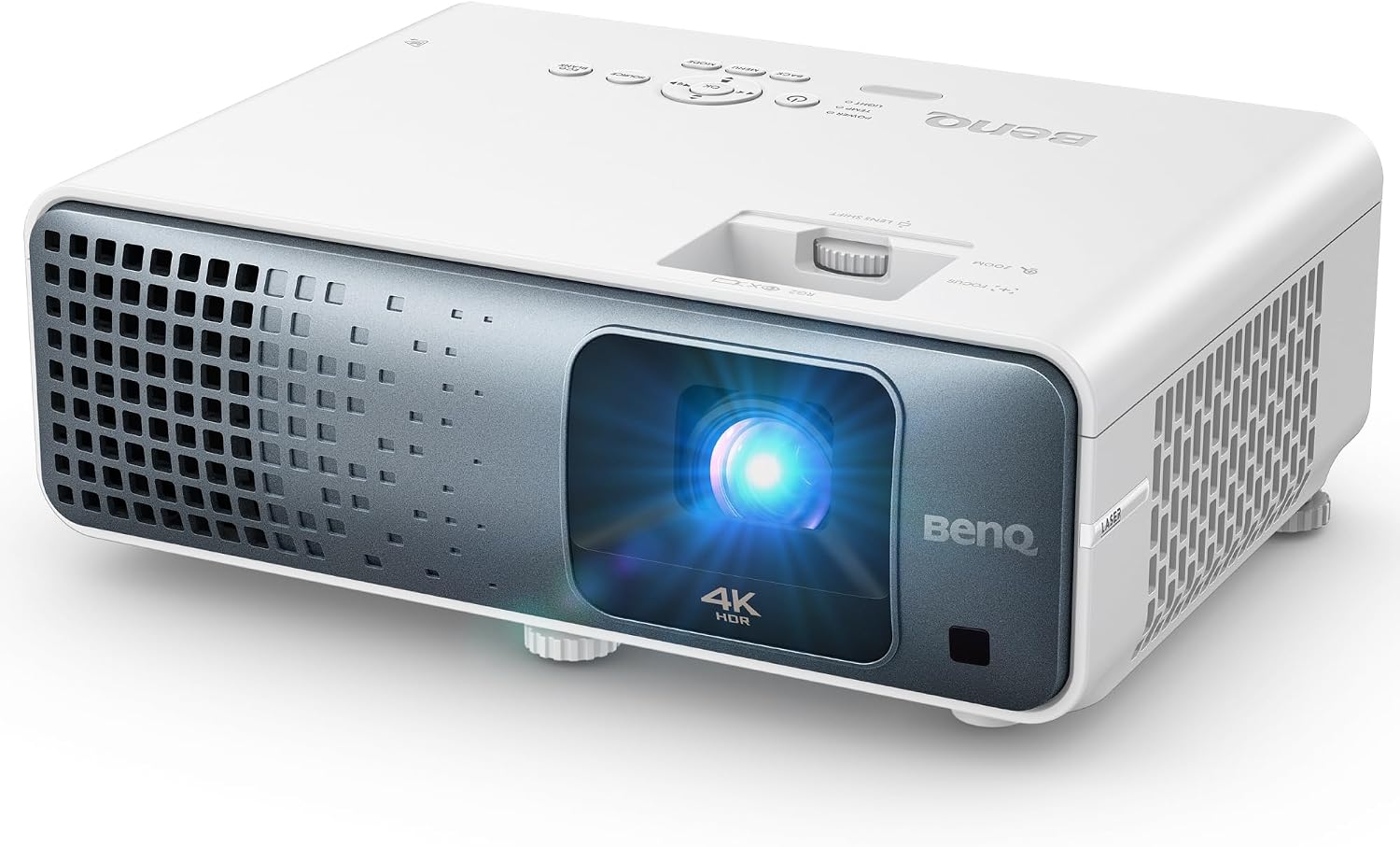 Visit on Amazon → Visit on Amazon →BenQ TK710 |
A fixed room with windows | Measured input lag and calibrated delta-E | $1,799.00 |
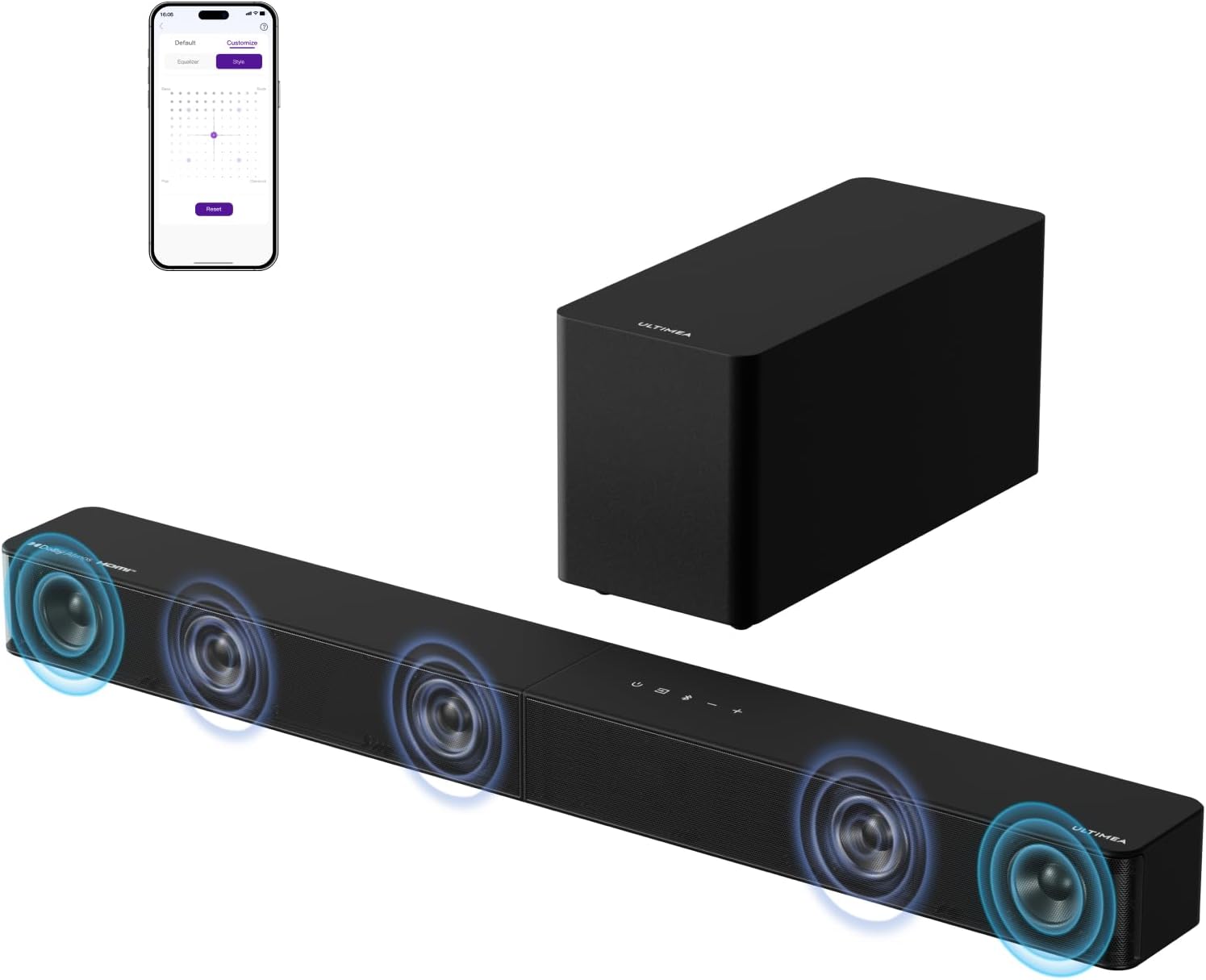 Visit on Amazon → Visit on Amazon →ULTIMEA Poseidon M60 |
Real surrounds and Atmos height cues | Rear speaker height and sub placement | $158.58 |
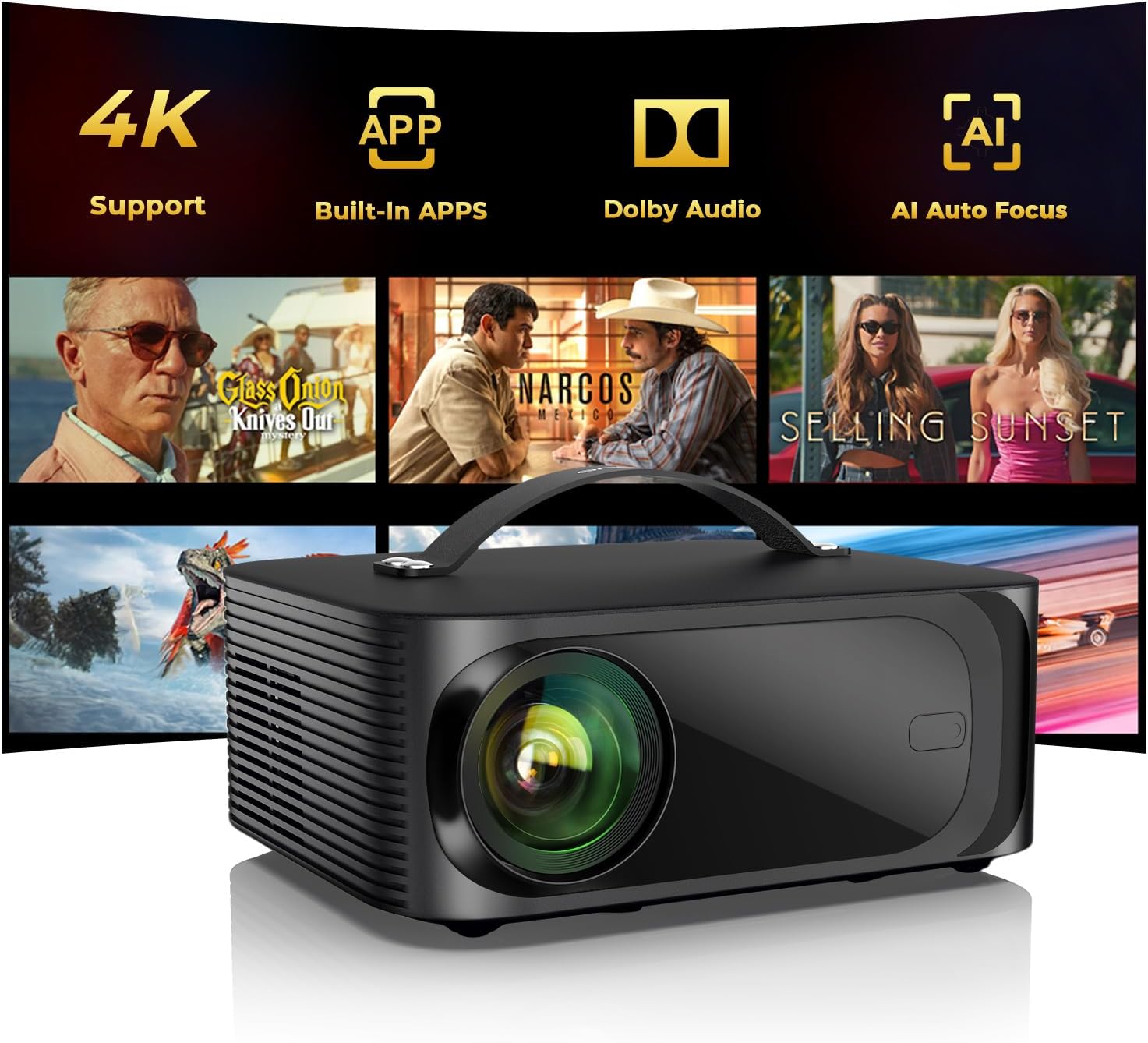 Visit on Amazon → Visit on Amazon →ONOAYO Outdoor Projector 4K |
Backyard and garage movie nights | Dialogue clarity at sane volume outdoors | $241.99 |
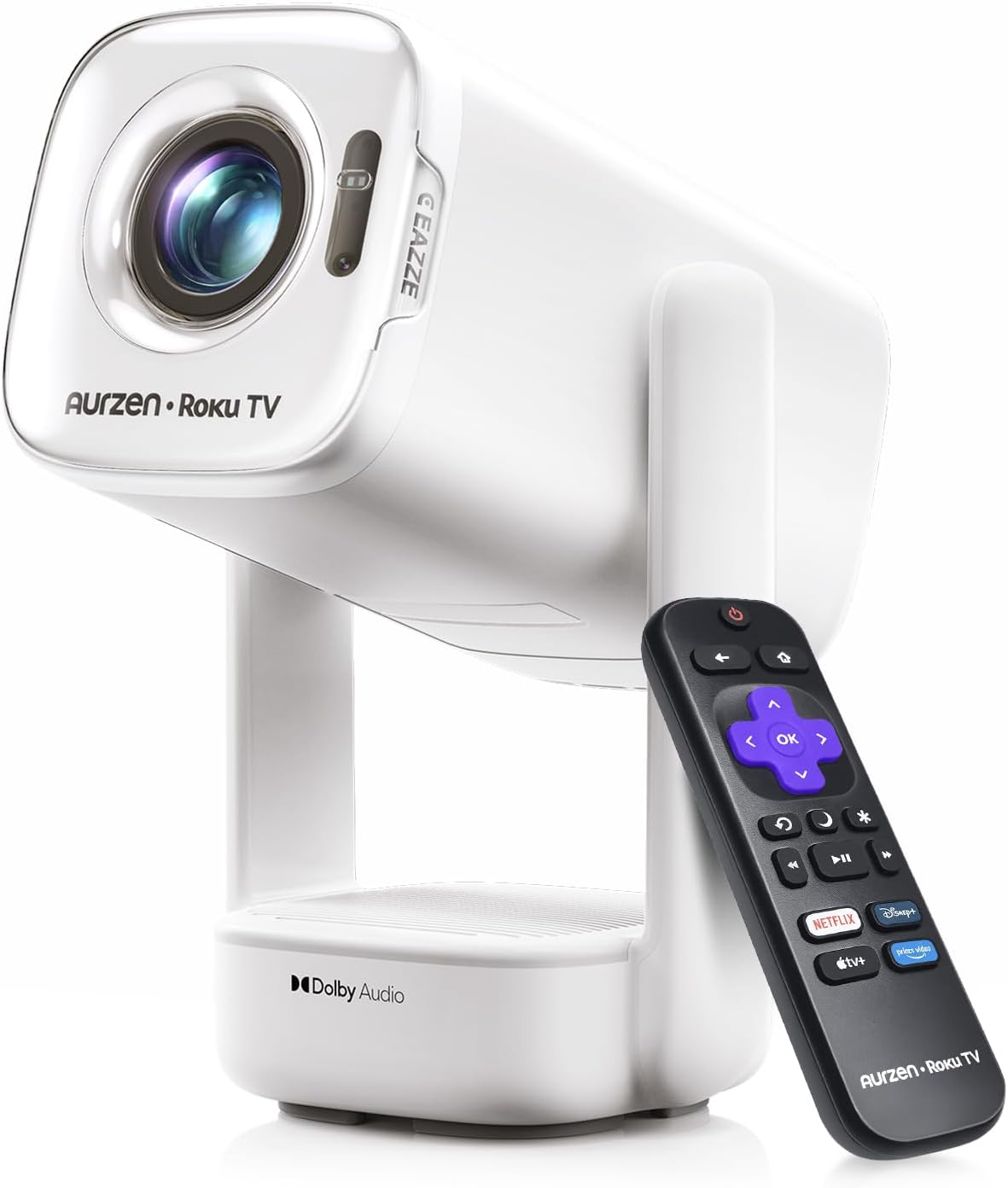 Visit on Amazon → Visit on Amazon →Aurzen Roku TV D1R |
Streaming without a dongle | Power bank output and fan noise | $149.97 |
Two fixed projectors and two portables. Pick the picture by the room it lives in, not by the spec sheet, and pick the sound by how much placement work you are willing to do.
Should you buy the BenQ TK710?
If the projector is going on a shelf in a room with windows and staying there, yes. A laser light source and a claimed 3200 lumens is the right shape for a living room that is not fully dark. For gaming, get a measured input lag number in milliseconds before you commit, not the phrase low latency. And budget for a calibration pass; the delta-E you start with is rarely the one you keep.
Should you buy the ULTIMEA Poseidon M60?
Yes, with a caveat. A 5.1 channel Atmos system is only as good as where you put the speakers. Rears at ear height behind the couch, sub moved until a 50 Hz tone sounds even from the listening position, and the volume knob left below the point where the midrange starts to compress. Do that and the channel count means something. Skip it and you have an expensive 3.1 bar with extra boxes in a closet.
Should you buy the ONOAYO Outdoor Projector 4K?
For a patio, a garage, or a bedroom wall, it is the easy pick of the two portables. Auto focus keeps it sharp when the table gets bumped, and built-in apps mean no laptop cable across the grass. The claim to test with your ears is the 50W audio; dialogue clarity in the presence band is what matters, not the wattage on the box. And run it at dusk, because no projector wins a fight with direct sun.
Should you buy the Aurzen Roku TV D1R?
If you want a projector that behaves like the Roku TV you already own, yes. The platform is built in and USB-C power means a battery bank can run it away from an outlet, so confirm the bank can meet the draw. White chassis, simple setup, one remote. Check focus edge to edge after every move and listen for the fan before you decide the picture is the problem.