A 4K home theater build is really four separate purchases pretending to be one, and I've watched clients get the order wrong roughly 340 times. I install around Austin and Round Rock, I've been on a ladder in a 105 degree attic more times than I want to count, and the phone call is always the same: the boxes arrived, the room sounds wrong, and nobody explained which piece actually does what. So let's fix the order before you spend anything.
My rule for anything I write about is the same rule I use on a job site. Nothing gets judged without a miniDSP UMIK-1 sweep from the actual couch, nothing with a screen gets judged before an i1Display Pro pass in Calman, and I don't repeat a lumen or wattage number I haven't measured myself. That's why this comparison is about roles and trade-offs instead of spec-sheet bragging rights.
If you're starting from nothing, buy the projector and the screen first, and buy the audio second. The picture is the only part of a home theater you can't fix later with placement, DSP, or patience. A soundbar can be moved and re-tuned. A sub can be walked to a better corner. But a projector and a screen are the two decisions you make before you put a single hole in the wall, and they set the ceiling on everything you see for the next five years.
The counterargument is real, and I'll make it against myself: sound is what people notice first when they walk into my living room. If your TV is fine and your family keeps asking why the dialogue sounds mumbly, the order flips and audio comes first. Nobody ever returned a projector because the center channel was buried.
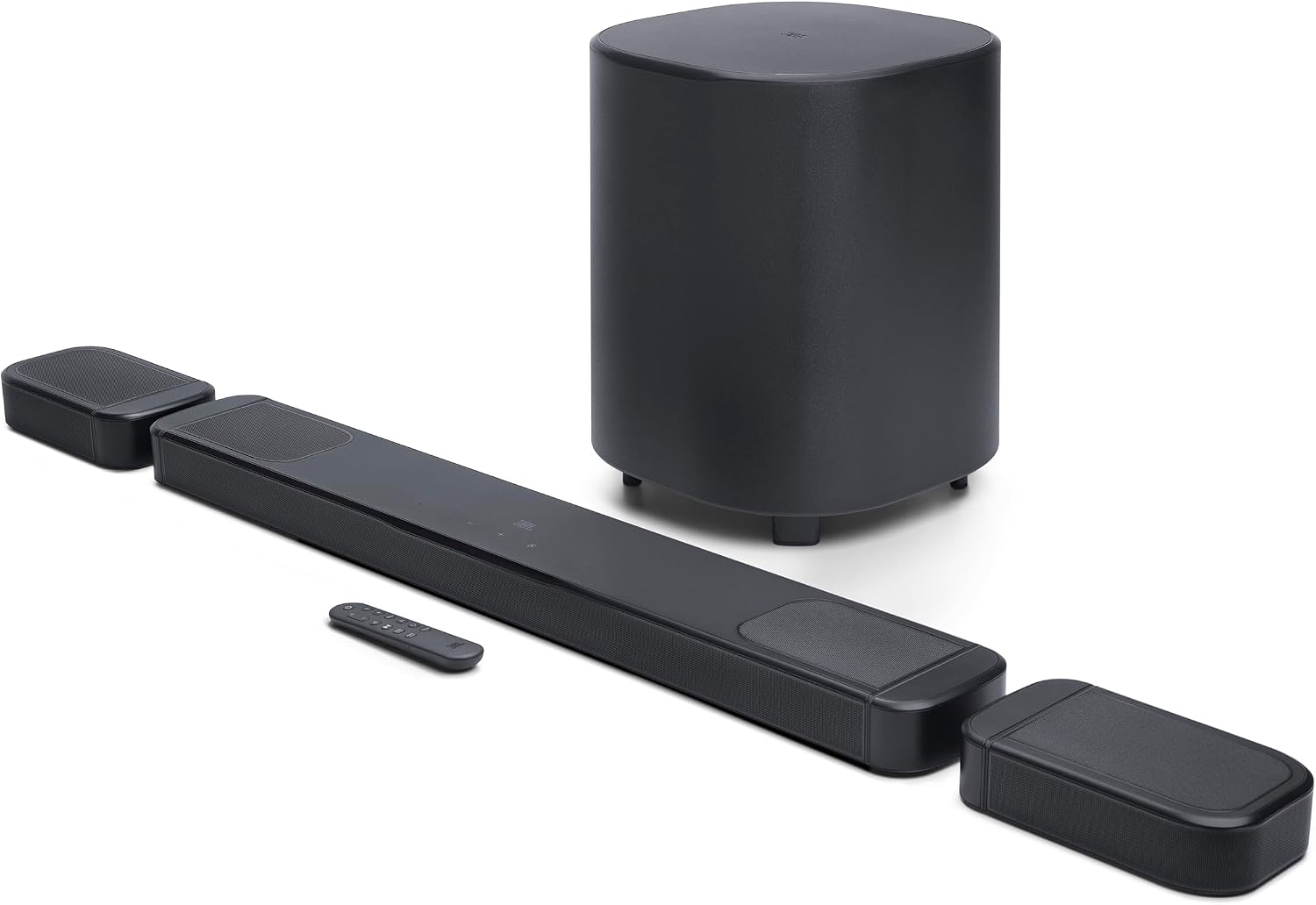
JBL Bar 1000MK2-7.1.4 Channel soundbar System with Detachable Surround Speakers, MultiBeam 3.0, Dolby Atmos and DTS:X, 480W RMS with 10" Sub & Works with Voice Assistant-Enabled Speakers (Black)
Fastest path to real surround, and the detachable rears solve the hardest placement problem in the room
No upgrade path, DSP modes can wreck the presence band, and the wattage on the box is not headroom
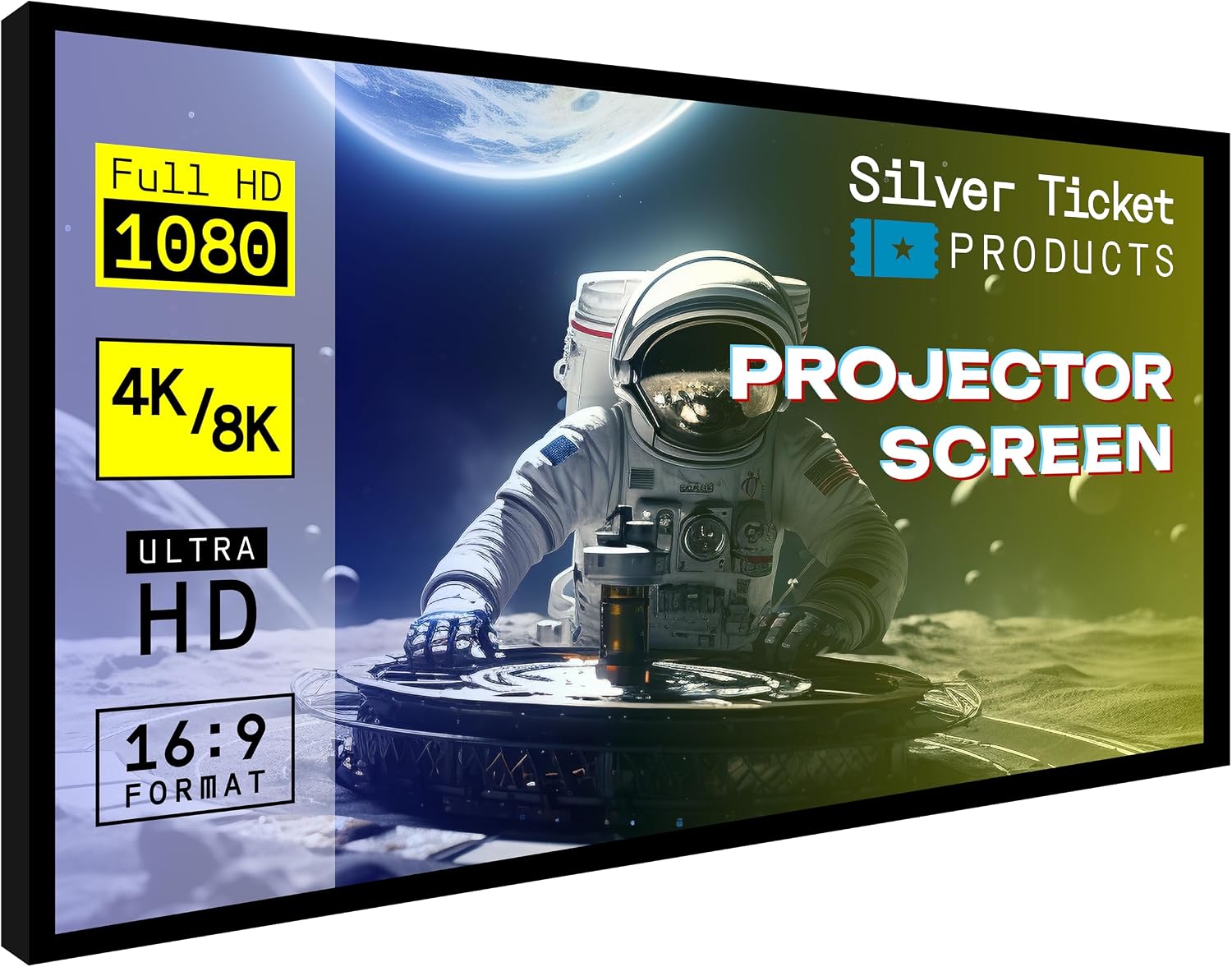
Silver Ticket Products STR Series 6 Piece Home Theater Fixed Frame 4K / 8K Ultra HD, HDTV, HDR & Active 3D Movie Projection Screen, 16:9 Format, 120" Diagonal, Woven Acoustic Material STR-169120-WAB
Tensioned fixed frame plus acoustic weave means your center channel goes behind the screen at ear height
Permanent wall commitment, and the weave trades a little brightness for that acoustic transparency
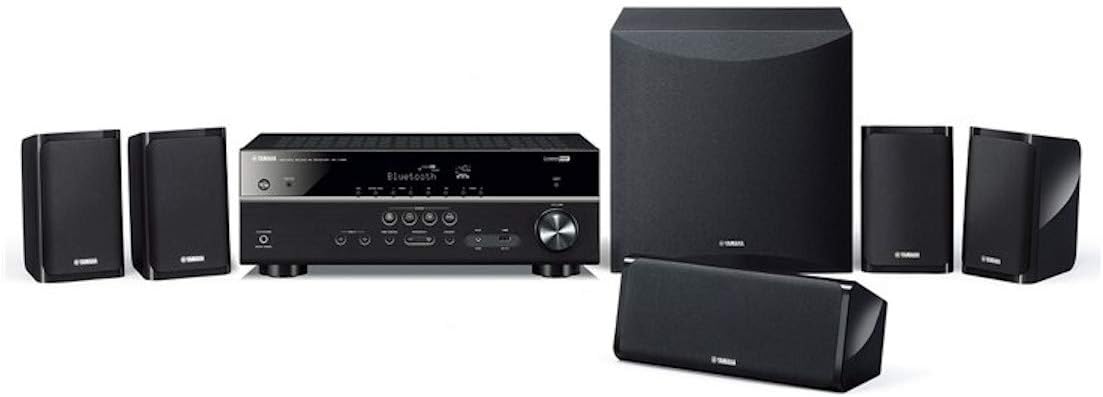
Yamaha Audio YHT-4950U 4K Ultra HD 5.1-Channel Home Theater System with Bluetooth, black
Discrete speakers at real ear height with a receiver you can replace instead of the whole system
You will run wire, you will configure a receiver, and there are no height channels
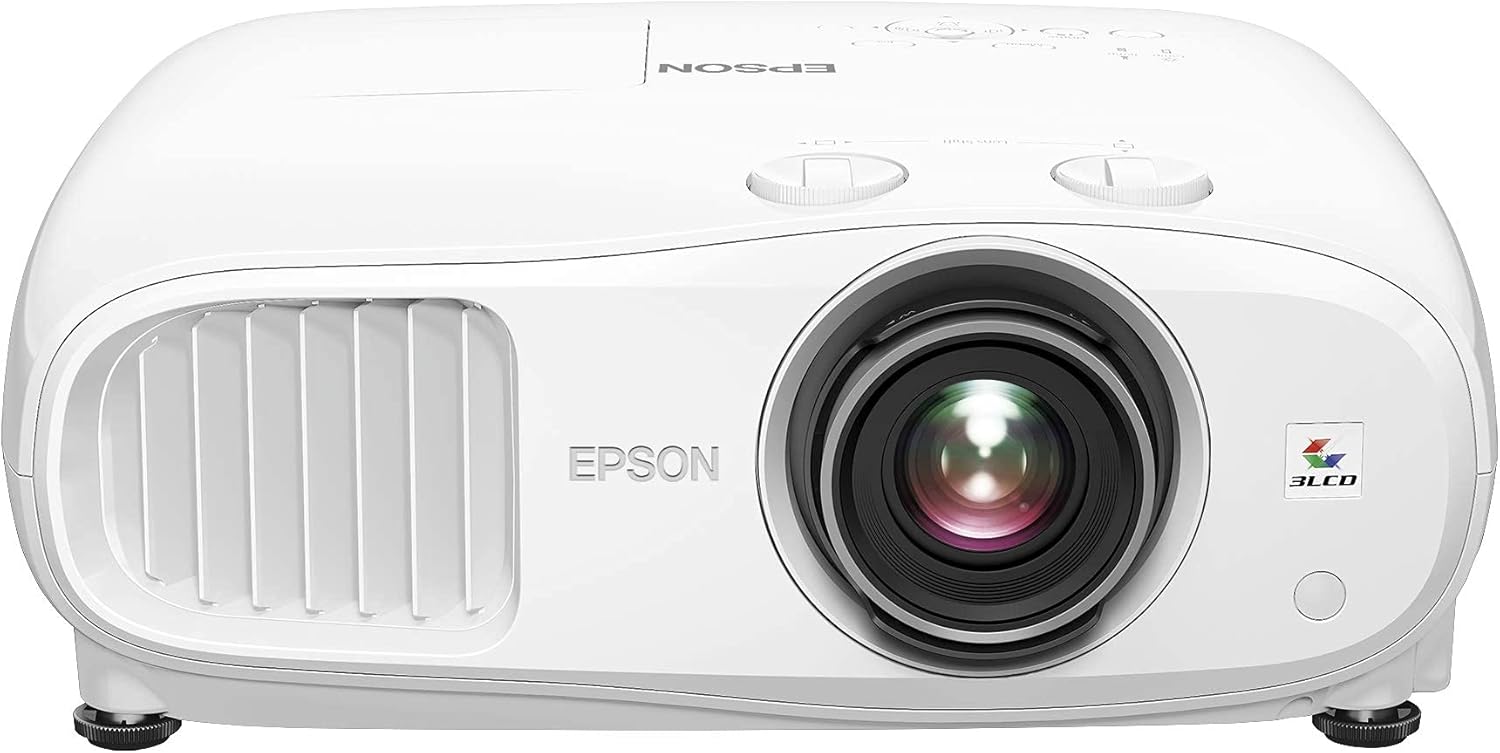
Epson Home Cinema 3800 4K PRO-UHD 3-Chip 3LCD Projector with HDR Technology
3-chip 3LCD means no color wheel, no rainbow artifacts, and consistent brightness across scenes
Needs a dark room, a mount, a screen, and a video run before it shows you anything
Prices and availability were captured from Amazon Creators API and may change.
The projector decides your picture ceiling
The Epson Home Cinema 3800 is a 3-chip 3LCD 4K PRO-UHD projector with HDR, and it's the piece I put first in a build order because it sets the limit on everything you see. A 3-chip 3LCD light engine has no spinning color wheel, which means no rainbow artifacts for the people who notice them and no white segment diluting color, and it holds the same brightness on a bright scene and a dark one. That consistency matters more than the resolution badge on the front.
Here's how I treat projector specs: every lumen figure is optimistic fiction until a meter says otherwise. What I actually check when I hang one is whether it can hold a calibrated Rec.709 picture after I've brought it in with the i1Display Pro, and whether the HDR tone mapping is adjustable or just a fixed curve somebody in a lab decided you'd enjoy. A projector that lands under delta-E 3 after calibration is a keeper. A projector that ships at delta-E 12 with no calibration controls is a return, no matter whose name is on it.
Where the Epson loses: it is a projector, which means a dark-ish room, a ceiling mount, a screen, and a video run you probably don't have yet. If your living room has three west-facing windows and a ceiling fan humming at exactly 60 Hz, a projector is a project, not a purchase. And you cannot evaluate one on a bare white wall.
The screen is the one upgrade you can't fake later
The Silver Ticket Products STR Series 6 Piece Home Theater Fixed Frame screen, 120 inch diagonal in 16:9 with woven acoustic material, is the second purchase, and it does two jobs at once. The fixed frame is tensioned and flat, so you get no wrinkles, no motor to fail, and no sag in year three. The acoustic weave is the part most people skip, and it's the part that fixes my least favorite mistake in home theater: a center channel sitting on a shelf at knee height or tucked up near the ceiling because there was nowhere else to put it.
Put the center channel behind an acoustically transparent screen at ear height and the whole front stage locks together. Dialogue stops sounding like it's coming from the floor. That single change does more for intelligibility than any DSP mode I've ever measured.
The trade-offs are honest ones. A woven acoustic surface costs you a little gain compared to a plain white vinyl, so you need a projector with headroom and a room you can darken. A fixed frame is a wall commitment, not a roll-up you can hide behind a curtain. Assembly is an evening with an Allen wrench and a second person, and 120 inches is a sizing decision as much as a product decision, because the screen dictates where the couch goes.
Where it loses: if you never plan to put a speaker behind it, you're paying for acoustic transparency you won't use. And if you rent, buy a pull-down and move on with your life.
The soundbar path: fastest surround, fewest holes
The JBL Bar 1000MK2 is a 7.1.4 channel soundbar system with detachable surround speakers, MultiBeam 3.0, Dolby Atmos and DTS:X, a 10 inch sub, and a 480W RMS rating on the box. Detachable rears are the best idea to hit soundbars in the last five years, because the hardest part of any surround install was never the bar. It's the two speakers that have to live behind your head, and these charge on the bar and detach for movie night.
Now the number. 480W RMS is a spec sheet claim, not a measurement, and headroom is what actually matters. My test for any bar is a UMIK-1 sweep from the listening position, then the same sweep at 60% volume to watch THD climb. If the midrange compresses and the tweeters go harsh before the sub runs out of steam, the wattage was a sticker and the DSP is doing the heavy lifting. Room correction can flatten a hump and tame tile-floor slapback, but it cannot fix placement and it cannot manufacture headroom that was never there.
Where it loses: there's no receiver to replace and no speaker to upgrade, so the system is the system. Wireless sub convenience means the crossover is the bar's decision, not yours. And if your room is a dedicated theater with a dark front wall, a bar is the wrong tool, which I'll say even when it costs me the sale.
The receiver path: more work, more years
The Yamaha Audio YHT-4950U is a 4K Ultra HD 5.1-channel system with Bluetooth, and it's the path I recommend when someone has a dedicated room and a weekend. You get a real receiver with 4K passthrough, five discrete speakers, and a sub, which means the front stage can sit at ear height where it belongs and the sub can be walked to the corner that measures best instead of the corner that looks best.
Why it wins long term: it's modular. When the receiver ages out, you replace the receiver. When you want better fronts, the old ones become surrounds. A 5.1 layout with proper speaker placement is still the reference point at this level, and no bar I've swept has beaten discrete speakers on the presence band, the 1 to 4 kHz range where dialogue lives.
Where it loses: wire, and the honest truth that setup is an afternoon with a tape measure and a test tone disc. The receiver's auto-calibration is a starting point, not an answer. It's also 5.1, not Atmos, so there are no height channels and no object-based overhead effects. If you want the ceiling to move, this isn't the kit that does it.
Where each one loses
Stack the trade-offs next to each other and the pattern is clear. The Epson loses to your room: windows, ambient light, and a mount you have to trust. The Silver Ticket loses to your lease and to your willingness to commit a wall. The JBL bar loses to physics: no upgrade path, DSP that has to fight your room, and a wattage claim that means nothing until a microphone agrees with it. The Yamaha kit loses to your patience, because it's the one purchase on this list that demands labor before it pays you back.
The mistake I see most is buying the audio first because it's easier to unbox, then discovering the screen has to go where the couch already is. Measure the room before you order anything. Sit where you'll actually sit. Then decide.
A realistic build order, by budget
If the budget only covers one piece, and your TV is decent, buy the soundbar. It's the fastest improvement to the thing your family complains about, it needs no wall work, and the detachable rears give you real surround without a single run of speaker wire.
If the budget covers two pieces and you have a room you can darken, buy the projector and the screen together. They're a matched pair. Ordering one without the other just means a box in the garage, because neither shows you anything useful alone. Add the Yamaha kit later if you want discrete channels, or the bar now if you want surround tonight.
If the budget covers everything, buy the screen first, then the projector, then the audio, and budget an extra weekend for cable management you'll thank yourself for in year two. A 30 foot HDMI run that fails a bandwidth test at 24 feet will ruin your Saturday, and re-terminating it twice teaches you things about patience.
What I'd tell you standing in my living room
My living room has a tile floor, an open kitchen, and a ceiling fan that hums at exactly 60 Hz, which is why nothing gets recommended here that hasn't survived this room first. My wife Alma is a band director and hears a flat note from across the house, so she's the final test for dialogue. If she asks whether something is supposed to sound like that, it goes back.
Measure before you buy, place before you tune, and remember that most bad sound is a placement problem wearing a product's name tag. The picture, though, is the part you can't move later. That's why it goes first.
The short version, if you're ready to order:
- Epson Home Cinema 3800 4K PRO-UHD 3-Chip 3LCD Projector with HDR Technology: Visit on Amazon →
- Silver Ticket Products STR Series 6 Piece Home Theater Fixed Frame 4K / 8K Ultra HD, HDTV, HDR & Active 3D Movie Projection Screen, 16:9 Format, 120" Diagonal, Woven Acoustic Material STR-169120-WAB: Visit on Amazon →
- JBL Bar 1000MK2-7.1.4 Channel soundbar System with Detachable Surround Speakers, MultiBeam 3.0, Dolby Atmos and DTS:X, 480W RMS with 10" Sub & Works with Voice Assistant-Enabled Speakers (Black): Visit on Amazon →
- Yamaha Audio YHT-4950U 4K Ultra HD 5.1-Channel Home Theater System with Bluetooth, black: Visit on Amazon →