Related: Projector Screen Size: How Big Is Too Big for Your Room
I have hung screens in attics that hit 118 degrees and in converted garages where the wall was out of plumb by two inches. Fifteen years and roughly 340 installs later, the same three things still decide whether a home theater projector screen setup looks like a theater or like a bedsheet taped to a wall: the screen surface, where the sound comes from, and one cable nobody wants to pay for.
Here is what nobody tells you when the projector arrives. The image is usually not the projector's fault. It is the screen, the light in the room, and whether dialogue is arriving from the right place. I have watched an expensive projector look worse than a cheap one because the screen was wrinkled and the soundbar was sitting on the floor. So this guide is built the way I build a room: screen first, sound second, cable last, because the cable is the cheapest part and the one that kills the most installs.
A quick word on how I judge gear, because it explains everything below. Spec sheets are optimistic fiction until a microphone says otherwise. Every bar I install gets swept with a UMIK-1 from the actual couch, and every projector gets calibrated with an i1Display Pro in Calman. Nothing here is a lab number. It is what survives a tile floor, a ceiling fan that hums at 60 Hz, and my wife Alma, a band director who hears a flat note from across the house.
The Foldable 120 Inch Screen I Hang Most Often
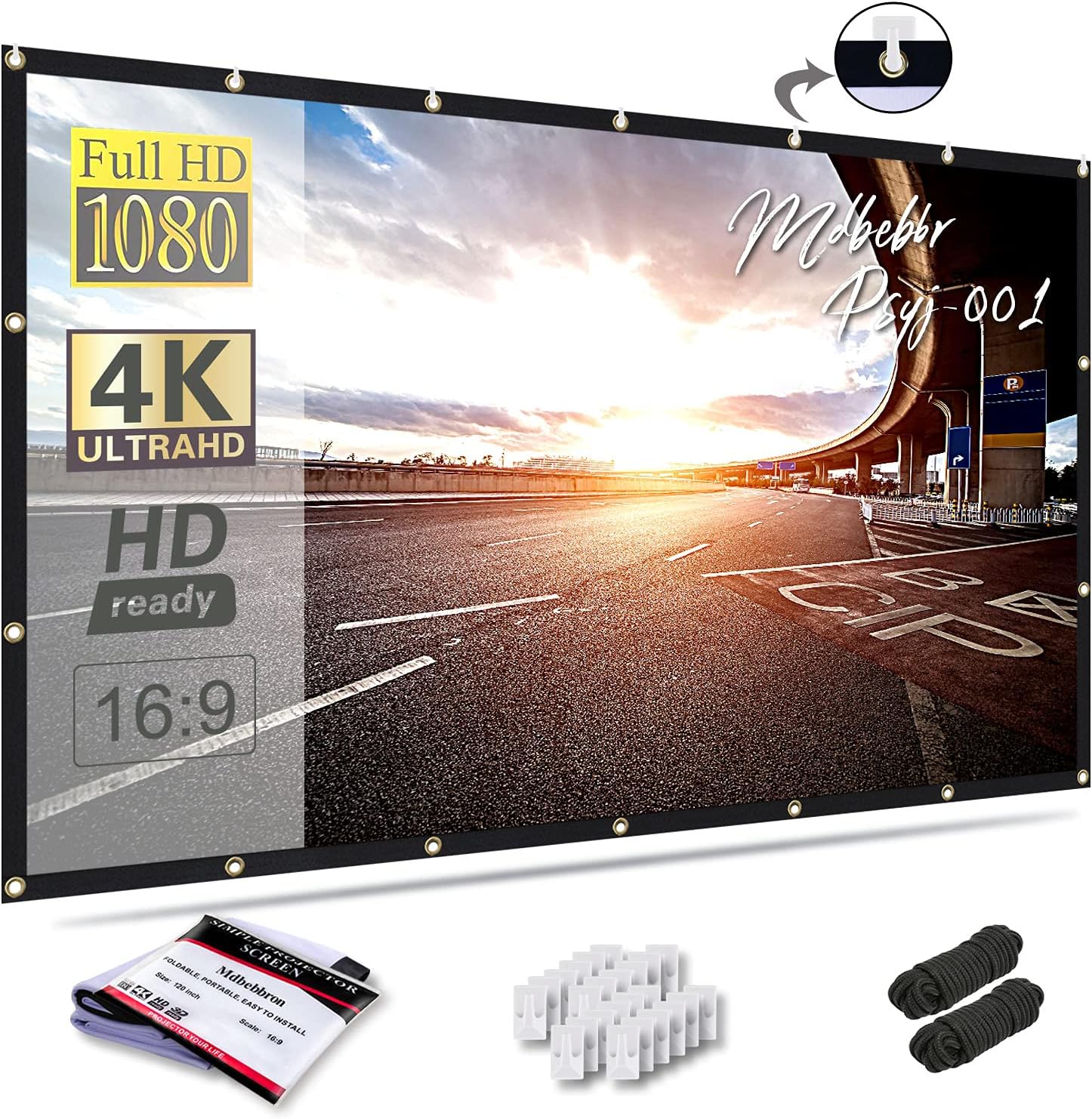
Most of my clients rent, or they want the screen gone when it is not movie night. That is why the Mdbebbron 120 inch foldable screen rides on my truck more than any other surface. It is 16:9, it folds instead of rolling, and it supports double sided projection, which matters when the kids want to watch from the patio side on a warm night.
The anti-crease part is the claim worth caring about, because wrinkles are what actually ruin a projected image. A crease shows up as a soft bright line across a face, and no amount of focus fixes it. Fold it the same way every time, store it flat instead of stuffed into a bag, and pull even tension at all four corners. That is the whole trick, and it is why a foldable works so well in rooms where the screen goes up and down.
Mount it so the bottom edge lands near your seated eye height. I have re-hung dozens of screens that sat a foot too high because somebody matched the TV position. A screen wants your eyes in the lower third of the image. That is the difference between a movie and a slideshow.
When the Movie Moves Outside
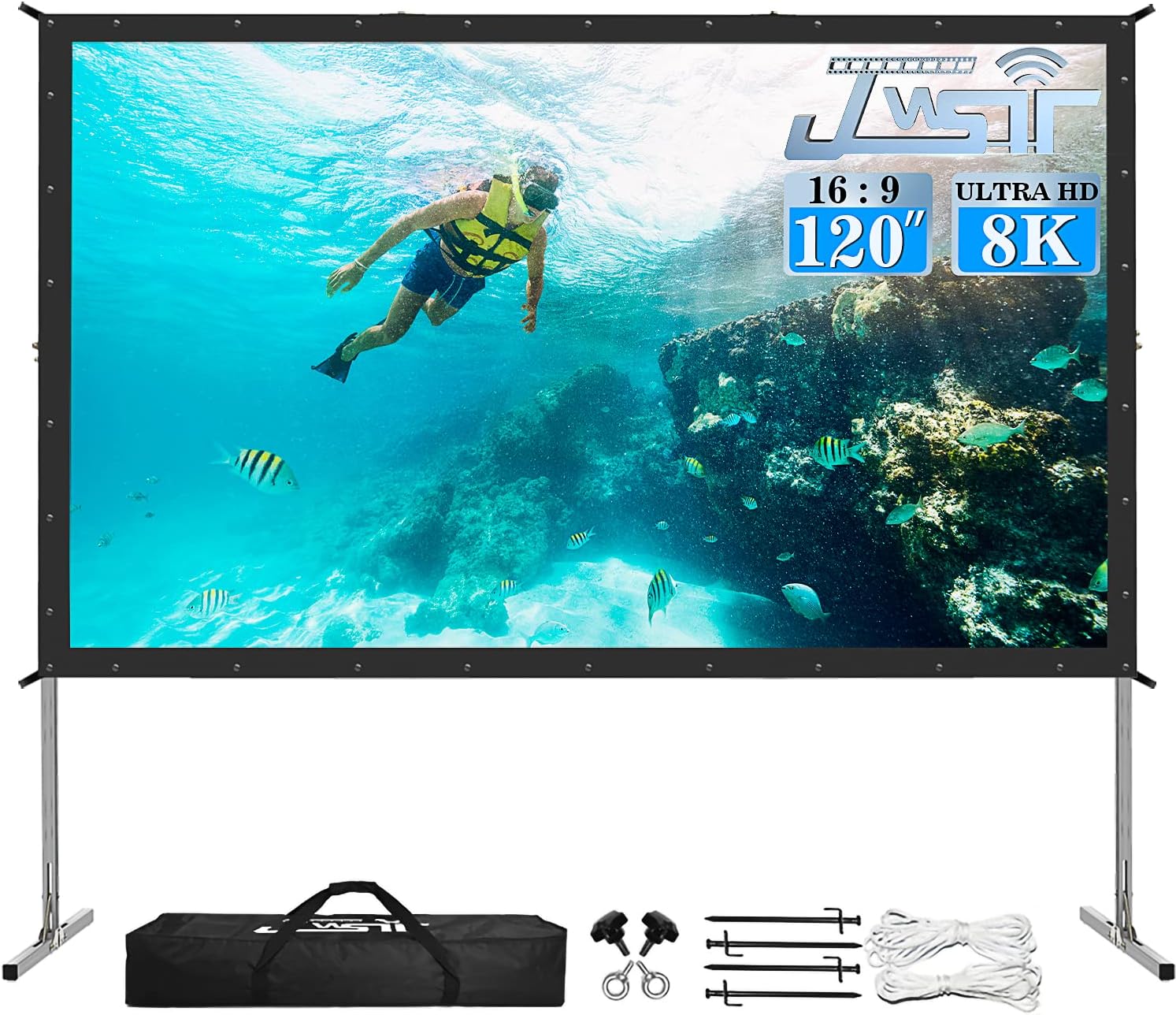
The 120 inch outdoor screen with the 3-layer PVC surface is the one I hand to clients who say "backyard" and "football" in the same sentence. PVC wipes clean, does not soak up humidity the way cloth does, and shrugs off the pollen that coats everything in Central Texas by April.
Outdoor screens live or die on setup, not on specs. Get the frame square before you tension anything, because a twisted frame pulls the surface into a diagonal wave that no projector can hide. Weight the base. A screen that flaps in a breeze is worse than no screen, and I have watched a gust turn a family movie night into a scramble. If it stays up permanently, check the top corners after the first big storm.
Indoors it behaves like any PVC surface: bright, even, and easy to keep clean with a damp cloth. It is heavier than a foldable, so plan the mount before you buy the hardware.
The Sound Bar I Put Under Screens
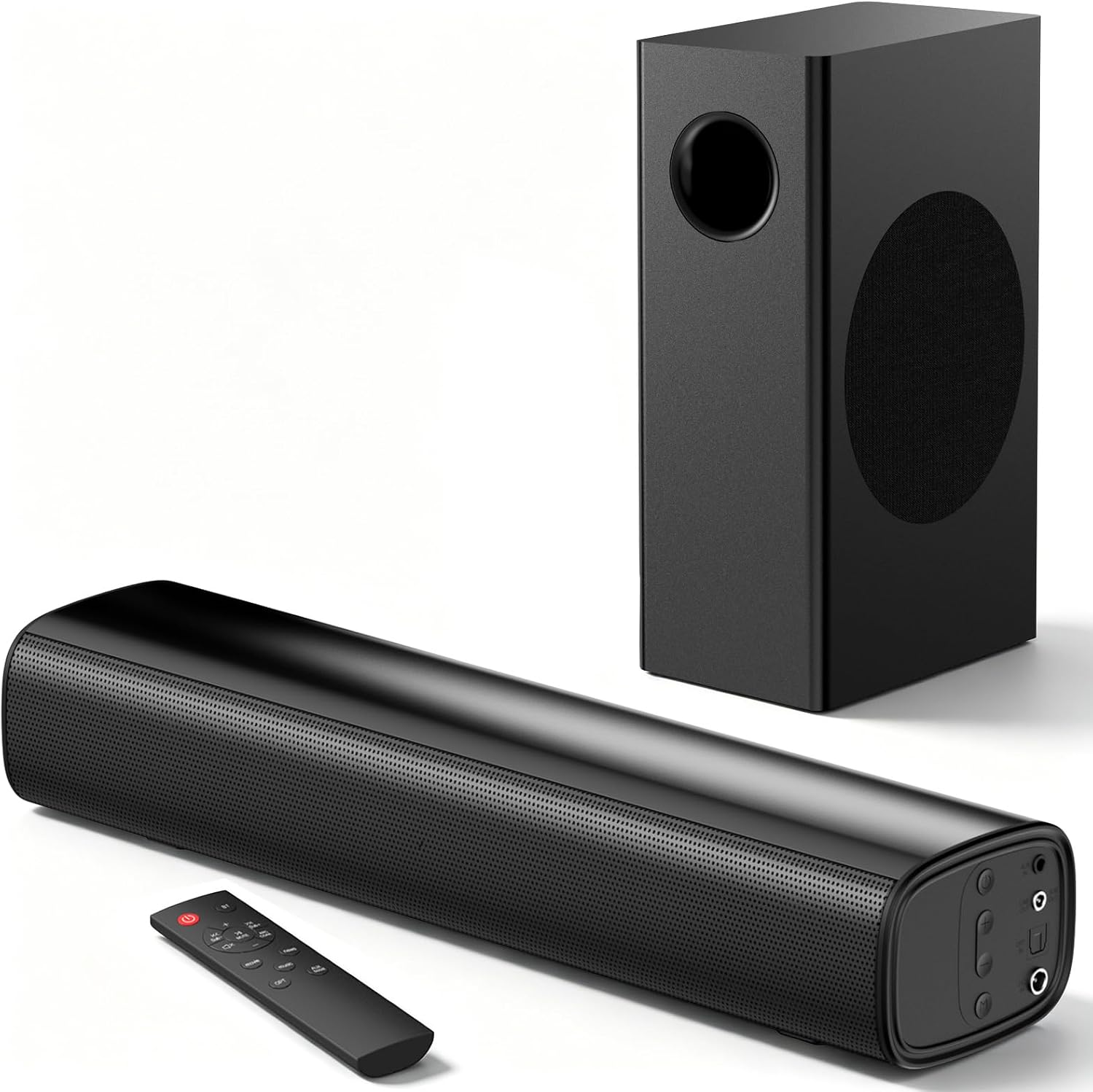
The 70W 2.1 channel sound bar with wired subwoofer is the bar I recommend when someone has a projector and a budget. A wired subwoofer sounds old fashioned until you have watched a wireless sub drop out during a quiet scene. A cable does not need to pair, does not need a handshake, and does not decide to sleep in the middle of a conversation.
Placement is where most people lose the money they already spent. The bar goes at ear height or as close as your furniture allows, never on the floor and never inside a closed cabinet. The sub goes in a corner or along a wall, and you should move it and listen instead of trusting the marketing diagram. I use a 50 Hz sine tone and a tape measure, check four positions, then commit. Low frequencies pile up in corners, and the wrong corner turns a tidy sub into a boom that muddies dialogue.
Dialogue lives in the presence band, roughly 1 to 4 kHz. If a bar scoops that range out, actors mumble no matter what the wattage sticker claims. This one is voiced for television first, which is exactly right for a screen that mostly shows series, sports, and the same animated movie four hundred times. Run its room correction once, then leave the surround modes alone.
The Cable That Decides Whether eARC Works
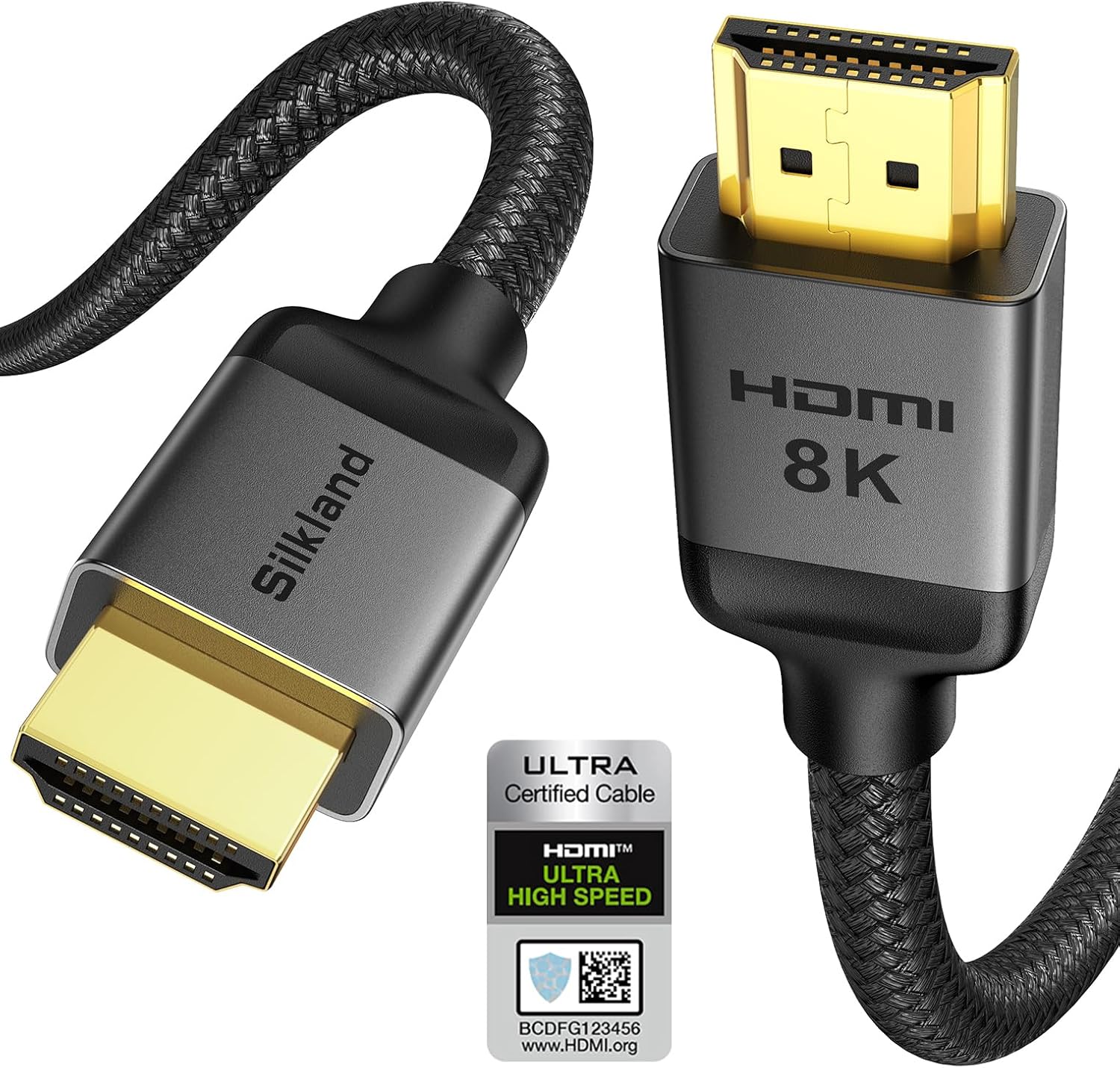
The Silkland certified HDMI 2.1 eARC/ARC cable, 3.3 feet, 48Gbps, is the part people try to save money on and then blame the soundbar. This is the run from the TV's eARC port to the bar, and it is short on purpose. Three feet is the right length for a bar sitting under a wall mounted TV. Do not buy a 3.3 foot cable to cross a room, and do not buy a 25 foot cable to do a three foot job, because long passive runs are exactly where 48Gbps falls apart.
Certification matters here. I test long HDMI runs with a pattern generator, and I have watched a 30 foot run fail partway through, which is why I re-terminate cables and keep the short ones short. For eARC the cable carries audio back from the TV to the bar while the TV receives video, and a marginal cable shows up as dropouts, lip sync drift, or a bar that simply will not wake up with the TV.
Plug it in once, route it with slack, and leave it alone. Cable management is not glamorous, but a stressed connector at a right angle is a future failure.
How I Set This Up in a Real Room
Every room gets the same sequence. Screen first: hung level, tensioned, bottom edge at seated eye height, and seats inside the projector's throw. Light second: blackout wherever I can get it, because ambient light does more damage to contrast than any setting in the menu.
Sound third. I sweep the bar from the couch with the UMIK-1 before and after its room correction runs, and I find where the sub lands with a sine tone. Then the cable, then the calibration pass on the projector with the i1Display Pro, targeting Rec.709 for HD content.
The ceiling fan is a real variable. Mine hums at 60 Hz, and so does yours if you sit still and listen. That hum sits right where a subwoofer works, which is one more reason to place the sub by ear and measurement instead of by the picture in the manual.
What Actually Matters
Price predicts marketing, not performance. I have heard inexpensive bars beat expensive ones on dialogue, and I have heard expensive bars compress and go harsh before the volume knob hits 60 percent. That is what THD looks like in real life: the midrange stops growing and starts sounding strained.
Screens are simpler. Surface condition beats brand. A cheap screen pulled flat and hung correctly beats an expensive one with a crease down the middle. Cables are simplest of all: certified, short, and correct.
None of this is complicated. It is unglamorous, and unglamorous is what holds up on a Tuesday night when nobody is calibrating anything and everybody just wants the dialogue to be audible.
The Screen and Sound Reference Table
This is the table I keep in my install notes for a screen and sound package. Prices move constantly, so check the listing.
| Product | Best for | Key detail | Price | Notes |
|---|---|---|---|---|
 Visit on Amazon → Visit on Amazon →Mdbebbron 120 inch foldable screen |
Indoor, portable setups | 16:9, double sided projection | $24.99 | Fold and store flat to keep it crease free |
 Visit on Amazon → Visit on Amazon →3-layer PVC 120 inch screen |
Backyard and patio viewing | 3-layer PVC surface | $188.99 | Square the frame before tensioning |
 Visit on Amazon → Visit on Amazon →70W 2.1 sound bar with wired subwoofer |
Dialogue first, projector budgets | Wired subwoofer, 2.1 channels | $59.99 | Bar at ear height, sub by ear not by diagram |
 Visit on Amazon → Visit on Amazon →Silkland certified HDMI 2.1 eARC cable |
The short TV to bar run | 48Gbps, 3.3 feet, certified | $8.99 | Keep it short and leave slack at both ends |
Should you buy the Mdbebbron 120 inch foldable screen?
Yes, if the screen comes down when movie night ends. It is 16:9, it folds instead of rolling, and double sided projection is the feature renters and patio viewers actually use. The anti-crease claim holds only if you fold it the same way every time and store it flat rather than crushed into a bag.
Hang it with the bottom edge near seated eye height and pull even tension at all four corners. Do that and it looks like a much more expensive screen. Skip it and you will blame the projector for a crease you put there yourself.
Should you buy the 3-layer PVC outdoor screen?
Yes, if the screen lives outdoors or comes out for backyard nights. A PVC surface wipes clean and does not soak up humidity the way cloth does, which matters in a climate that goes from 105 degrees to a thunderstorm in an afternoon.
The catch is setup, not the surface. Square the frame before you tension it, weight the base, and check the top corners after the first storm. A screen that flaps in a breeze is worse than no screen at all, and that has nothing to do with what you paid.
Should you buy the 70W 2.1 sound bar with wired subwoofer?
Yes, if dialogue matters more to you than spec sheet wattage. A wired subwoofer means no pairing, no dropouts, and no wireless module deciding to sleep during a quiet scene. Place the bar at ear height, move the sub through a few positions with a sine tone, and run its room correction once.
Then leave the surround modes alone. The modes are where bars usually go wrong, hyping the midrange and wrecking the presence band. Straight mode and a properly placed sub will beat a "cinema" preset every time.
Should you buy the Silkland HDMI 2.1 eARC cable?
Yes, for the short run between the TV's eARC port and the bar. Three feet is the right length for a bar under a wall mounted TV, and certification matters because eARC sends audio back while the TV receives video. A marginal cable shows up as dropouts, lip sync drift, or a bar that will not turn on with the TV.
Do not stretch a short cable across a room and do not use a long passive run for a short job. Buy the right length, route it with slack, and forget about it.
Start with the screen, place the sound where dialogue survives, and use the short certified cable for the short run. That is a home theater that still works on a Tuesday night.