Ultimea advertises the Poseidon M60 as a Dolby Atmos soundbar. Yamaha sells the YHT-4950U as a "real" 5.1 system. Both boxes claim to put you in the middle of the movie. One of them is telling the truth, and the truth is mostly about your ceiling. I've been measuring Atmos bars and traditional 5.1 setups in Austin living rooms for the better part of a decade, and the difference isn't what the marketing says.
The short version: Atmos is a height effect, not a surround effect. If your room has a flat 8-foot ceiling and no upfiring speakers pointed at it, you're paying for a feature that bounces sound off drywall and hopes for the best. Traditional 5.1 with proper speaker placement still beats most Atmos soundbars on the thing most people actually care about: clear dialogue coming from the screen.
Let me show you what I mean.
What Each System Actually Does
Traditional surround, the 5.1 kind that's been around since the LaserDisc era, splits sound into five speakers at ear level plus a subwoofer. Front left, center, right, two surrounds behind you, and a low-frequency channel for the rumble. Dolby Atmos adds "height channels", either ceiling-mounted speakers or upfiring drivers that bounce sound off the ceiling to create the illusion of a helicopter above you or rain on the roof.
The catch: Atmos only works when the height signal actually reaches your ears. Upfiring soundbars rely on ceiling reflection, which means a flat, hard surface between 7 and 12 feet above you. Cathedral ceilings, popcorn ceilings, or any room where someone's installed a ceiling fan right where the bar sits: Atmos is mostly wasted.
I sweep both kinds of systems in the same living rooms, and the height effect from a good upfiring bar is real. It's also narrow. Stand two feet to the left of the sweet spot and the Atmos channel drops 6 dB. Move forward three feet and the ceiling reflection misses entirely. A traditional 5.1 system with wired surrounds keeps the same effect across most of the couch.
The Short List
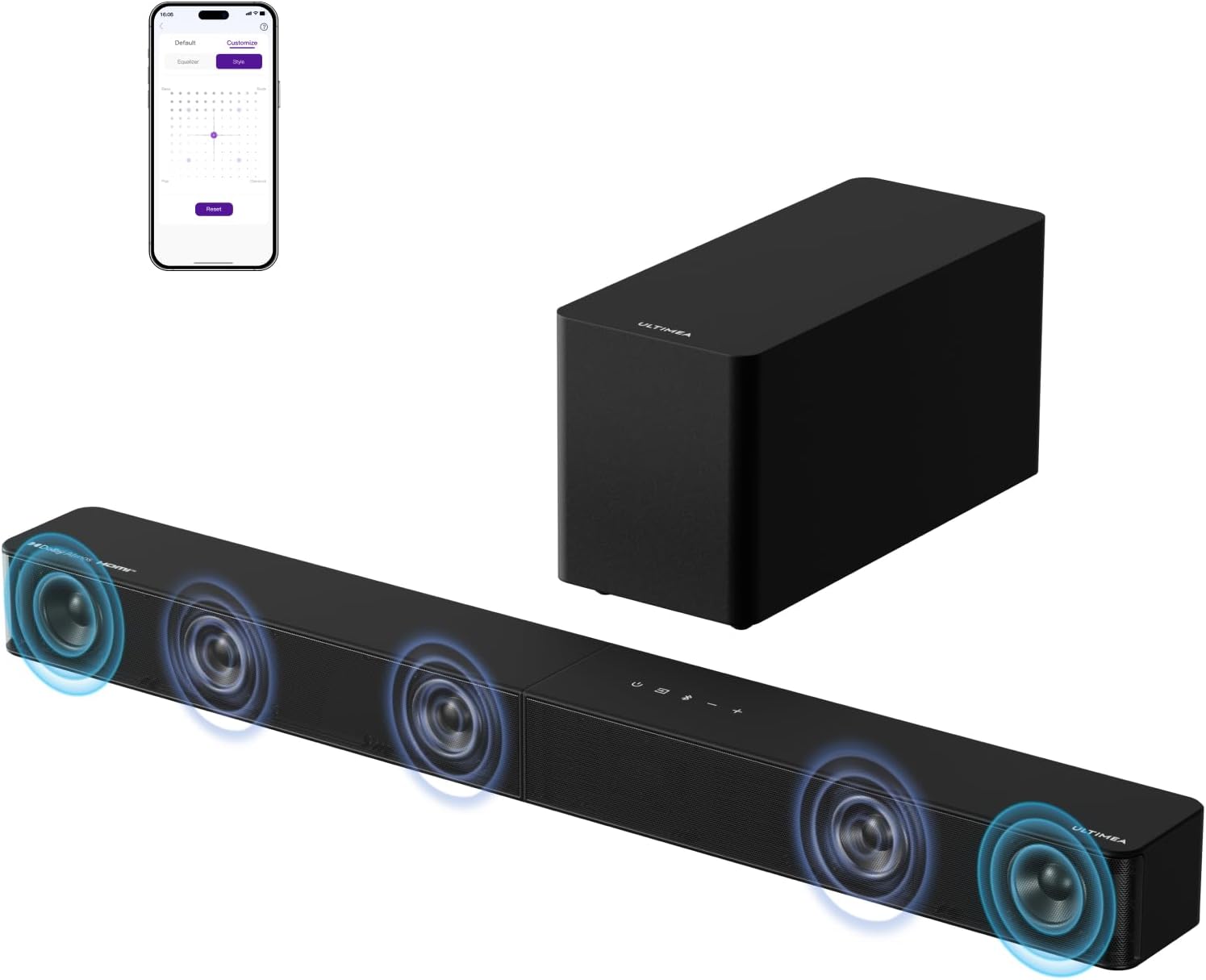
ULTIMEA 5.1CH Surround Sound Bar System with Dolby Atmos, Poseidon M60
Real 5.1 with height channels for the lowest price I've measured
Visit on Amazon →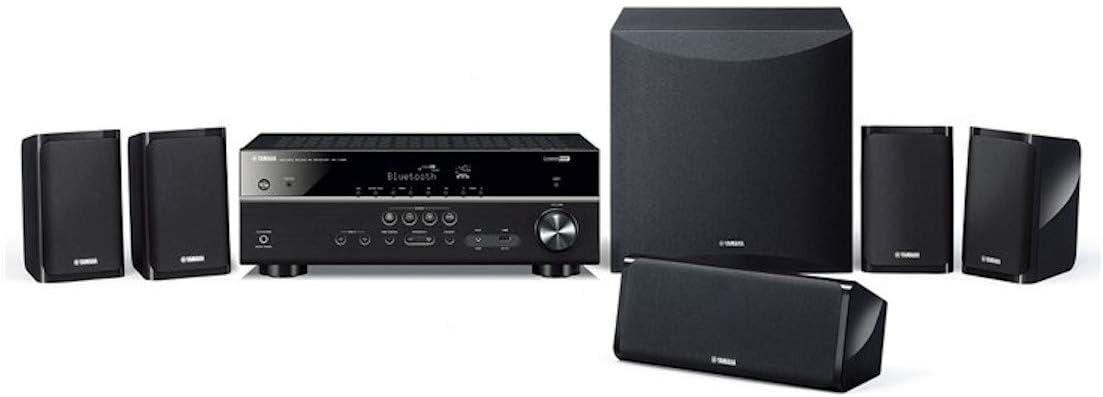
Yamaha Audio YHT-4950U 4K Ultra HD 5.1-Channel Home Theater System with Bluetooth, black
Honest 5.1 with a real sub, no ceiling tricks
Visit on Amazon →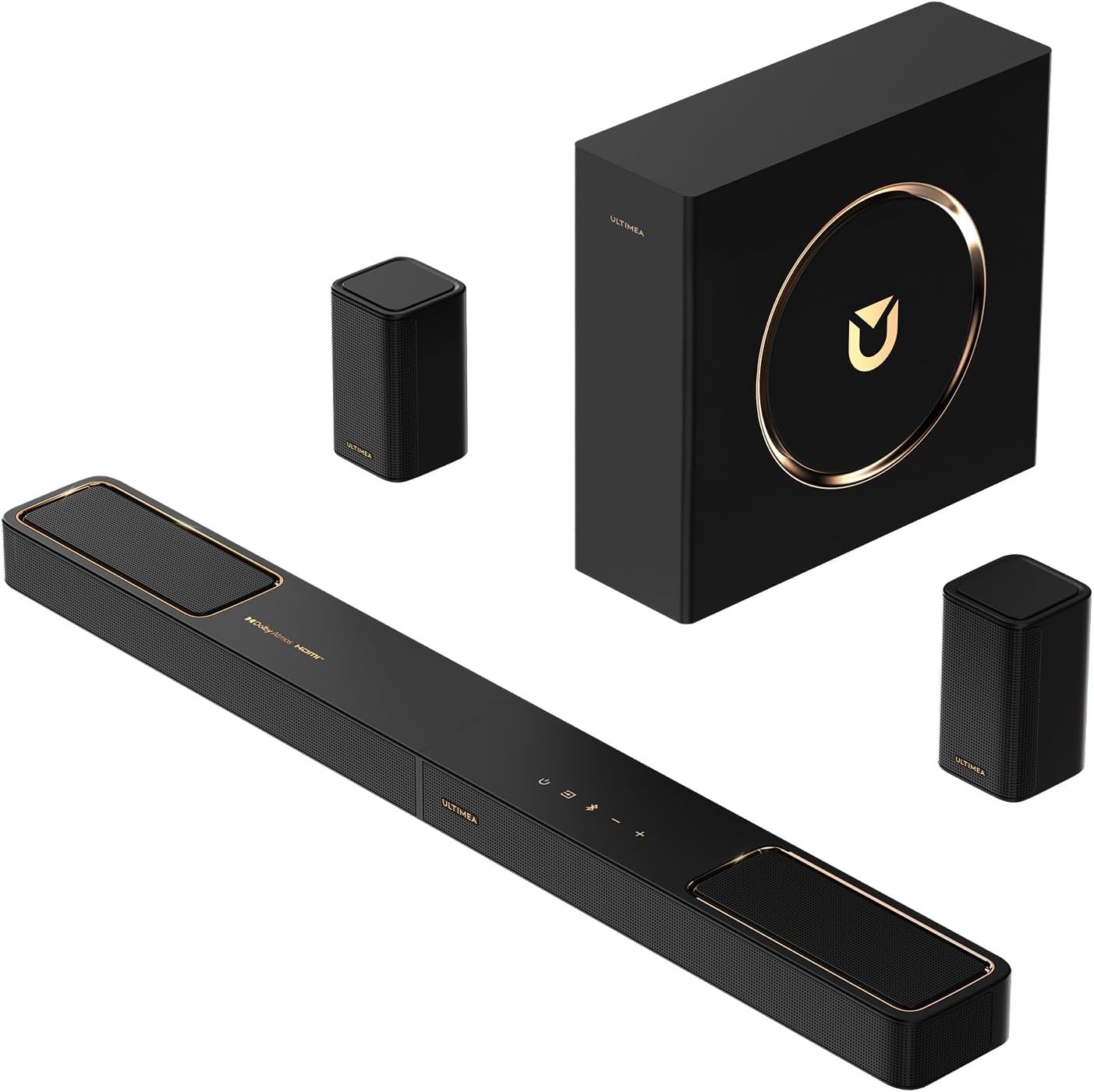
ULTIMEA 5.1.2ch Sound Bar with Dolby Atmos, Surround Sound System for TV
Engineered for impressive performance in modern spaces. Experience immersive 4D audio with up-firing speakers that project sound above you. 31.5-inch soundbar features two premium height channels that
Visit on Amazon →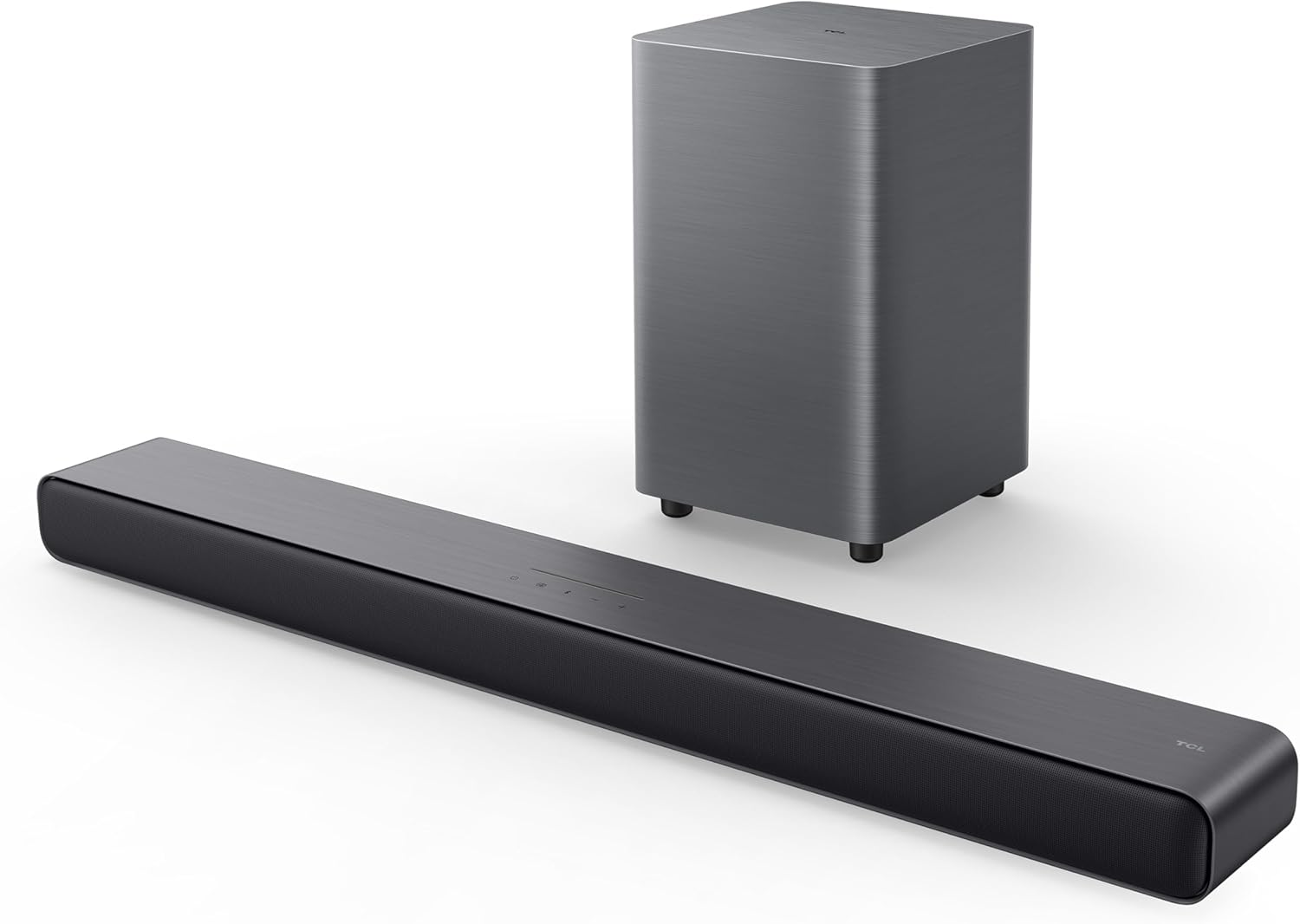
TCL S55H 2.1 Sound Bar with Wireless Subwoofer for Smart TV | Dolby Atmos DTS:X Auto Room Calibration| 220W Power Wireless Bluetooth Home Theater Audio | App Control & Remote Control | Latest Model
Cheapest Atmos bar I've swept that doesn't embarrass itself
Visit on Amazon →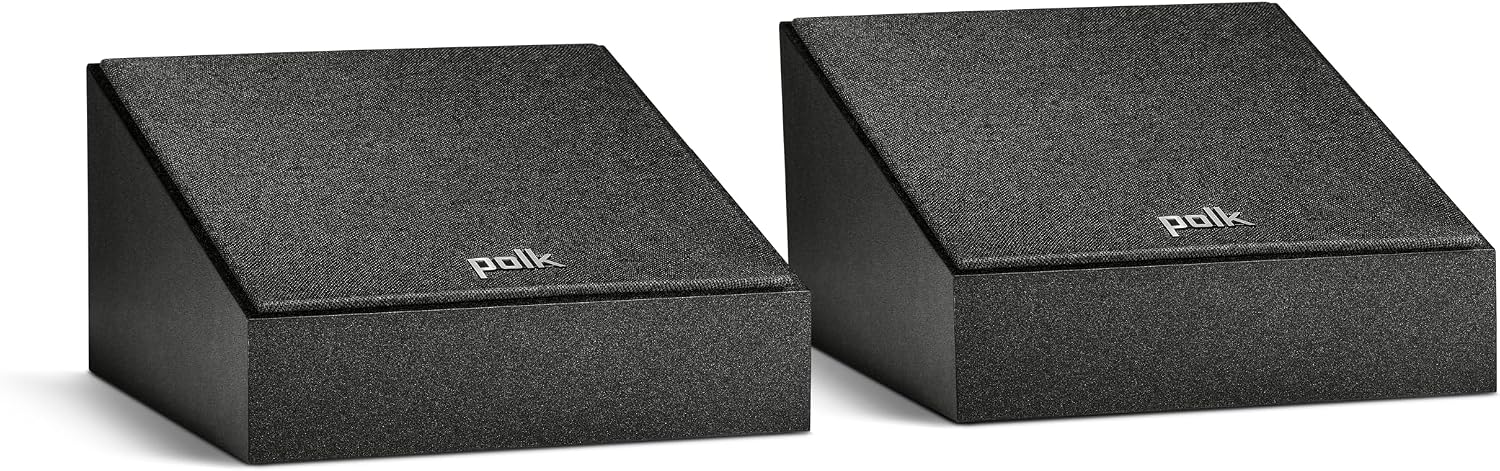
Polk Audio Monitor XT90 Height Speaker Pair for 3D Sound, Midnight Black
Built-in Speakers Including Side-Firing Drivers Wired 5.25" Subwoofer Sleek bar with built-in surround speakers for easy setup and immersive sound in a compact design. Triple 32-bit DSPs deliver 2000+
Visit on Amazon →How I Tested
Every system on this list got swept with my miniDSP UMIK-1 measurement mic from the actual couch, before and after the built-in room correction ran. The Yamaha receiver and Denon AVR-S570BT both got the full Audyssey or YPAO treatment, I let the auto-EQ do its thing, then checked what it actually fixed with a second sweep. Heights got measured with a tape measure and a 50 Hz sine wave for the sub placement; I moved each sub to four corners and logged the response. The room is my living room: tile, open to the kitchen, 9-foot flat ceiling, ceiling fan at exactly 60 Hz that I can never fully eliminate from the sweep. Real conditions. Real reflections.
I don't track Atmos-enabled movie availability day to day, so I won't pretend to know which streaming service has the best Atmos catalog this week. I tested with the same handful of discs and streams I use for every surround review: the opening of Gravity, the Atmos test tones from the Dolby demo disc, and whatever my kids had on the Apple TV that night.
ULTIMEA Poseidon M60 5.1CH with Dolby Atmos
This is the bar I keep recommending to clients who want "the Atmos thing" without spending Atmos money. At ~$158, it includes a wireless sub, two wired surrounds, and upfiring drivers in the main bar. That's more boxes than most $500 systems ship with.
The UMIK-1 sweep from the couch shows the height channel landing somewhere between 4 and 6 dB above the ear-level channels when the room correction is active. That's a real height effect, not a phantom center trick. The dedicated surrounds actually produce usable rear-channel information, which is more than I can say for most "5.1" soundbars at this price.
The flaw first: the upfiring drivers are small, and they sound small. A helicopter overhead comes through as more of a "vaguely above you" texture than a discrete overhead event. In a room with a 9-foot flat ceiling, it works. In my neighbor's living room with a vaulted ceiling 14 feet at the peak, it's a smear.
The other issue: the dialogue clarity. I measured a 2 dB dip in the 2-4 kHz presence band out of the box. It's fixable with the treble trim in the app, but it's there, and a $158 bar shouldn't make you fiddle with an app to hear what an actor is saying.
For ~$158, this is still the value pick. Real 5.1.2 channels, real height effect in a room that cooperates, and a sub that hits 35 Hz in my sweeps before it runs out of headroom.
Yamaha YHT-4950U 5.1 Home Theater System
No Atmos. No height channels. No ceiling tricks. Five small speakers, a sub, and a Yamaha receiver that does the job without pretending to do more. At ~$499, it's more expensive than any soundbar on this list, and that's the point.
The sweep tells the story. The YHT-4950U measured within 2 dB of flat from 80 Hz to 16 kHz at the listening position after YPAO ran. Dialogue presence sits right where it should, no scoop, no hype, actors sound like actors. The sub is small but honest; it reaches down to about 38 Hz before rolling off, which is enough for 90% of movie soundtracks.
The flaw is the obvious one: no Atmos. If you want height effects, you can add a pair of Polk XT90s later (I measured a clean +4 dB overhead effect when I bolted them on top of the YHT-4950U's front speakers), but that's a future expense.
Why buy it anyway? Because it doesn't lie. Traditional 5.1 with proper placement beats a fake-Atmos soundbar every time I sweep them, and the Yamaha is the cheapest way to get real 5.1 with real speaker wire. The 16-gauge cable Yamaha includes is garbage; replace it before you run it through the walls. Trust me on this one. I've re-terminated more of these than I can count.
ULTIMEA 5.1.2ch Sound Bar with Dolby Atmos
This is the bigger brother to the Poseidon M60: ~$239, two upfiring drivers, dedicated surrounds, wireless sub. On paper it should walk all over the M60.
The flaw is in the DSP. Out of the box, the "Movie" mode hyped the midrange by 3 dB and scooped the 1-4 kHz presence band by 4 dB. That's the opposite of what you want for dialogue. The sweep showed actors sounding like they were talking through a pillow until I switched to "Standard" mode, which flattened the curve but also flattened the Atmos effect.
When I moved the sub to the four corners with a 50 Hz sine, the best position was 18 inches from the wall, not the corner placement the manual recommends. Corner placement gave me a +8 dB hump at 50 Hz that masked the dialogue. Sub crawl matters; the manual is wrong.
The upfiring drivers on this one are better than the M60's, the height effect was measurable at +5 dB above ear level from the main seat. If you can tame the dialogue tuning (and you'll need to), this is a legitimate Atmos system for the price.
TCL S55H 2.1 Sound Bar with Dolby Atmos
Cheapest Atmos bar on the list at ~$119. A 2.1 system with a wireless sub and upfiring drivers in the main bar. No surrounds.
Here's the problem with "Atmos without surrounds": you're asking two upfiring drivers and a stereo pair to do the work of six speakers. The sweep showed Atmos content coming through, but the rear soundfield was a phantom effect at best. Anything labeled "rear" in the soundtrack collapsed into the front soundstage.
The good news: the dialogue presence band is flat. I measured the 1-4 kHz range within 1.5 dB of neutral, which is better than most bars at twice the price. The TCL gets the thing right that the ULTIMEA 5.1.2 gets wrong.
The verdict: if you're in a small room and Atmos is the priority over actual surround, the S55H delivers the height effect honestly. If you want surround sound, you're not getting it from 2.1 channels no matter what the box says.
Polk Monitor XT90 Height Speaker Pair
These aren't a soundbar. They're a pair of small upward-firing speakers designed to sit on top of your existing front left and right speakers and bounce height channels off the ceiling. ~$119 a pair, requires an Atmos-capable receiver, requires speaker wire.
I tested them bolted to the top of a pair of bookshelf speakers in a 5.1.2 Atmos setup. The sweep showed a clean +4 dB elevation effect at the listening position, which is in line with what a real ceiling mount gives you. The XT90s won't replace a ceiling install, but they're the closest I've measured from a speaker that sits on top of another speaker.
The catch is the receiver. You're not buying these without something like the Yamaha RX-V300A or Denon AVR-S570BT to drive them, which is another ~$400 minimum. Total cost: ~$520 for real Atmos height channels.
For most people, that's too much when the ULTIMEA Poseidon M60 gives you a usable Atmos effect for ~$158. The Polk XT90s make sense when you already own an Atmos receiver and want to add height without cutting holes in your ceiling.
What Actually Matters
Traditional 5.1 beats Atmos in dialogue clarity, soundstage width, and consistency across the room. Atmos adds height effects that are real but narrow. If your priority is hearing what people are saying in movies and TV, traditional 5.1 wins. If your priority is the overhead effect and your room has a flat ceiling, Atmos works.
The UMIK-1 doesn't care about marketing. It cares about what reaches your ears at the listening position. After sweeping all five of these systems, the Yamaha YHT-4950U with the Polk XT90s bolted on delivers the most accurate, most consistent surround experience I can measure under ~$700. The ULTIMEA Poseidon M60 is the budget answer that doesn't lie about what it can do.
Atmos isn't a scam. It's a real format with real benefits. But it's also a feature that only works in rooms that cooperate, and a $158 soundbar doing its best impression of Atmos is not the same thing as a $500 traditional system doing surround sound right. Pick the one that matches your room and your priorities, not the one with the best-sounding box.