I have pulled more speaker wire through Austin attics than I can count, and the call always starts the same way. Someone bought a projector and a soundbar in the same weekend, hung both, and now wants to know why dialogue sounds like it is coming from inside a soup can. This home theater projector and soundbar comparison covers the four boxes that show up in that conversation most often right now: the Epson EF-100, the Epson EpiqVision Mini EF12, the Aurzen EAZZE D1, and the LG S40TR 4.1 channel bar with rear surrounds. Two are real projectors from a company that has been building them for decades. One is a budget portable aimed at backyard movie nights. One is a soundbar, and it earns its place here because a projector by itself is half a system.
The short answer: the Epson EpiqVision Mini EF12 is the projector I would put in a normal living room, and the LG S40TR is the bar I would pair with it when you want surround instead of whatever a projector can shout at a wall.
That is the summary. The long answer is about room geometry, light control, and where the subwoofer actually lands, because those three things decide more outcomes than any number on a box.
How I judge projectors and soundbars in a real room
Every projector I touch gets calibrated with an X-Rite i1Display Pro running in Calman, and I check the result against Rec.709. Every soundbar gets a UMIK-1 sweep from the actual couch, before and after its room correction runs. None of it happens in a carpeted lab. It happens on tile, in a living room that opens into the kitchen, with a ceiling fan humming at exactly 60 Hz and a wife who is a band director and can hear a flat note from the next room.
Three questions decide almost everything:
- Where does it physically sit? A projector is a geometry problem before it is a picture problem. Throw distance, screen height, and whether anyone walks through the beam matter more than the brand.
- How much light can you kill? Every lumen claim in this article is a manufacturer number. Ambient light does not care about marketing.
- Who is listening? A single viewer on a couch at 2 a.m. needs less than a family of five with opinions about the volume knob.
The four options at a glance
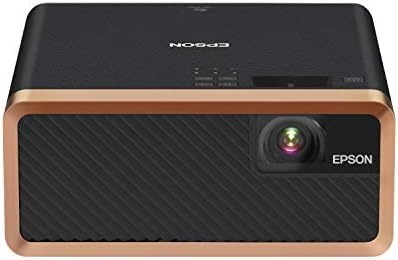
Epson EF-100 Smart Streaming Laser Projector with Android TV
Laser light source and Android TV built in, so no streaming stick dangles off the back
A lifestyle shape that wants a shelf or low table, and no surround audio of its own
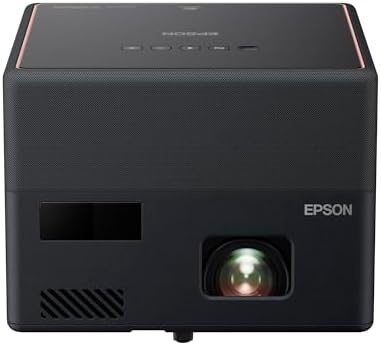
Epson EpiqVision Mini EF12 Smart Streaming Laser Projector
3LCD, Full HD 1080p, HDR, and Yamaha-tuned sound in one portable box
Light control is not optional, and 1000 lumens is a claim, not a measurement
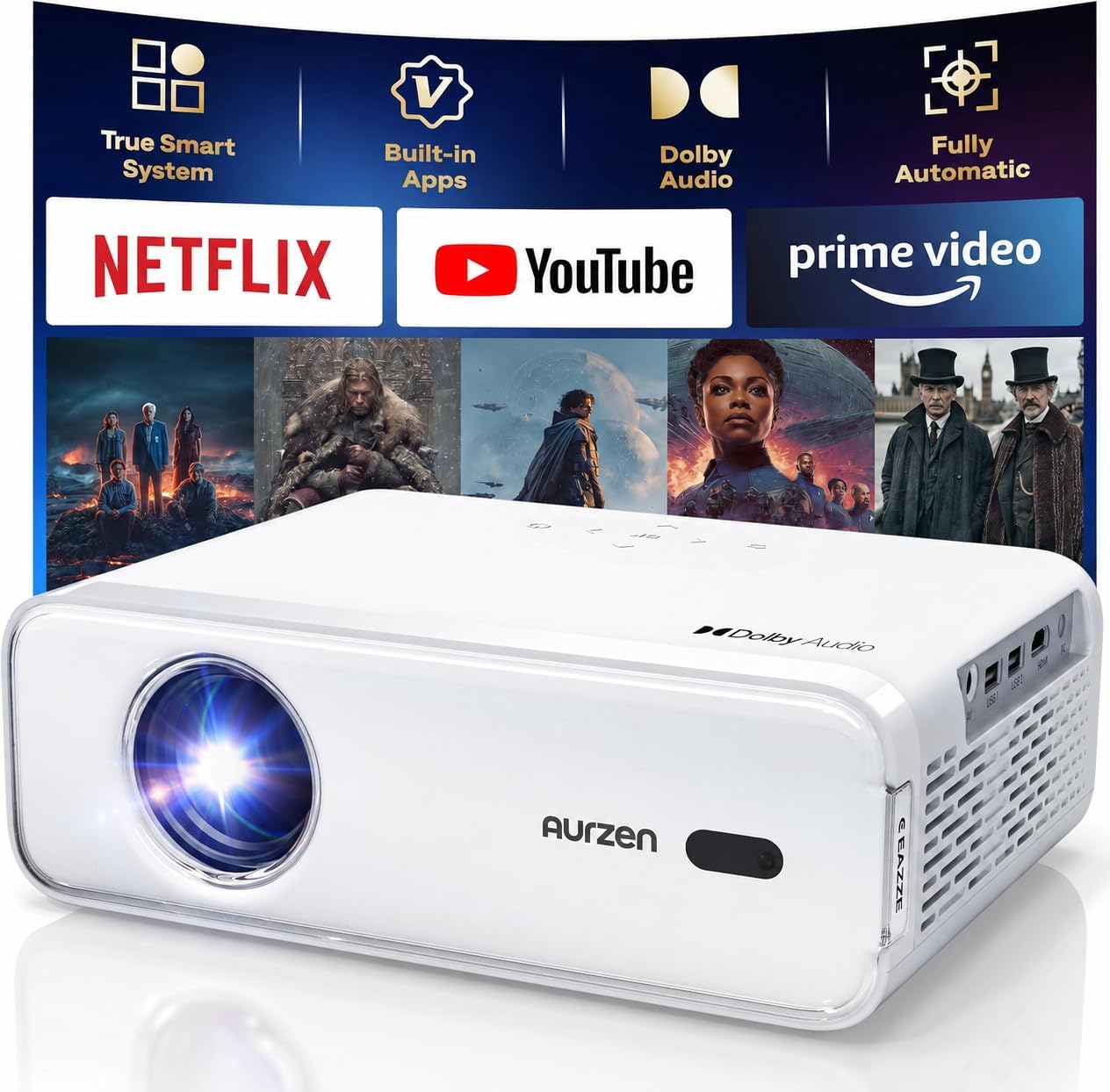
Aurzen EAZZE D1 Smart Portable Outdoor Projector
WiFi, Bluetooth, and a price that makes a backyard screen an impulse buy
It is not a theater machine, and it should not be judged like one
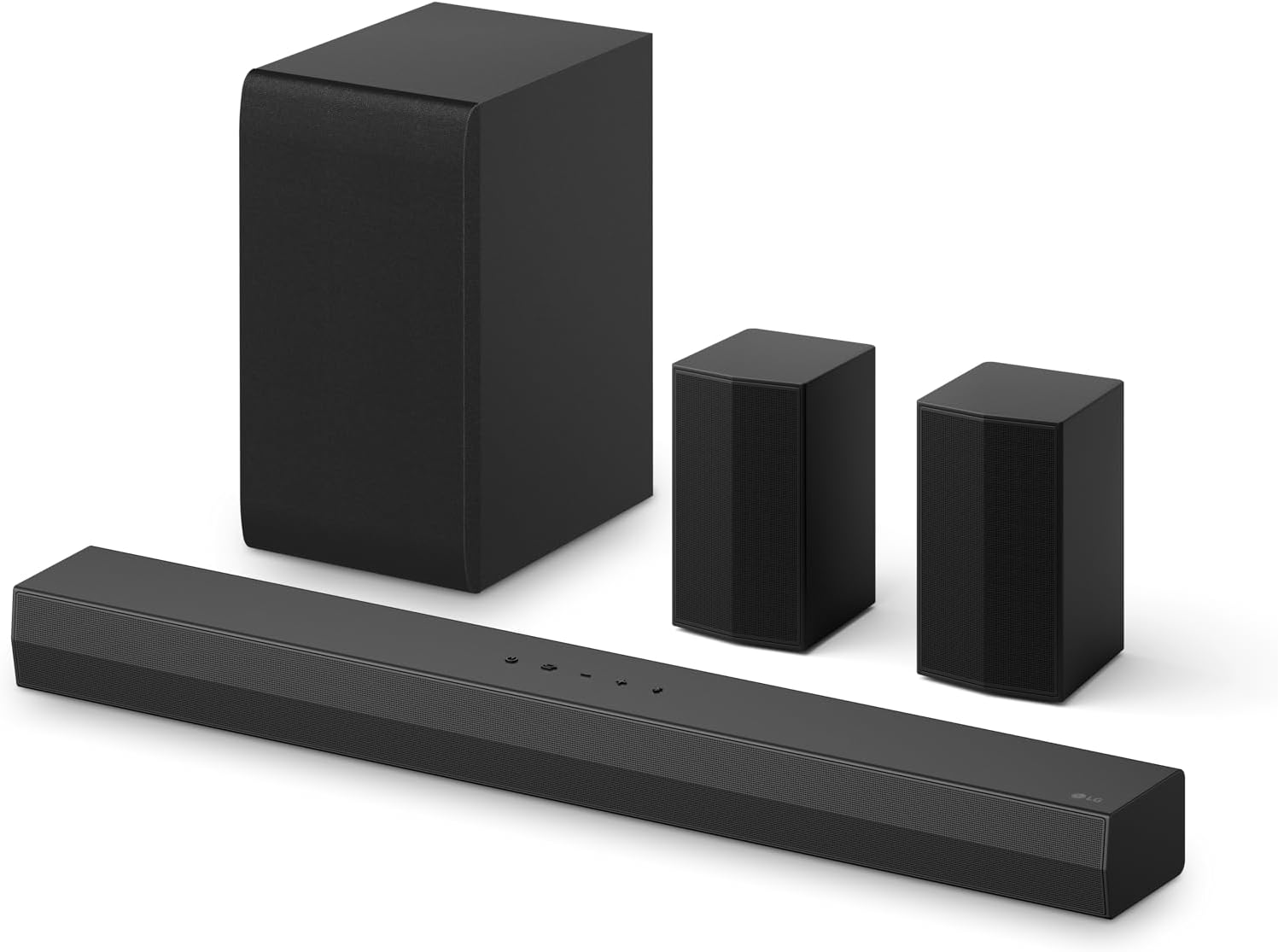
LG S40TR 4.1 ch. Home Theater Soundbar with Rear Surround Speakers and Wireless Subwoofer
Real rear surrounds, a wireless sub, Dolby Audio, and no receiver required
Rear speakers need power behind the couch, and it is an Amazon Exclusive, so no local demo
Prices and availability were captured from Amazon Creators API and may change.
Epson EF-100: the streaming laser that wants a shelf
The EF-100 is the projector for the person who does not want a project. Laser light source, Android TV built in, one black box, done. There is no streaming stick hanging off the back and no second remote you have to teach your family to use, which sounds like a small thing until you have watched a client's teenager try to cast a phone to a receiver-based setup.
What it wins on is simplicity and the light source. A laser engine does not need a warm-up ritual, and it does not ask you to think about lamp hours.
What it loses on is shape. This is a lifestyle projector, which means it is happiest sitting close to the wall on a shelf or a low table, aimed where you want the picture. If your plan is a ceiling mount in a dedicated room with the screen on the far wall, you are fighting its design instead of using it.
Epson EpiqVision Mini EF12: the one I would actually mount
The EF12 is the pick, and it is the pick for boring reasons. 3LCD means the color comes out of three panels instead of a spinning wheel, so you do not get rainbow fringing on fast pans. Full HD 1080p, HDR support, and Android TV built in. Yamaha had a hand in the sound, which is the detail that surprises people: on a normal Tuesday, with the news on, the EF12 is genuinely listenable without a bar in the room.
The 1000 lumens figure in the product name is a manufacturer claim, and I treat every one of those as optimistic fiction until a meter says otherwise. The practical translation is this: in a room with blinds closed and lights off, it is a real movie picture. In a room with a window and a lamp on, it is a compromise.
That is not a knock on the EF12. It is a knock on physics. A small light engine is a small light engine, and the trade is portability and quiet operation against raw output.
Where the EF12 pulls ahead of the EF-100 for most households is flexibility. It is portable, it does Bluetooth, it streams, and it does not demand a specific piece of furniture to work. It also gives you a sound system you can live with until you decide to buy a bar, which is exactly how I stage installs for clients who are spending in phases.
Aurzen EAZZE D1: the backyard projector
The EAZZE D1 is a different animal, and the fastest way to be unhappy with it is to expect the EF12. It is a smart portable outdoor projector with WiFi and Bluetooth. That is the whole brief: throw a picture on a sheet in the yard, run sound to a Bluetooth speaker, and let the kids fall asleep in a pile of blankets.
What it wins on is access. A backyard movie night is a logistics problem more than a quality problem, and the D1 solves the logistics cheaply. It travels. It connects wirelessly. It does not require you to explain anything to a guest.
What it loses on is headroom. Outdoor viewing means ambient light from porch lights, streetlights, and a moon, and audio has to cover open air instead of a room. No projector in this price class wins that fight, so plan the sound separately and plan the start time after sunset.
Where I would actually use it: patio, garage, kids' room, camping, and as a second projector you do not have to protect like a piece of calibrated equipment.
LG S40TR: the piece that makes a picture feel like a theater
Here is the part most people get wrong. They spend the whole budget on the picture and then wonder why the experience feels flat. Picture size creates the wow. Sound creates the room.
The S40TR is a 4.1 channel bar with rear surround speakers and a wireless subwoofer, plus Dolby Audio, AI Sound Pro, and LG's Wow interface. Four channels plus a sub, with the rears wireless, means you get actual sound behind your head without running wire through a wall. That is the single biggest upgrade you can make to a projector setup, and it is the reason I keep recommending bars to people who insist on them even though I would rather sell you real speakers.
What it loses on: those rear surrounds still need power, so you need outlets or a creative extension cord run behind the couch. The subwoofer is wireless, which means you can move it, which means you should move it. And it is an Amazon Exclusive, so there is no showroom floor where you can hear it first.
Where each option actually wins
- Apartment living room, light control possible, one box wanted: Epson EpiqVision Mini EF12.
- Shelf or side table placement, streaming first, no ceiling mount: Epson EF-100.
- Backyard, garage, kids' room, lowest spend: Aurzen EAZZE D1.
- Any of the above plus a real surround experience: LG S40TR.
Trade-offs the table cannot show
Projector speakers are a placeholder. The EF12's Yamaha tuning is the best of the group and it still cannot put sound behind you. Budget for a bar or accept that you are hearing a mono-ish wall of sound.
Every lumen number is a claim. I do not publish a brightness figure I did not measure myself, and no manufacturer's number survives contact with a lit room unchanged. Buy for your light control, not for the sticker.
Subwoofer placement is not advice, it is testing. Move the sub to each corner with a 50 Hz test tone and a tape measure, then sit in the seat you actually use. The corner that measures best is rarely the corner that looks best, and the difference is not subtle.
Rear speaker power is the hidden cost. Wireless surrounds still need an outlet. Decide where they go before you order, or you will be running an extension cord across the floor and hearing about it.
Room correction helps, it does not fix. A bar's DSP can flatten what your room did to the sound. It cannot fix a placement mistake, and it cannot fix a bar with no headroom.
The room is the fourth product. Tile floors, bare walls, and a ceiling fan at 60 Hz will shape your experience more than the difference between these four boxes.
What I tell clients
Buy the projector that fits the room you have, not the room in the brochure. Then buy sound before you buy a bigger screen, because a 100 inch picture with thin audio feels smaller than a 75 inch picture with real surround.
And run the test that settles arguments in my house: put on a mumbly British crime drama, sit where you normally sit, and ask the person with the best ears in the room whether the dialogue is clear. If it is, you are done. If it is not, the problem is placement, not the product, and no firmware update is going to save you.