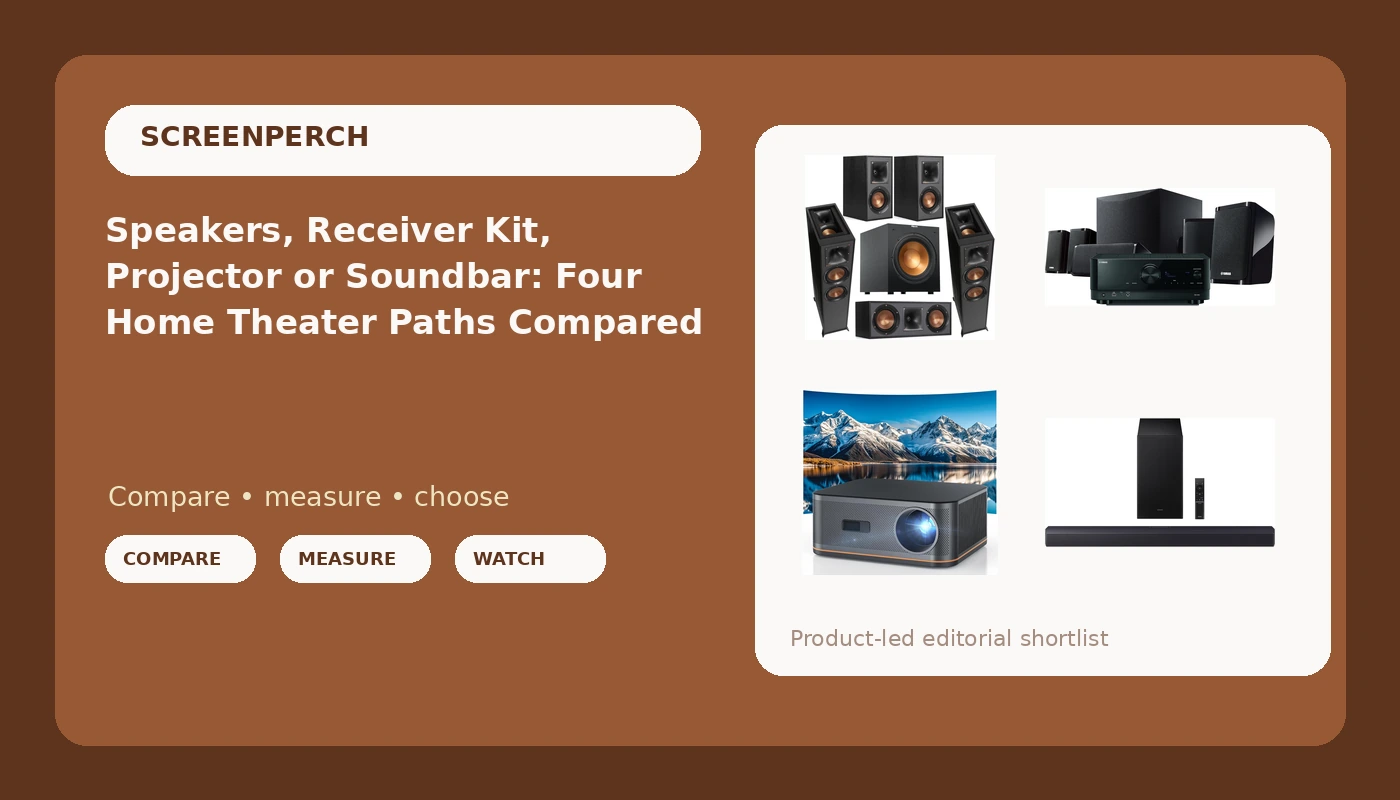
I've spent fifteen years pulling speaker wire through Austin attics, and the question that starts every install is never "which brand." It's "what does this room already do to sound, and what's the cheapest thing that fixes it?" That's why this home theater system comparison isn't a spec-sheet shootout. The four products below sit in four different lanes: a full 5.1 speaker kit built around a pair of floorstanders, a receiver-and-speakers bundle that arrives with the amplification and inputs already figured out, a budget 4K projector, and a 2.1 soundbar with a subwoofer. Ranking them against each other on paper is nonsense, because they solve different problems. Ranking them on what they ask of your room, your seating, and your tolerance for cable is the only comparison that means anything.
Related: Where to Put a Subwoofer in a Real Living Room
If you're starting from nothing and you're allowed to drill into a wall, the Klipsch Reference 5.1 system is the purchase that ends the upgrade cycle. If you want one box, one remote, and a subwoofer you can tuck beside the couch, the Samsung HW-B550F is the honest answer. The Yamaha YHT-5960U sits between those two as a hub you can grow into, and the HAPPRUN projector isn't an audio decision at all, no matter how many people treat it like one.
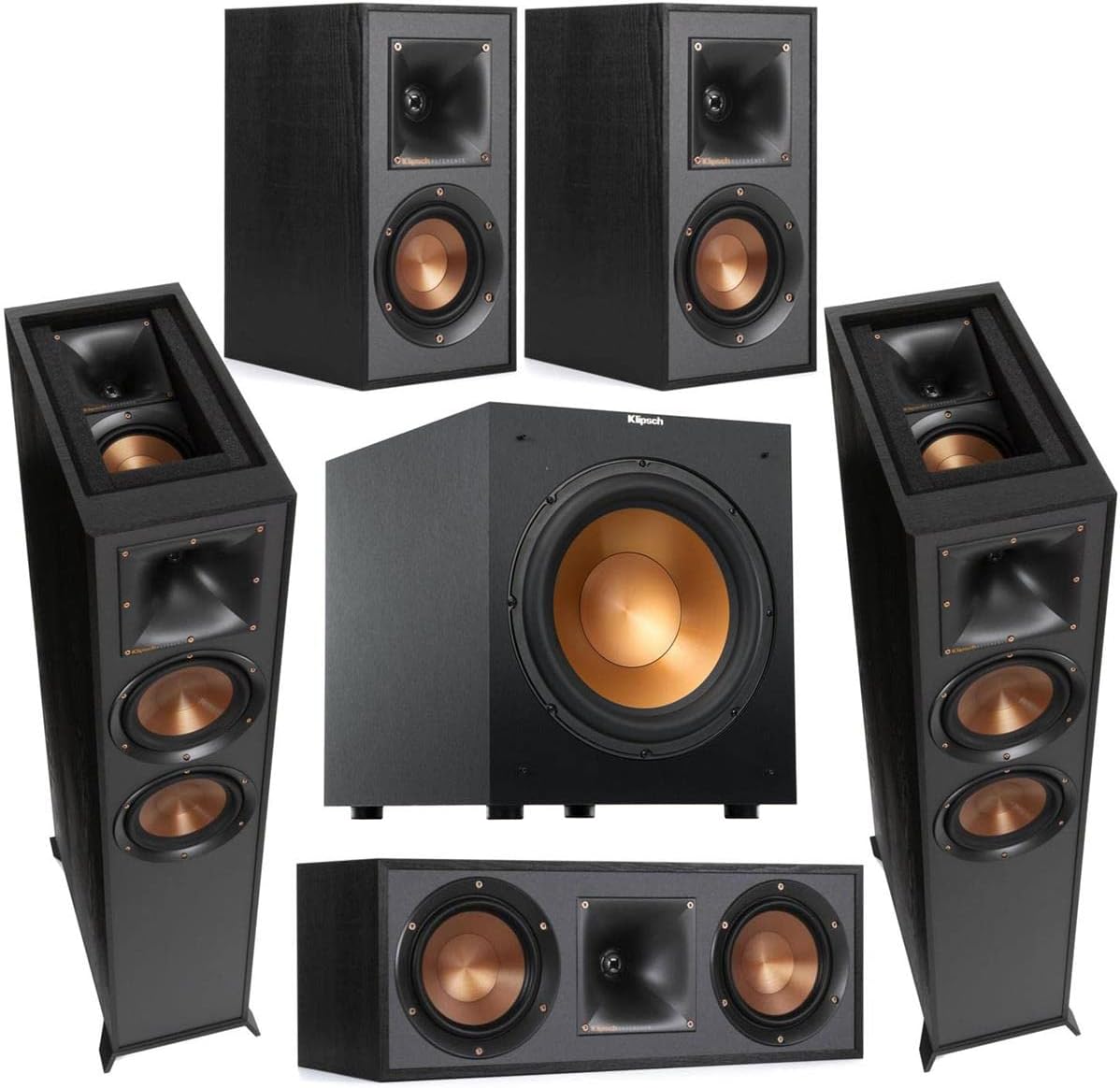
Klipsch Reference 5.1 Dolby Atmos Home Theater System with R-625FA Floorstanding Speakers, R-52C Center, R-41M Surrounds & R-12SW 12" Powered Subwoofer, Black (Speaker System + Subwoofer)
Real drivers in real cabinets, a dedicated center channel, and up-firing Atmos modules on the towers. This is the only option here that gives you a true surround field instead of a virtual one.
It demands a room, a receiver, and a weekend of cable work. Floorstanders dominate a small space, and the sub still needs to be placed, not shoved in a corner.
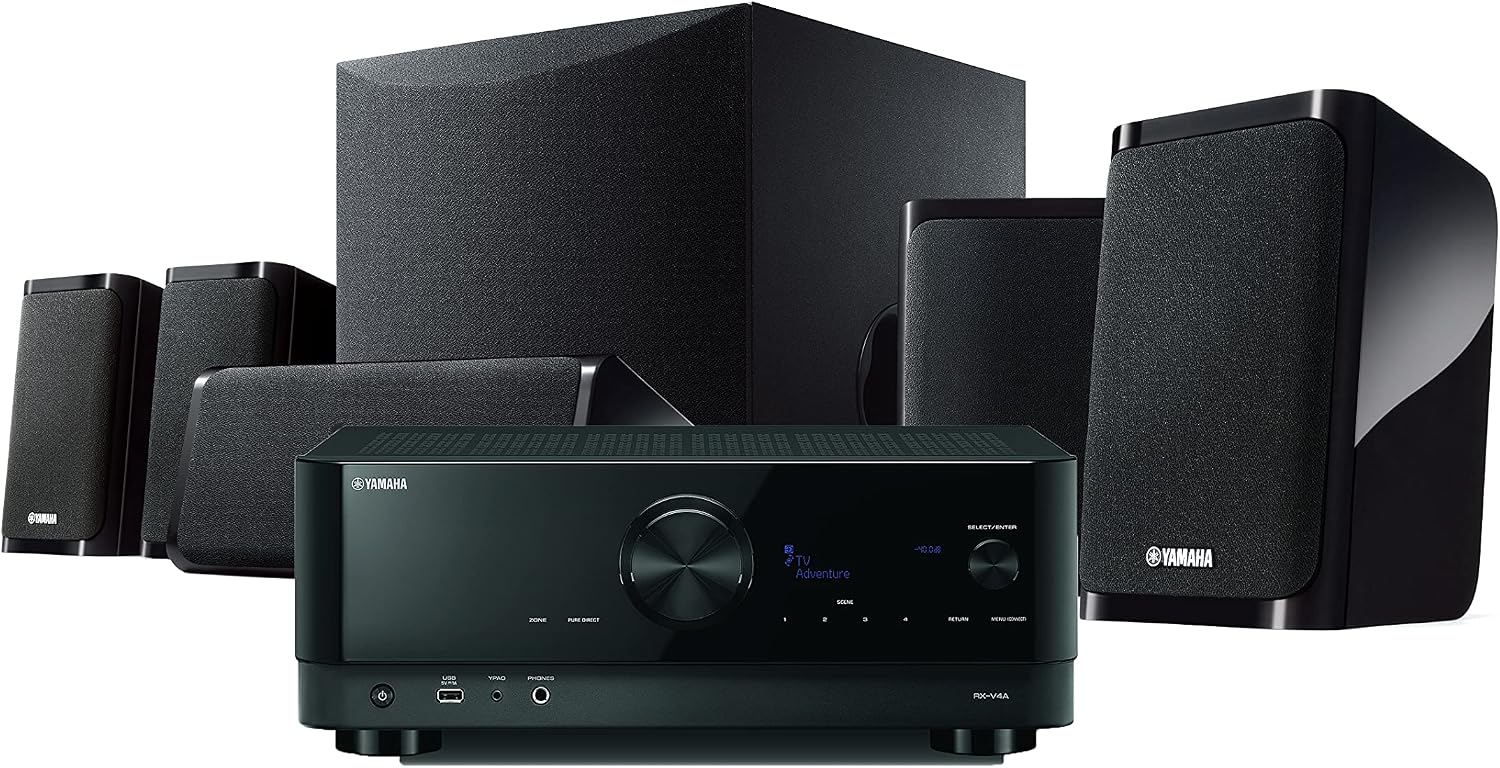
Yamaha YHT-5960U Home Theater System with 8K HDMI and MusicCast
The receiver is the star: 8K HDMI switching, MusicCast streaming, and enough inputs that you stop unplugging things. It's the hub a growing system needs.
The bundled speakers are the compromise, and you'll outgrow them long before you outgrow the receiver. Expect to replace speakers first and keep the amp.
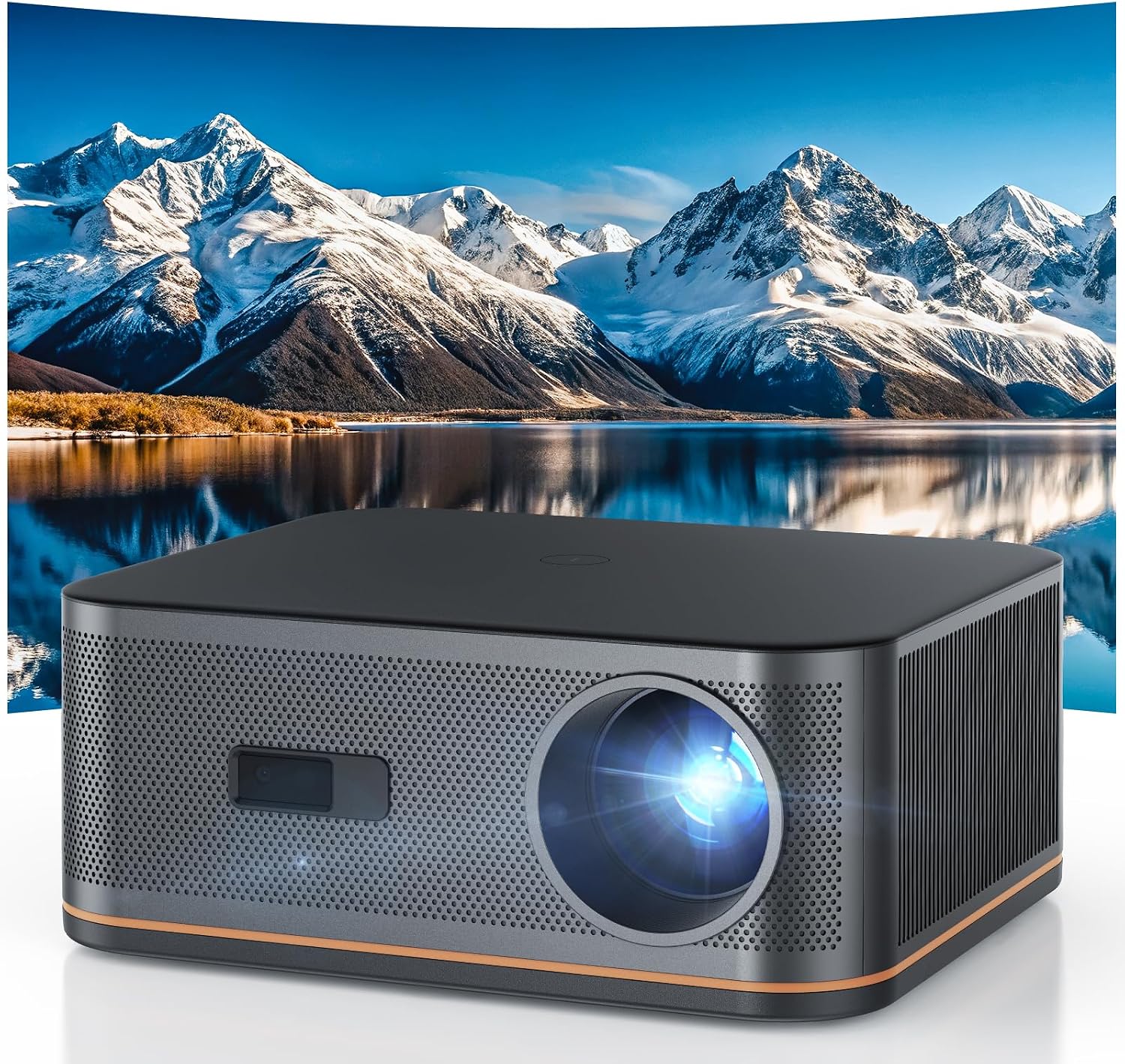
HAPPRUN 2000 ANSI 4K Decoding Projector with WiFi and Bluetooth, Auto Focus
Big picture for the price of a mid-range soundbar. Auto focus and Bluetooth mean a two-minute setup, and WiFi streaming skips the laptop cable.
It's a picture decision, not a sound one. Light control matters more than any number on the box, and you still need audio from somewhere else.
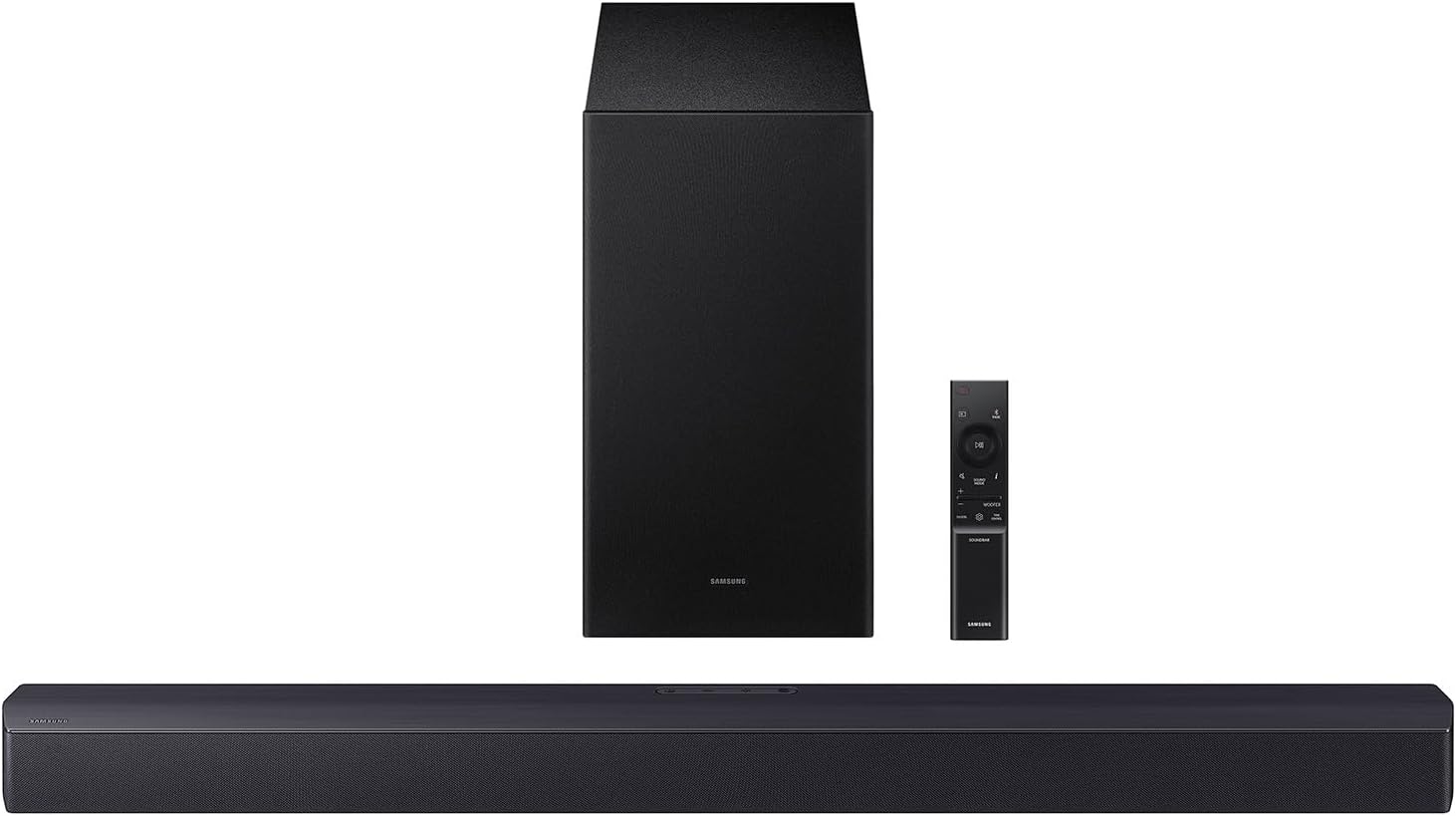
Samsung B-Series Soundbar HW-B550F 2.1 ch DTS Virtual:X Soundbar with Subwoofer (2025 Model) Voice Enhance Mode, Bass Boost, Adaptive Sound
The easiest win in the room. Voice Enhance mode targets exactly the band where dialogue lives, and a real subwoofer beats every bar that ships without one.
Two channels and a sub is still two channels. DTS Virtual:X is processing, not rear speakers, and no DSP makes a bar fill a dedicated theater.
Prices and availability were captured from Amazon Creators API and may change.
How I judge a home theater purchase before the box is open
Three questions, in this order. First, what's the room? A long rectangle with a flat ceiling behaves completely differently from an open plan that bleeds into a kitchen. Second, what's between the speakers and the couch? Tile and glass bounce sound back at you; carpet and a couch absorb it. Third, who else lives there? If a sleeping kid is on the other side of the wall, the biggest, best speaker kit in the world is the wrong purchase, because you'll never turn it up.
That's the frame for everything below. Room correction helps, and modern DSP is genuinely good at taming a bass hump or a slapback off a hard floor. What it can't do is fix a bar with no headroom, or a subwoofer jammed into a corner because the only free outlet is behind the plant. Placement is free and it beats almost every upgrade you can buy.
Klipsch Reference 5.1: the option that ends the upgrade cycle
The Klipsch Reference 5.1 Dolby Atmos Home Theater System is the most complete thing in this comparison. You get R-625FA floorstanding towers with up-firing Atmos modules, an R-52C center channel, a pair of R-41M surrounds, and an R-12SW 12" powered subwoofer. That's a genuine 5.1.2 layout in one purchase.
What it buys you is a real surround field. The center channel does the dialogue lifting instead of a pair of drivers trying to fake a phantom center from two feet apart, and the towers give you cabinet volume that no bar can replicate. The Atmos modules reflect height cues off your ceiling, which works well with a flat ceiling at the right height and disappoints under a vaulted one or a ceiling fan that chops up the reflection path.
What it costs you is everything else. These are passive speakers, so you need an amplifier or receiver to drive them, and that's a separate purchase and a separate set of decisions. They want space: towers need room to breathe and a little toe-in toward the seat, the center wants to sit at ear height rather than inside a media console, and the surrounds want to be behind or beside you, not on the front wall because that's where the outlet is. The sub needs a placement decision too, and that decision is made with a tape measure and a test tone, not by dropping it where it looks tidy.
If you're building a room you actually use for movies, this is the path that stops the cycle of buying a bar, being disappointed, and buying a bigger bar. If your "theater" is a 12-foot-wide living room with a sectional against the back wall, it's more speaker than the room can use.
Yamaha YHT-5960U: the hub that grows with you
The Yamaha YHT-5960U Home Theater System is the pragmatic middle. The headline here is the receiver, not the speakers. It brings 8K HDMI switching and MusicCast streaming, which means it becomes the box everything plugs into: console, streamer, projector, whatever comes next. You stop swapping cables behind the TV, and you get a real volume knob and real input labels.
That receiver-first framing matters because of the upgrade path. In a bundle like this, the speakers are the part you'll replace first. The amp is the part you'll keep for years. If you're the kind of buyer who wants to start somewhere reasonable and add better speakers in two years, buying the receiver as part of a bundle is a smarter move than buying a bar and starting over from zero.
The honest trade-off: bundled speakers are chosen to hit a package price, not to be the last speakers you own. They'll handle TV, sports, and casual movie nights fine. They won't give you the headroom or the low-end authority of the Klipsch towers, and if you push them hard in a big room, that's where you'll hear the ceiling. The other thing to plan for is the same one that bites every receiver owner: HDMI cable runs. I've re-terminated more long in-wall HDMI cables than I care to count, and a receiver with modern HDMI inputs only helps if the cable between it and the display actually carries the signal.
HAPPRUN 2000 ANSI projector: a picture decision, not a sound one
The HAPPRUN 2000 ANSI 4K Decoding Projector with WiFi and Bluetooth, Auto Focus is in this comparison because buyers keep putting it there, and I want to be clear about why it doesn't belong in a straight fight with the other three. It makes a picture. It does not make a sound system.
Two things worth knowing before you buy. The name specifies 4K decoding, which is a claim about what the projector accepts and processes, not a claim about native panel resolution, and the ANSI figure in the model name is a manufacturer claim until somebody measures it in a dark room with a meter. Treat both as starting points, not results. The second thing is that a projector is only as good as its light control. In a room with white walls and a window, no projector looks like the showroom. In a dark room with a screen, almost any modern projector looks better than you expect.
Auto focus and WiFi streaming make setup genuinely quick, and Bluetooth audio out means you can pair it with a soundbar without running a cable across the floor. That's the budget pairing that makes sense: projector plus the Samsung HW-B550F, both of which are the cheapest way into a big picture and decent dialogue. If you already own a receiver and speakers, the projector plugs into that instead, and you're done.
Samsung HW-B550F: the honest answer for most living rooms
The Samsung B-Series Soundbar HW-B550F 2.1 ch DTS Virtual:X Soundbar with Subwoofer is the option I install most often, and not because it's the best. It's the one that fits the room most people actually have.
Two channels plus a subwoofer, with Voice Enhance mode, Bass Boost, and Adaptive Sound. Voice Enhance is the feature that matters if your house watches more British crime dramas and nightly news than blockbusters: it lifts the presence band where dialogue lives, and that band is where cheap bars fail. A dedicated subwoofer, even a modest one, does more for a movie than any amount of virtual surround processing, because it takes the low end off the bar's small drivers and lets them concentrate on the midrange.
The trade-off is physics. DTS Virtual:X is processing, and processing can suggest height and width without ever producing a discrete rear channel behind your head. Adaptive Sound adjusts to content, which is convenient and also means you're trusting the bar's opinion about the mix. And the subwoofer still wants a corner or a wall nearby to reinforce it, so budget ten minutes to move it, listen, and move it again.
Where I'd steer you away: a dedicated theater room. If you have a dark room with seating in the right place and you watch movies with the volume up, a bar is the wrong tool and I'll say that even though it's the cheaper sale for me.
The trade-offs nobody puts in the table
Wired versus wireless is really a question about how much you care about the rear channels. The Klipsch kit and the Yamaha bundle can give you discrete surrounds. The soundbar gives you virtual ones. There's no firmware update that closes that gap.
Headroom is the second one. A system with real cabinet volume and an outboard amplifier can get loud without the midrange compressing. Small drivers in a sealed plastic bar hit a wall, and that wall arrives earlier than the box suggests. If your listening is 90% streaming at moderate volume, you'll never notice. If it's movie night at reference-ish levels, you will.
Upgrade path is the third. The Klipsch system ends at "buy a better sub someday." The Yamaha bundle ends at "buy better speakers, keep the receiver." The soundbar ends at "buy a bigger soundbar." None of those are wrong, but you should know which one you're signing up for.
Which one would I install, and where
Dedicated room, seating that isn't against the back wall, permission to run wire: the Klipsch Reference 5.1 system, plus a receiver. That's the only setup here that delivers a real surround field, and it's the one that stops you from shopping again next year.
Multi-purpose living room, family watching TV every night, no interest in running cable: the Samsung HW-B550F. It solves dialogue, adds honest bass, and disappears into the room.
You want a receiver as the center of everything and a path to better speakers later: the Yamaha YHT-5960U. Buy it for the hub and plan to upgrade the speakers.
Big picture on a budget, and you already have audio handled or you're pairing it with the soundbar: the HAPPRUN projector. Just measure your throw distance and know where the light is coming from before you commit.
Questions I get on every install
Do I need a receiver with the Klipsch kit? Yes. Those speakers are passive, so something has to amplify them. That's the hidden cost of the best-sounding option here.
Will a 2.1 soundbar fill a large open room? It will fill the seating area, not the whole floor plan. Open-concept rooms eat bass and dialogue, and the fix is placement, not wattage.
Is a projector a replacement for a sound system? No. It replaces your TV, not your speakers. Budget for both, or pair the projector with a bar.
Can I add rear speakers to the soundbar later? Not to this one. If discrete surrounds matter to you, that decision gets made at purchase, not after.
What I'm testing next
I've got a long in-wall HDMI run on the bench that failed a bandwidth pattern test well short of its advertised length, which is a reminder that the cheapest failure in any of these builds is the cable you can't see. I'm also working through a batch of room-correction firmware updates, because the gap between what a bar's DSP claims and what a microphone at the couch actually reads is still the widest gap in this whole category. When the numbers land, they go in the spreadsheet, and if they contradict anything above, you'll read the correction here first.