Related: Soundbar Placement: Why the Couch Hears Something Different
Most people build a home theater projector and soundbar setup in the wrong order. They buy the projector first because the picture is the exciting part, then they find out the room has opinions: a tile floor that slaps dialogue back at them, a ceiling fan humming at 60 Hz, a wall that swallows bass. I have been hanging screens and pulling wire since before streaming emptied the DVD racks, roughly 340 installs in and around Austin, and the order of operations matters more than the badge on the box.
Here is the honest split. A projector gives you size, and size is the one thing a TV cannot fake. A soundbar gives you dialogue, and dialogue is what you hear for most of what you watch. If your budget forces a choice, take the soundbar first. Every client who argued with me about that has come back a couple of months later to say the picture looked fine but they could not understand what anybody was saying.
The four pieces below are the ones I get asked about most, and they are not interchangeable. One is a compact 2.0 channel bar built for a small room, two are streaming-first projectors with Google TV built in, and one is the movie-room machine. Here is how I think about each, plus the reference table I use when a client is standing in the driveway deciding.
Sony S100F 2.0ch Soundbar
The S100F is a two-channel bar with a bass reflex cabinet and an integrated tweeter, which is a long way of saying there is no separate subwoofer and no surround channels. In a small room that is not a compromise, it is the point. Two channels placed correctly image better than five placed badly, and this bar is compact enough to sit under a monitor or on a shelf without taking over the desk.
Dialogue is the job it was built for. A bar with a real tweeter and a reflex port can put the presence band, the 1 to 4 kHz range where voices live, right where your ears are. Bluetooth means you can stream from a phone without adding a receiver to the chain.
What it does not do is rumble. Bass reflex extends the low end a little, but there is no sub in the box, so an explosion is a thump rather than a hit in the chest. If you want the floor to move during a movie, this is the wrong bar, and I will tell you that before you buy it even though it costs me the sale.
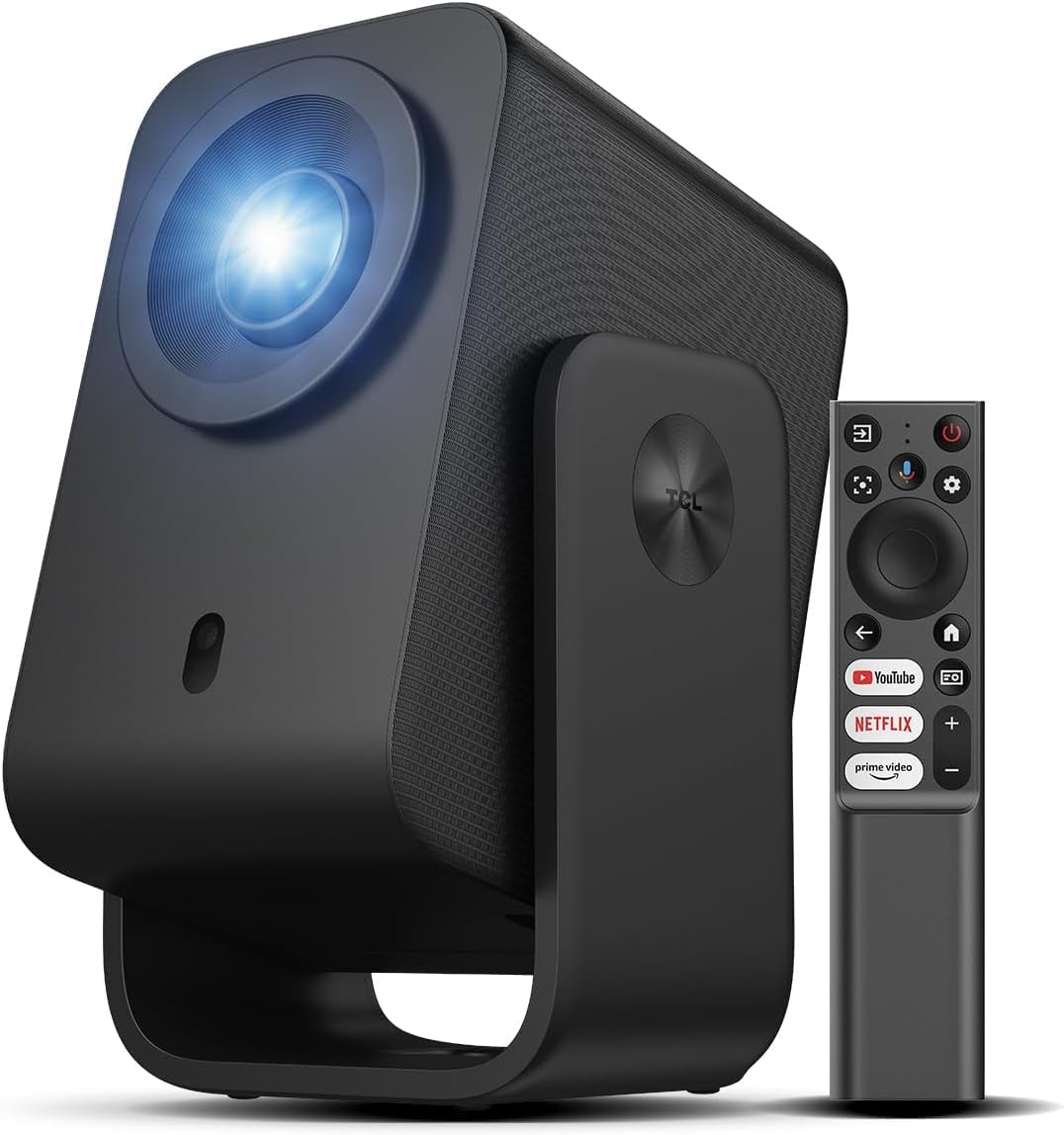
TCL C1 Smart Google TV Projector
The C1's party trick is the 285-degree rotating gimbal. No ceiling mount, no ladder, no drywall anchors. You set it on a table, aim it at a wall, and when you want a bigger image you rotate it toward the ceiling and lie down. For renters, and for anyone who has patched a mount hole before a deposit inspection, that is worth the price of admission by itself.
Google TV is built in, along with WiFi and Bluetooth, so the apps live in the projector instead of on a stick dangling from the back. That is one fewer cable, one fewer remote, and one fewer thing to troubleshoot when the screen goes black.
The tradeoff is physics. A projector designed to be moved is not calibrated to sit in one spot at one throw distance forever, so focus and convergence are worth a look every time it gets bumped. If your plan is a permanent install on a fixed screen, the gimbal is a feature you will use once.
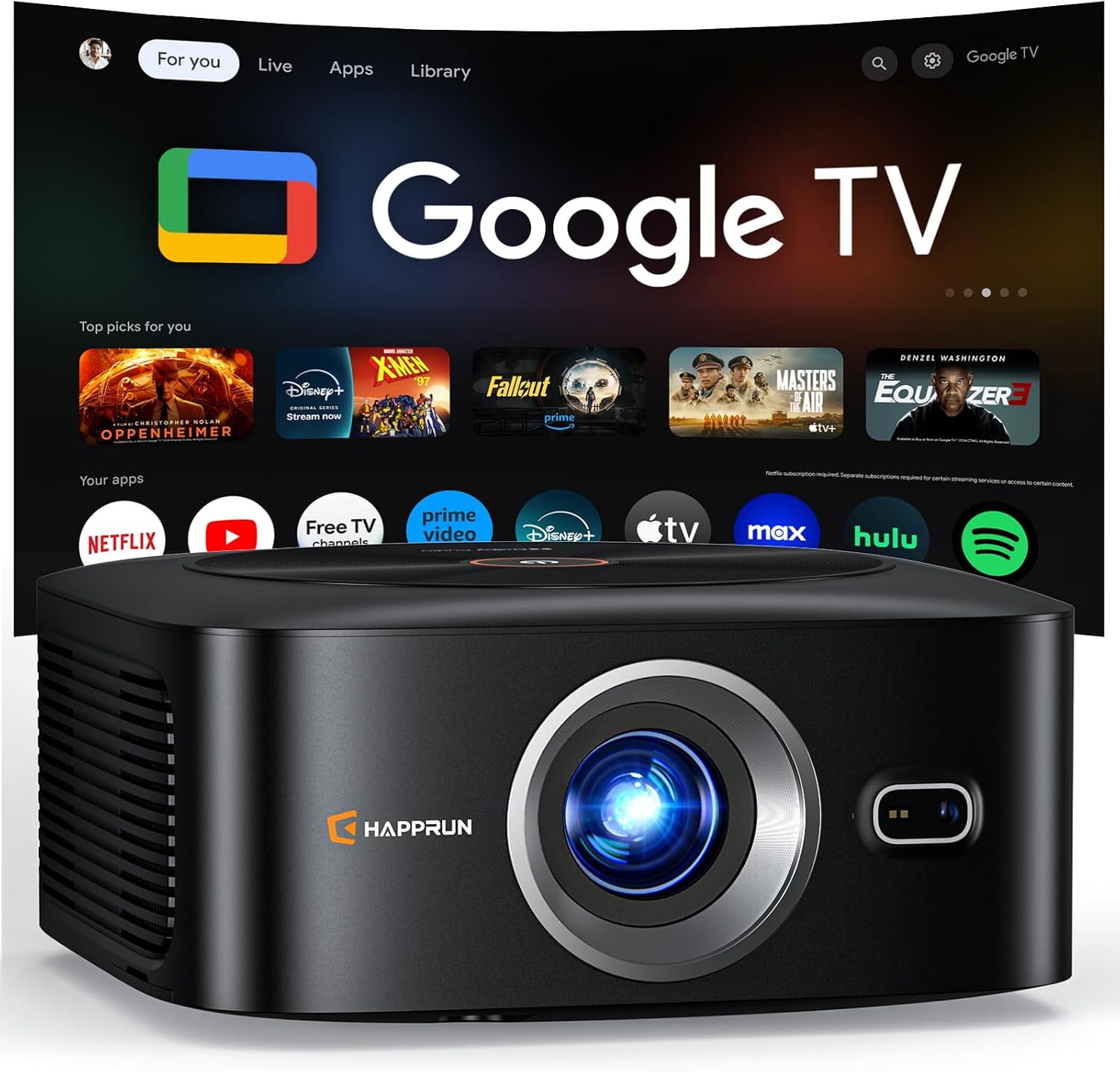
HAPPRUN 1500 ANSI Lumens Outdoor Projector
This is the one people buy for the backyard, the garage, and the camping trip where somebody swears they will hang a sheet. The spec sheet claims 1500 ANSI lumens, and brightness is the number that decides whether you can start before full dark or wait out the sunset. I do not publish a lumen figure I did not measure myself, so treat that claim as a starting point rather than a promise and plan the first viewing for after dusk.
Official Google TV is on board here too, and it matters more outdoors than indoors. You are not dragging an HDMI cable across a patio to a laptop that someone will trip over. The projector holds the apps, the WiFi radio finds the network, and Bluetooth lets you send audio to a speaker instead of trusting whatever driver is bolted inside the chassis.
Outdoor viewing is a light-control problem before it is a projector problem. A white sheet, a porch light, and a full moon all fight the image. Kill the ambient light, hang something with a little gain, and the same machine looks twice as good without spending another dollar.
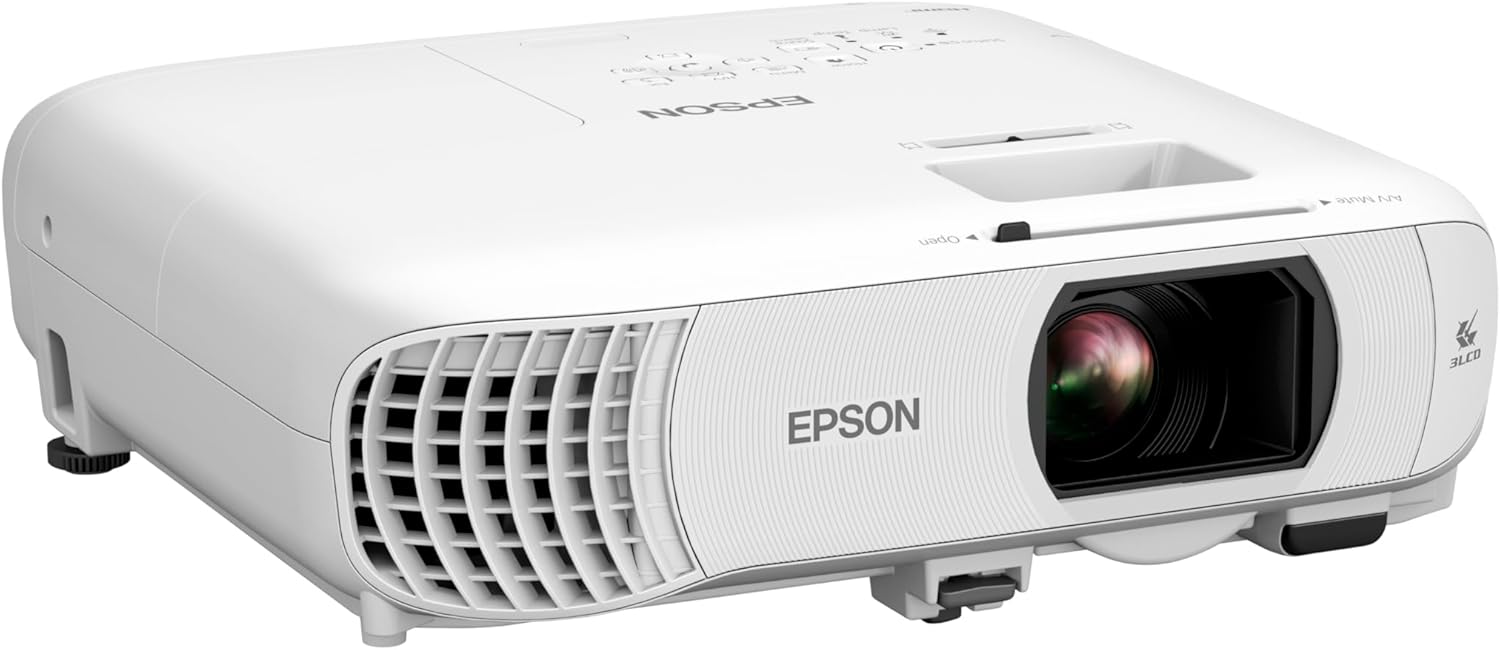
Epson Home Cinema 980 3-Chip 3LCD Projector
The 980 is the one I would put in a room that is actually dark. It is a 3-chip 3LCD design at 1080p, which means the light path splits across red, green, and blue panels instead of spinning a color wheel in front of a single chip. In practice, no rainbow artifacts for the people who see them, and color brightness that holds across the whole image instead of sagging in bright scenes.
Every projector I touch gets calibrated, and 3LCD is friendly to that process. Rec.709 is the target, delta-E under 3 is the bar, and this is the class of panel that can get there with a proper pass. "Cinema-grade color" on a box means nothing until a meter says otherwise, which is why the i1Display Pro earns its keep.
1080p is also the honest resolution for most rooms. You can chase 4K, but at living room seating distance a calibrated 1080p projector with real contrast beats a washed-out 4K one, and the money saved goes toward the screen.
How I check gear before I recommend it
Every soundbar gets a UMIK-1 sweep from the actual couch, before and after its room correction runs. That part is not negotiable: no measurements, no opinion. A sweep shows where the presence band sits, whether the bar scoops out dialogue, and whether the DSP is fixing the room or fudging the curve.
Then I push to 60 percent volume and listen for THD climbing before the bar gets loud. A bar that compresses the midrange and turns the tweeters harsh has no headroom, no matter what the sticker claims about watts. Headroom is a measurement, not a marketing number.
Projectors get the i1Display Pro in Calman: grayscale, gamma, and Rec.709 primaries, with delta-E logged in a spreadsheet I have been keeping since 2016. Then the boring checks, like whether keystone correction is eating resolution and whether the fan is audible from the couch during a quiet scene.
And then the room test. My living room has a tile floor, an open kitchen, and a ceiling fan that hums at exactly 60 Hz. Gear has to survive that, plus Alma, who is a band director and hears a flat note from across the house. If it fails her "is that supposed to sound like that" test, it does not go into a client's house either.
What actually decides it
Three things separate these four.
Whether you need a subwoofer. The Sony is a 2.0 bar, so if movie rumble is on the list, plan for a separate sub. I also will not sell a soundbar into a dedicated theater room, even when a client insists, because two bookshelf speakers and an amp beat any bar at the same money.
Whether the projector travels. The gimbal on the TCL and the outdoor intent of the HAPPRUN are features for people who move the machine. A permanent install wants a fixed mount and a screen, which is the Epson's life.
How much light you can kill. A projector is only as good as the room around it. Blackout curtains and a dark wall cost less than a brighter projector and improve the picture more. Measure the room before you measure the projector.
Home theater gear reference table
This is the table I keep in the truck. The verdict column is the short version of what I tell clients.
| Gear | Type | Best room | What decides it | Verdict |
|---|---|---|---|---|
 Visit on Amazon → Sony S100F soundbar |
2.0 channel soundbar | Office, bedroom, small living room | Dialogue clarity, not bass | Buy it for voices, not explosions |
 Visit on Amazon → TCL C1 projector |
Streaming projector with rotating gimbal | Bedroom, rental, anywhere you cannot drill | Aim it anywhere, apps built in | The flexible one |
 Visit on Amazon → HAPPRUN projector |
Outdoor projector with Google TV | Patio, garage, backyard movie night | Wait for full dark | The backyard pick |
 Visit on Amazon → Epson Home Cinema 980 |
3-chip 3LCD 1080p | Dark media room, permanent mount | Color after calibration | The movie room machine |
| Bar placement | Reference | Any room | Tweeters at ear height when seated | Free fix, biggest gain |
| Sub placement | Reference | Any room with a sub | Four corners, 50 Hz sine, tape measure | Corners boost, they do not improve |
| HDMI run | Reference | Any room | Long runs fail pattern tests first | Re-terminate before you blame the gear |
Placement notes that beat a gear upgrade
Tweeter height is free. Sit on the couch, measure your ear height, and put the bar there. A bar on the floor or above a fireplace is a bar fighting the room.
Subwoofer placement is not a suggestion on a card in the box. I move a sub to four corners with a 50 Hz sine and a tape measure, because the corner that sounds biggest is usually the corner that sounds worst, and the crossover setting is what saves it.
Long HDMI runs are where good gear goes bad. A cable that passes a pattern test at short length can fail further down the wall, and the symptom looks exactly like a projector problem. Re-terminate the connector before you return the projector.
Should you buy the Sony S100F?
If you want dialogue you can follow without subtitles in a small room, yes. It is compact, it sets up in minutes, and Bluetooth means no receiver. If you want movie rumble, no, and I would rather tell you that now than have you buy it and blame the bar.
Should you buy the TCL C1?
Yes, if the projector has to move. The 285-degree gimbal plus built-in Google TV is the combination that makes a projector practical in a bedroom or a rental. If you are mounting something permanently in a dark room, put the money toward the Epson instead.
Should you buy the HAPPRUN?
Yes, for a backyard or a garage, with one condition: control the light. The 1500 ANSI lumen figure is a spec sheet number, and the outdoor image lives or dies on how dark you can make the space. Google TV built in is a real convenience out there.
Should you buy the Epson Home Cinema 980?
Yes, if you have a dark room and you care about color. A 3-chip 3LCD projector at 1080p, calibrated to Rec.709, is the picture most people are actually chasing when they buy a projector, and it is the one I would install in my own media room.
None of these four is the wrong answer. They are answers to different questions, and the question is always the room.