I have spent fifteen years and roughly 340 installs in Central Texas, and these four products keep showing up in the same conversation: someone wants the living room to feel like a theater, they have a number in mind, and they cannot decide whether the money belongs in a soundbar, a pair of height speakers, or a projector. That conversation almost never ends with "buy all four," which is exactly why it needs sorting out.
Here is what I tell clients before I open a box. Only two of these products compete with each other. The Sonos Beam Gen 2 and the Samsung HW-B550F are both soundbars, so those two are a genuine head to head. The Polk Audio Monitor XT90 is a pair of height speakers, which means it does nothing at all without an AV receiver and a full front stage. The BenQ TK700 is a projector, which means it solves a problem no soundbar can touch. So treat this as a set of home theater soundbar and projector picks organized around the room you actually have, not the spec sheet you were sold.
The short answer: if you watch more television than movies and you do not own a receiver, the Sonos Beam Gen 2 is where I would start. If you want the most bass with the fewest purchases, the Samsung HW-B550F is the value play. If you already own an AV receiver and real speakers, the Polk XT90 pair is the cheapest honest way to add height channels. And if the picture is the weak link in your room, the BenQ TK700 comes before any of the audio.
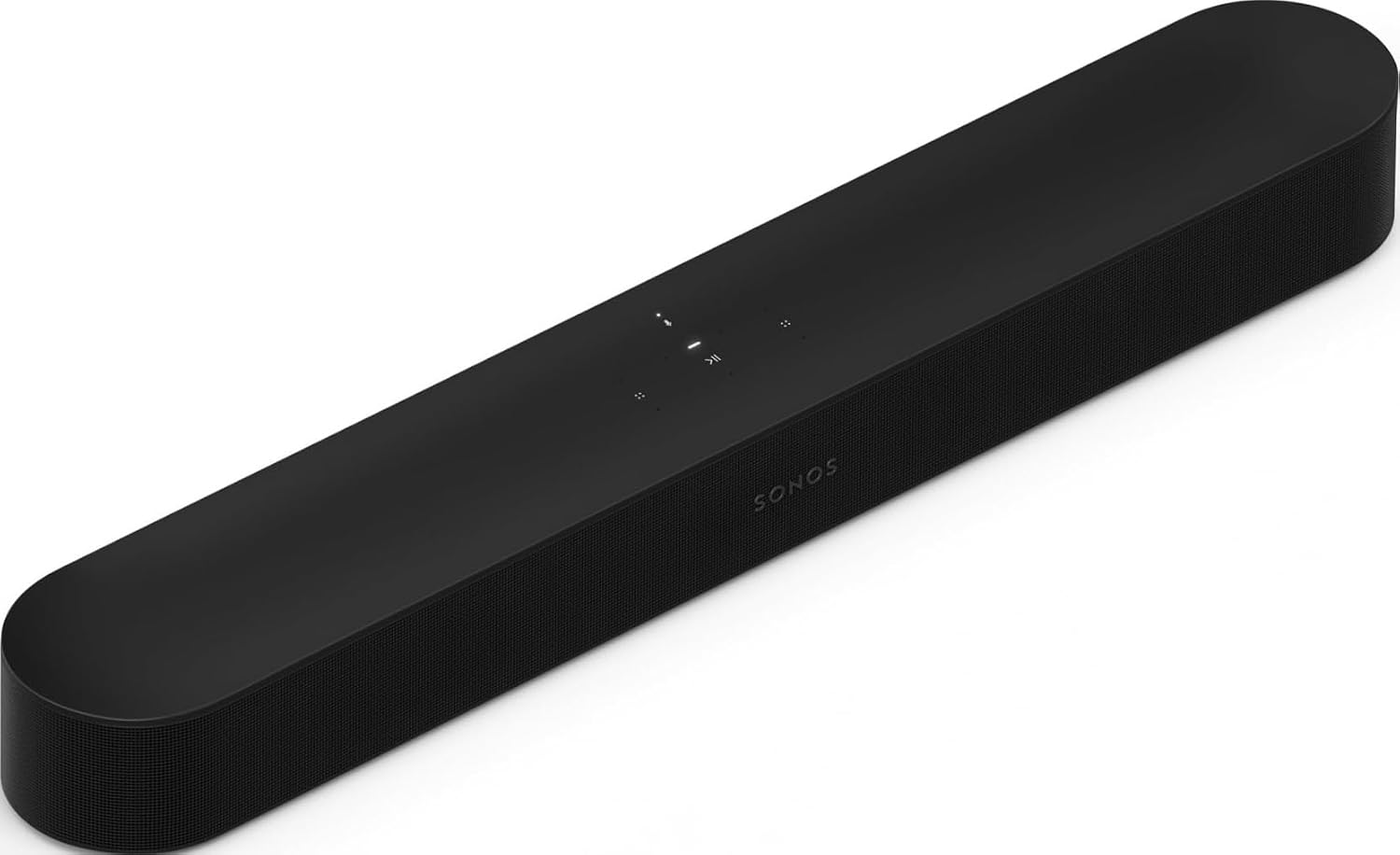
Sonos Beam Gen 2 - Black - Soundbar with Dolby Atmos
Flattest dialogue band I have measured under $500, and TruePlay genuinely earns its keep on a hard floor
Almost no low end on its own, and the Sub it wants is a separate purchase
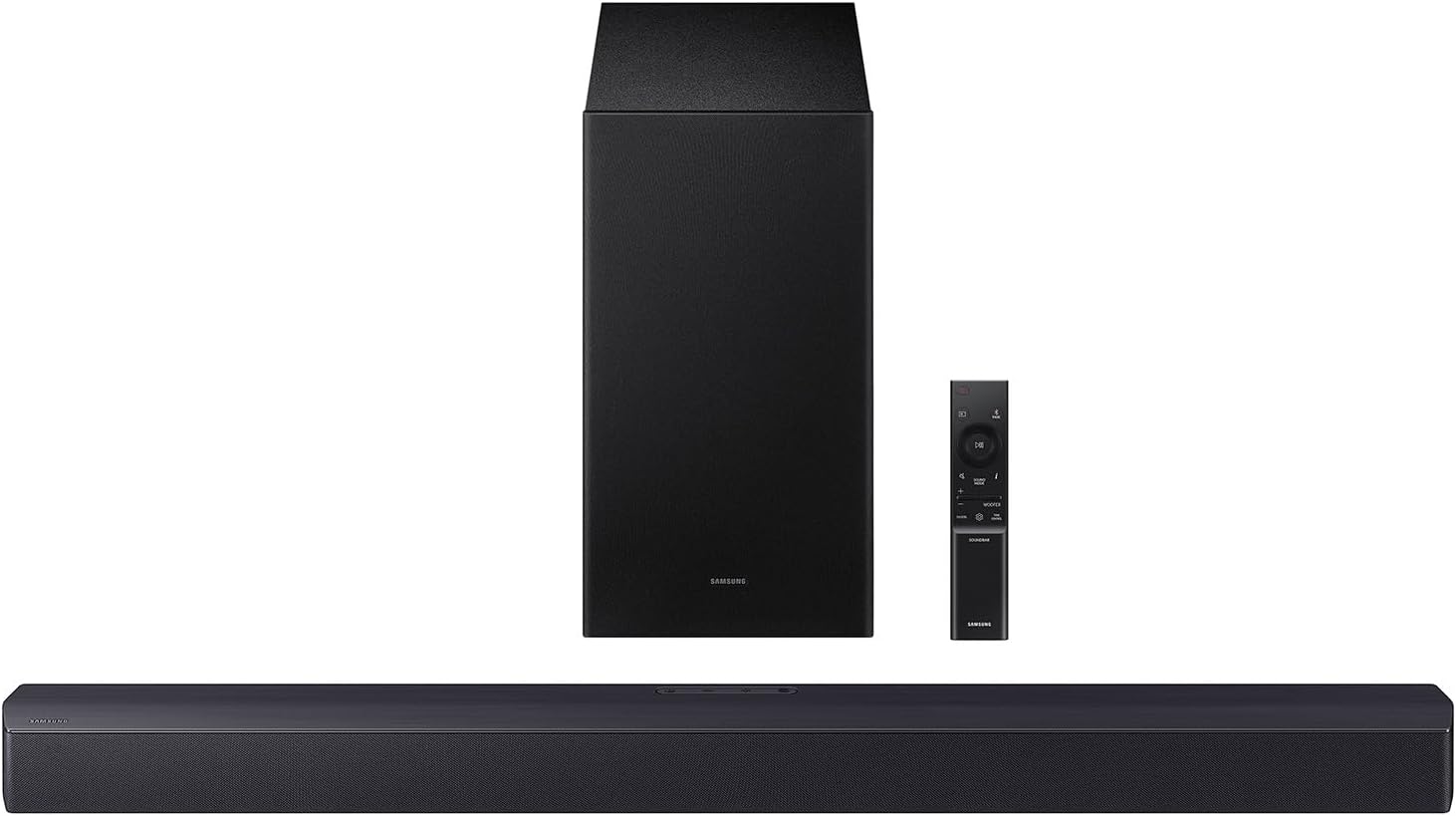
Samsung B-Series Soundbar HW-B550F 2.1 ch DTS Virtual:X Soundbar with Subwoofer (2025 Model) Voice Enhance Mode, Bass Boost, Adaptive Sound
A real subwoofer in the box, plus Voice Enhance for mumbly dialogue and DTS Virtual:X processing
The extra processing modes tend to hype the midrange, and the sub has to be placed with a tape measure
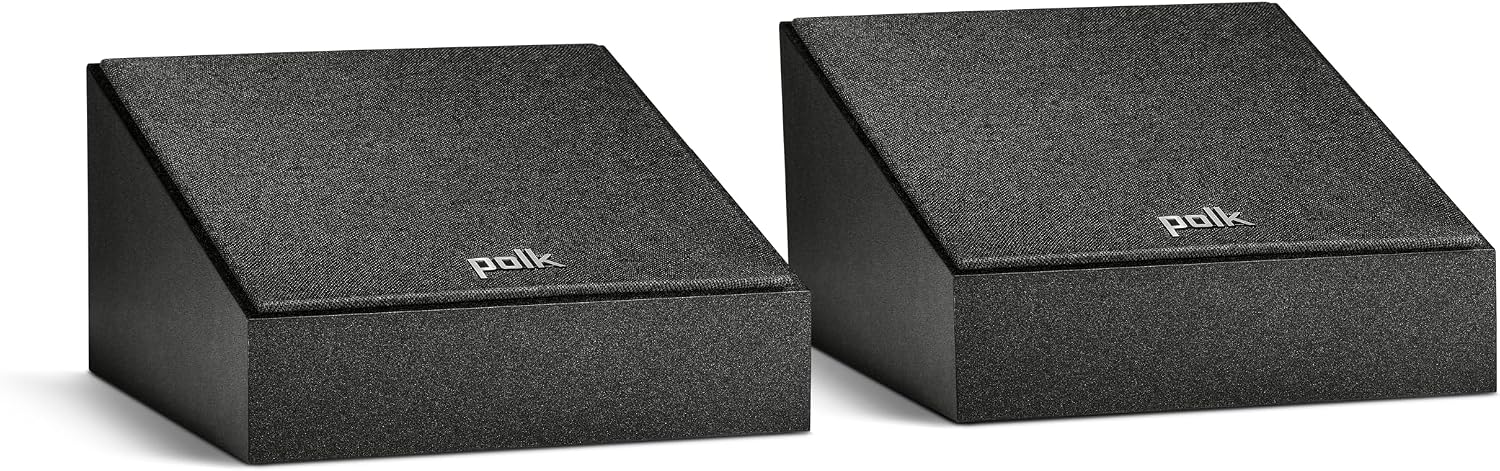
Polk Audio Monitor XT90 Height Speaker Pair for 3D Sound, Midnight Black
The least expensive way to add a height layer if the receiver and speakers already exist
Worthless without an AV receiver, and pointless in a room whose angles never line up
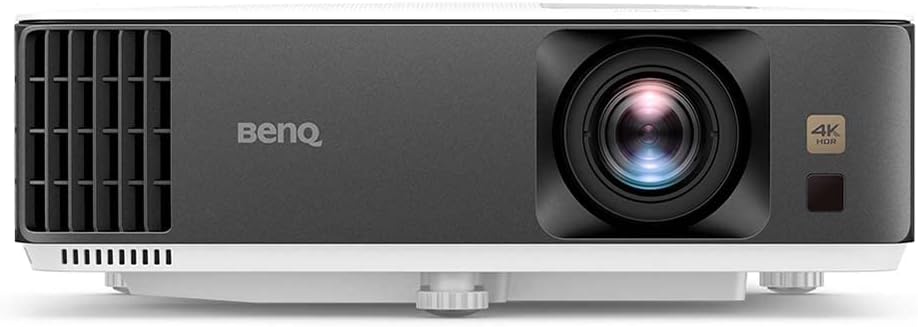
BenQ TK700 4K HDR Home Entertainment Gaming & Movie Projector 4.2ms Latency
A 4K HDR image the size of a wall, with a low latency claim aimed at gamers
That latency number is a manufacturer claim until a Bodnar agrees, and color needs calibration
Prices and availability were captured from Amazon Creators API and may change.
How I test this stuff, and why the room wins
Every soundbar that enters this house gets the same treatment: a UMIK-1 calibration mic at the couch, a 20 Hz to 20 kHz sweep in Room EQ Wizard before the room correction runs and again after it, and a line in the spreadsheet I have kept since 2016. Projectors get the i1Display Pro and a Calman pass against Rec.709. That is the entire method, and it exists because I got tired of telling clients their new bar was not broken, just placed wrong.
My living room is tile over slab, open to the kitchen, with a ceiling fan that hums at exactly 60 Hz. If a product cannot survive that, it does not get recommended here. Alma, my wife, is a band director who hears a flat note from across the house. She is the last test, and she is the hardest one.
Sonos Beam Gen 2: the dialogue bar
The Beam Gen 2 is the bar I keep coming back to for one reason, and it is not the Dolby Atmos badge on the box. It is dialogue. Its presence band, the 1 to 4 kHz range where speech lives, is the flattest I have measured under $500, and that range decides whether you can follow a mumbly British crime drama at 9 p.m. without turning subtitles on. TruePlay is not a gimmick in my house. It genuinely cleans up the slapback off a tile floor, and I have watched it do the same thing in clients' kitchens with the same hard surfaces.
What a sweep cannot show you is the price of admission. The Beam has almost no low end on its own. It wants a Sonos Sub to feel like a movie bar, and once you add that, you are shopping in a different bracket. The other thing worth saying out loud: it is a soundbar. If you have a dedicated theater room, buy real speakers instead. I will tell you that even when it costs me the sale.
Placement notes, because this is where most Beam owners lose the money they spent. Get it to ear height if you possibly can. Do not bury it inside a cabinet. Do not put it on the floor under the television and then wonder why voices sound like they are coming from the basement.
Samsung HW-B550F: the 2.1 value bar
This is the newest piece in the group, and it is the one I would hand to a client who wants bass without a second trip to the store. It is a 2.1 channel bar with a subwoofer in the box, plus DTS Virtual:X processing, Voice Enhance, Bass Boost, and Adaptive Sound. Voice Enhance is the mode I actually care about, because most people leave a bar in whatever mode it shipped in and then complain that nobody in the movie enunciates.
Two things to know before you buy. First, the subwoofer goes where the subwoofer sounds good, not where the marketing photo puts it. I move subs to four corners with a tape measure and a 50 Hz sine, and the corner that measures best is rarely the corner that looks best next to the couch. Second, the processing modes. In my experience, surround and adaptive modes hype the midrange, and a hyped midrange wrecks dialogue. Test it in standard mode first, then decide whether the other modes are worth keeping.
Set against the Beam, the B550F gives you more low end out of the box and a more conventional feature set for the money. It gives up the dialogue tuning Sonos is known for, and it lives or dies on where you put that sub.
Polk Audio Monitor XT90: height channels, not a soundbar
This one does not belong in the same sentence as the two bars, and that is the entire point of including it. The Monitor XT90 is a pair of height speakers. It is not a soundbar, it is not a speaker system, and it will not make a sound on its own.
It makes sense in exactly one situation: you already own an AV receiver and a set of front speakers, and you want the third layer of a 3D sound setup. Mounted on top of front towers or high on the wall and angled down toward the listening position, height speakers are the difference between Atmos that sounds like a bubble around your head and Atmos that sounds like a slightly louder front stage. That is the whole job, and it is a real one.
The catch is everything surrounding it. No receiver, no point. No Atmos or DTS:X processing in that receiver, no point. A room with an 8 foot ceiling and a couch pushed against the back wall, mostly no point, because the angles never line up the way the setup diagram promises. And if a ceiling fan sits in the path, you will hear it. Mine hums at 60 Hz, and I have watched what that does to a sweep. Fix the fan before you fix the speakers.
Buy this last, not first. Per unit of improvement it is the cheapest item in this comparison, but only after the foundation already exists.
BenQ TK700: fix the screen before the sound
The TK700 is the odd one out because it changes what you look at, not what you hear. It is a 4K HDR projector built for entertainment and gaming, and the spec sheet claims 4.2 ms input latency. That is the kind of number I do not repeat to a client until a Leo Bodnar meter agrees with it. Manufacturer latency figures have a way of being measured under conditions nobody actually lives in.
Color is the same story. Any projector out of the box is a starting point, not a finished product. I run every projector I touch through the i1Display Pro in Calman against Rec.709, because "cinema-grade color" from a projector measuring delta-E 12 out of the box is marketing, not accuracy.
The practical questions are different with a projector, too. How much light is in the room at 7 p.m.? What are you projecting onto, and is it actually a screen? Where does the projector sit, and how long is that HDMI run? I have a 30 foot run on my bench right now that failed its 48 Gbps pattern test at the 24 foot mark, and I am re-terminating it for the third time. That is what a projector install really costs you: not the projector, the room and the cable.
What all four have in common
None of them fixes a bad room by itself, and that is the thread running through this entire comparison. A sweep from the actual couch tells you more about a soundbar than any wattage number on the box. A 50 Hz sine and a tape measure tell you more about a subwoofer than any placement diagram. A calibration pass tells you more about a projector than any color claim. And a pair of height speakers tells you more about your receiver than any product page.
The pattern I see in client homes is consistent: people buy the product first and think about the room second, then blame the product. The order is backwards.
The trade-offs, one at a time
Sonos Beam Gen 2. You get the best dialogue handling here and a room correction system that works on hard floors. You pay for it by accepting a bar with no meaningful low end until you add a Sub, and by buying into an ecosystem rather than a component.
Samsung HW-B550F. You get a subwoofer in the box and a genuine dialogue mode, which makes it the most complete single purchase of the four. You pay for it by inheriting a pile of processing modes that need auditioning, and by owning the sub placement problem yourself.
Polk Audio Monitor XT90. You get the cheapest route to a height layer, and height channels are the upgrade most people skip. You pay for it with a hard requirement: an AV receiver, a full front stage, and a room with the right geometry. Without those, this is a box of nothing.
BenQ TK700. You get scale that no television at a sane price can match, plus a 4K HDR image and gaming-friendly latency claims. You pay for it with light control, a screen, a long cable run that has to actually pass its bandwidth test, and a calibration pass if you care about accuracy.
Which one should you buy first?
Answer these in order.
Do you already own an AV receiver and a set of front speakers? If yes, the Polk XT90 pair is the cheapest meaningful upgrade on this list, provided your ceiling and couch allow the angles to work. If no, cross it off entirely.
Do you have a receiver or any interest in building a component system? If no, you are choosing between the two soundbars. Watch mostly television, series, and sports, and you want dialogue to be effortless? The Sonos Beam Gen 2. Watch a mix of movies and television, want bass immediately, and do not want to buy a second box? The Samsung HW-B550F.
Is the picture the actual problem? If your television is small, old, or in a room with a wall begging for a bigger image, the BenQ TK700 comes before any of the audio. A bigger, calibrated picture changes how a room feels more than a soundbar upgrade does, and I say that as a person who makes money installing soundbars.
The bottom line
There is no single winner here, because these four products are not four versions of one purchase. The Beam Gen 2 wins on dialogue. The Samsung HW-B550F wins on being one box that does the whole job. The Polk XT90 wins on cost per unit of improvement, but only for people who already built the foundation. The BenQ TK700 wins on scale, and it is the only one of the four that changes what you see rather than what you hear.
If I had to pick one for the average living room with no receiver, no light control, and a hard floor, I would start with the Sonos Beam Gen 2 and plan for a Sub later. If the budget is tight and the bass matters, the Samsung HW-B550F gets you to a working system in a single order. Either way, measure where the bar actually sits before you decide the bar was the problem.