Related: Subwoofer Placement in a Real Living Room: A 50 Hz Test Tone Walkthrough
Most of the calls I get start the same way. The gear is already bought, the boxes are open, and something about the picture or the sound is off. I spent my first eight years on a big-box install crew pulling wire through Austin attics in July, and I have been independent since 2019. Fifteen years and roughly 340 installs later, I am the guy people call after the return window closes. So this home theater projector and soundbar guide is the conversation I end up having in the driveway.
Four pieces here, and they are not competing for the same job. Two projectors sit at opposite ends of the market: one lamp-based 1080p machine with three SXRD imagers, and one high-output entertainment projector built for a bright room. One portable smart projector that lives in a bag and goes outside. And one discrete 5.1 system with a subwoofer, bundled with the accessories first-timers forget to buy.
Here is the framework I use on site, in order. Room light first, because it decides which projector is even possible. Then seating distance and screen size, because those decide whether 1080p is enough. Then audio, because a projector is a light-controlled device but a sound system is a room-controlled device, and the room wins every argument. Then wiring, which is where most installs go wrong.
Everything below labels where a number comes from. If it is a manufacturer claim, I will say so. If it is a number that only means something after it is measured in your room, I will say that too.
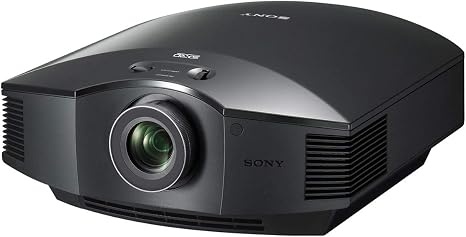
Sony VPL-HW45ES: for a room you can actually darken
This is the one that behaves like a home cinema projector rather than an entertainment projector. Three SXRD imagers mean the panels reflect light instead of passing it through, which is the same basic approach as the high-end Sony and JVC units I calibrate. In practice that buys you two things: no color wheel, so none of the rainbow fringing that a minority of people see on single-chip DLP, and better black level than a comparably priced DLP.
The box claims 1,800 lumens and 3D compatibility. Treat that lumen figure the way I treat every lumen figure, as a manufacturer claim describing a fresh lamp in a lab, not a projector on your ceiling after a few hundred hours. What actually decides whether this projector works is the room: how much light you can kill, where the lens can physically sit, and whether the lens shift has enough range to let you mount it where the joists are instead of where a throw calculator says.
Budget for a calibration. Any projector in this class ships with a picture mode designed to look punchy under showroom lighting, and out-of-box color is not the panel's ceiling. Set it to Rec.709, turn off dynamic contrast and motion smoothing, and judge the picture from there. If you cannot control ambient light, this is not your projector, and the next section is.
BenQ TH575: the bright-room and gaming pick
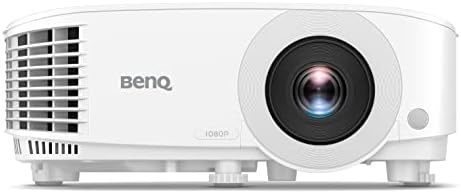
The TH575 is a different animal: single-chip DLP, high claimed output at 3,800 lumens, and a low latency mode the spec sheet puts at 16ms. That last figure is the one I would verify myself. My rule on latency claims is simple: no number counts until somebody puts a tester on it and reports the result, because "low latency mode" gets printed on panels that measure several times the claim. Test it during the return window with a game you know well.
What the brightness buys you is flexibility. This is the projector for a living room with a window you refuse to cover, a bonus room with a console, or sports on a big screen with the lights on. What you trade is black level. A single-chip DLP at this output level renders dark scenes as dark gray unless the room is dim, and no amount of menu tweaking changes physics.
The other thing nobody mentions at the store: a color wheel sits in the light path, and a small share of viewers see rainbow fringing in high-contrast scenes. If you have never noticed it on a DLP before, you probably never will, and this is a lot of picture for the money.
Aurzen EAZZE D1: the one that goes outside
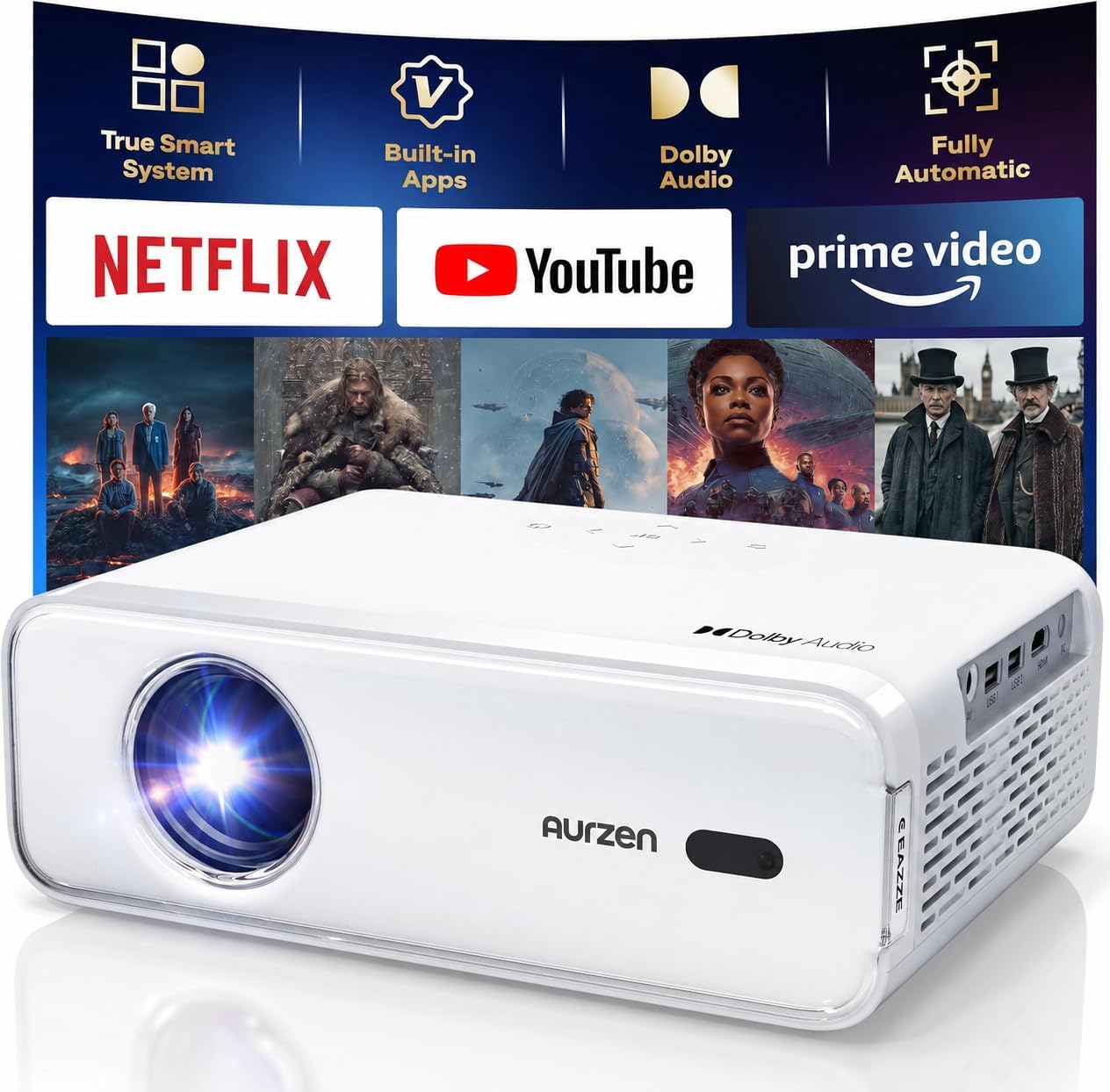
Portable smart projectors get judged badly because people review them like theater projectors. They are not. WiFi and Bluetooth plus built-in streaming make this a self-contained box: no receiver, no source, no cable run, which is exactly what you want when the screen is a sheet hung on a fence.
Ambient light is the enemy. A porch light or a streetlamp will wash the image out, so the practical screen size is smaller than the marketing photos suggest and the picture looks best well after sunset. Plan the throw short, get the unit square to the screen, and put it on something stable, because a projector on a wobbling patio table is a projector with a wobbling picture.
The feature I would actually use is Bluetooth audio out. A speaker this size handles dialogue and gives up on anything with a bass line, so pairing a real speaker is the upgrade that moves the whole experience up a class. This is the projector I would hand a teenager, take camping, or set up for a birthday party, and I would not ask it to be a media room.
Sony HTS60 BRAVIA Theater System 6: the audio side
This is a discrete 5.1 channel system with a subwoofer, and the bundle adds 26 months of protection, two HDMI cables, a surge adapter, and a beginner's guidebook. Two of those extras matter more than they sound. HDMI cables that actually pass the bandwidth your source needs are not a rounding error, and a surge adapter on a projector or receiver circuit is cheap insurance against the kind of Texas storm that takes out a whole neighborhood's electronics.
The 5.1 part is the whole argument. Five discrete speakers and a subwoofer produce real directionality: a car passes from behind you to in front of you because there are speakers behind you. A bar that bounces channels off the ceiling can be convincing, and I install plenty of them, but it is simulating what this system does physically.
Three setup rules decide whether it sounds good. Put the center channel at ear height at the seated position and aim it at heads, not knees, because that is where dialogue lives, roughly 1 to 4 kHz. Move the sub to a few corners with a 50 Hz test tone and a tape measure before you decide it sounds wrong, because placement fixes more bass problems than any menu. And run the system's setup routine from the couch, not from three feet in front of the speakers.
One honest note: if you are building a dedicated theater room, buy real speakers and a real subwoofer instead. This system is for the living room, the apartment, and the family room, which is where almost everyone actually watches movies.
The home theater reference table
| Product | What it is | The claim on the box | What your room decides | Price |
|---|---|---|---|---|
 Visit on Amazon → Visit on Amazon →Sony VPL-HW45ES |
1080p lamp projector, 3 SXRD imagers, 3D compatible | 1,800 lumens | Light control, lens shift, throw distance, calibration | Check current Amazon price |
 Visit on Amazon → Visit on Amazon →BenQ TH575 |
1080p DLP entertainment projector | 3,800 lumens, 16ms low latency | Bright-room use, screen gain, latency you verify yourself | Check current Amazon price |
 Visit on Amazon → Visit on Amazon →Aurzen EAZZE D1 |
Portable smart projector, WiFi and Bluetooth | Built-in streaming, wireless | Dark backyard, small screen, Bluetooth audio out | Check current Amazon price |
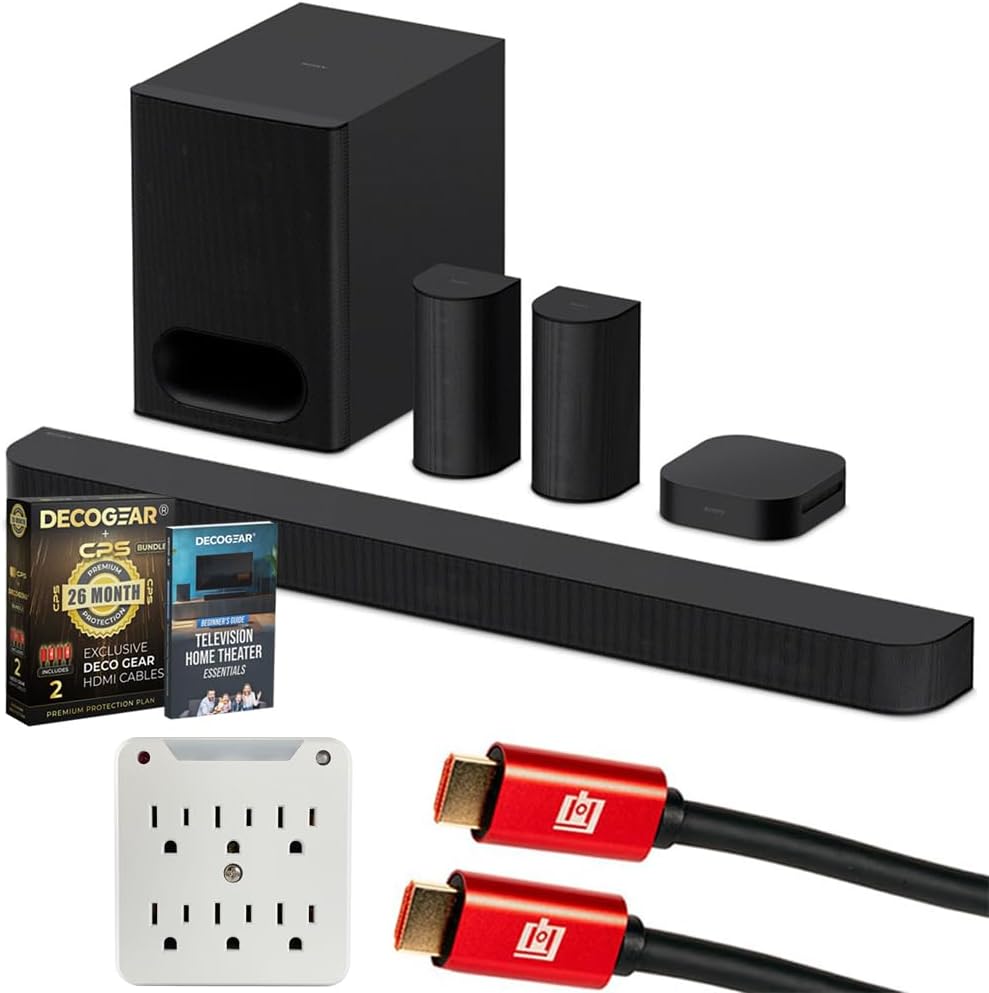 Visit on Amazon → Visit on Amazon →Sony HTS60 BRAVIA Theater System 6 |
Discrete 5.1 channels with subwoofer, bundled cables, protection, surge adapter, guidebook | 5.1 channels with subwoofer | Speaker placement, sub position, center channel height | Check current Amazon price |
How I test, and what I refuse to publish
Every install I touch gets the same treatment. A miniDSP UMIK-1 sweep from the actual listening position, before and after the room correction runs, so I can see whether the DSP fixed the room or fudged the curve. Projectors get the X-Rite i1Display Pro in Calman, aimed at Rec.709, with delta-E under 3 as the bar I publish against. Subwoofers get moved to corners with a 50 Hz sine and a tape measure, because a wireless sub's placement advice from a marketing deck is worth nothing in a room with a doorway on one side.
Then the room itself has a vote. My living room has a tile floor, an open kitchen, and a ceiling fan that hums at exactly 60 Hz, plus a wife who is a band director and can hear a flat note from across the house. Nothing gets recommended here that I would not install in that room.
Two rules follow from all of it. Manufacturer lumen and wattage figures get labeled as claims, because they are measured under conditions nobody lives in. And no latency number gets repeated as fact unless somebody measured it, because "low latency mode" is one of the most abused phrases in this hobby.
What these specs actually mean
Lumens are a starting point, not a promise. A 3,800 lumen claim and a 1,800 lumen claim do not describe a projector's picture quality, they describe how much light it can throw before the image falls apart. More light means a bigger screen and more tolerance for a lamp or a window; less light means deeper blacks and a room that has to earn them.
1080p is still the right resolution for most rooms. At normal seating distances, the pixel structure of a good 1080p projector disappears, and the money that would go to more pixels is better spent on light control and calibration. Color accuracy, contrast, and placement will change what you see far more than a resolution bump.
SXRD versus DLP is a real fork in the road. Reflective panels give you black level and no rainbow artifacts; single-chip DLP gives you output and sharpness per dollar. Neither is wrong. They are answers to different rooms.
And on audio, room correction can fix a lot but it cannot fix placement and it cannot fix a speaker with no headroom. If a system distorts before it gets loud, the correction is rearranging a problem. That is why the setup routine and the tape measure come before any menu.
Should you buy the Sony VPL-HW45ES?
Yes, if the room can be darkened and you are willing to pay for a calibration. Three SXRD imagers deliver better black level and no rainbow fringing compared with a single-chip DLP at a similar price, and the lens shift makes a clean ceiling mount realistic. The 1,800 lumen figure is a manufacturer claim, so size the screen to a light-controlled room and skip it if you cannot.
Should you buy the BenQ TH575?
Yes, for a bright living room, a game console, or sports with the lights on. The output claim is the reason to buy it, and the low latency claim is the reason to test it yourself during the return window. Accept that dark scenes will read gray, and this is a lot of picture for the money.
Should you buy the Aurzen EAZZE D1?
Yes, as a portable and outdoor projector. WiFi, Bluetooth, and built-in streaming make it a complete backyard box with no receiver and no cable run. Keep expectations honest: ambient light kills the image, the realistic screen is small, and Bluetooth audio out to a real speaker is the upgrade that matters most.
Should you buy the Sony HTS60 BRAVIA Theater System 6?
Yes, for a living room where discrete 5.1 beats a bar bouncing sound off the ceiling, and the bundle covers the accessories people forget: protection, HDMI cables, a surge adapter, and a setup guide. Put the center channel at ear height, move the sub with a test tone and a tape measure, and run setup from the couch. For a dedicated theater room, buy real speakers instead.