Related: How to Place a Soundbar in a Tile-Floor Living Room
Most of my service calls start with the gear already bought and the boxes already open. I've been installing home theater gear around Austin and Round Rock for over fifteen years, and I can count on one hand the times the real problem was the product. It's the room. A soundbar sitting on the floor, a subwoofer buried in a corner, a projector throwing at a wall with a window behind the couch.
So this is not a spec-sheet recital. It's the short list of a home theater system I'd put in a normal living room in 2026, in the order I'd think about it, plus the checks that decide whether any of it works once it's out of the box. My living room is the test lab: tile floor, open to the kitchen, and a ceiling fan that hums at exactly 60 Hz. My wife Alma is a band director, and she hears a flat note from across the house. Nothing survives that room by accident.
Here are the four pieces worth your money right now, and the honest case against each one.
Yamaha YHT-4950U: the 5.1 system that ends the argument
If you can run wire, buy real speakers. That advice costs me money and it is still the right advice. The Yamaha YHT-4950U is a 5.1-channel home theater system built around a 4K Ultra HD receiver with Bluetooth: five discrete speakers, a powered subwoofer, and an AV receiver handling the crossover and the source switching in one box.
Why that matters more than channel counts. A receiver lets you set the crossover where the speakers actually hand off to the sub instead of guessing, and it lets you put the front three at ear height, which is where the 1 to 4 kHz presence band lives. Dialogue comes from a speaker that isn't trying to bounce off your ceiling. That's the whole trick, and no bar can fully copy it.
What to plan for is wire. You need a path to the surrounds, and if that path runs behind baseboard or under carpet, budget a weekend and a fish tape. The sub goes where a 50 Hz sine and a tape measure say it goes, which is usually not the corner behind the couch. Check that the receiver's HDMI passthrough covers the way you actually connect a console and a streamer, because a 4K chain is only as good as its weakest link.
This is the pick for a house you own, a room you can dedicate, and someone willing to spend an afternoon with a drill.
ULTIMEA 5.1.2ch: surrounds and height channels without a receiver
A 5.1.2-channel bar is the compromise I recommend when the room will not take wire. The ULTIMEA system packages a soundbar, a wireless subwoofer, and surround speakers with Dolby Atmos decoding, so you get rear channels and a pair of height effects channels without an AV receiver in the cabinet.
Two honest caveats. First, height channels in a bar are effects, not a ceiling array. They will suggest overhead sound when the mix has it and the room cooperates, and they will do nothing at all when your ceiling is a fan spinning at 60 Hz or a textured surface that scatters everything. Second, the surrounds still need power and a place to sit. Rear speakers at ear height, just behind and slightly outside your seat, beat any virtual surround mode by a mile.
Setup is the part people skip. Run the calibration routine, then walk the room and check that the surrounds are not louder than the fronts. If the rears call attention to themselves, they are too loud or too close. Keep the sub out of the corner unless a sweep says otherwise, and give the bar a hard surface at ear height rather than a shelf inside the cabinet.
This is the middle path: more channels than a two-piece bar, less work than a receiver and five speakers, and no speaker wire running to the front three.
TCL S55H: the 2.1 bar with room correction built in
For most people, most of the time, a two-piece bar and sub is the right answer. The TCL S55H is a 2.1-channel sound bar with a wireless subwoofer, Dolby Atmos and DTS:X decoding, and automatic room calibration, plus app and remote control. That calibration feature is the one I care about most, and it is the one most buyers ignore.
Room correction runs a sweep from the listening position and flattens what your room did to the response. On a tile floor with hard walls, the difference between correction on and off is not subtle: slapback and a midbass hump get pulled back into line. It cannot fix placement, and it cannot add headroom that isn't there, but it is real work being done, and it is worth running more than once with the mic or the phone where you actually sit.
On the wattage number: 220 watts is a marketing figure until a meter says otherwise. What I listen for instead is what happens at 60 percent volume, because that is where cheap amplification starts compressing and dialogue turns harsh. Judge it there, not at the demo volume in the store, and keep the dialogue-heavy test scene handy. If a mumbly British crime drama stays intelligible, the presence band is tuned right.
If your TV room is a rental, a bedroom, or a living room where wire is a non-starter, this is the shape of system I would start with.
HAPPRUN Native 1080P projector: the big picture without the big budget
On the picture side, the cheapest way to get a genuinely large image is a projector, and the HAPPRUN Native 1080P Outdoor Smart Projector is built for exactly that: a native 1080p panel, smart apps onboard, and a body meant to move outside for movie night.
Native is the word that matters. Plenty of budget projectors advertise 4K support and mean they accept a 4K signal and downscale it. Native 1080p is an honest spec, and honesty is rare in projector marketing. Lumen claims are optimistic fiction across the entire category, so treat the brightness number as a relative ranking rather than a measurement, and plan around the light in your room. A projector fights ambient light and loses. The fix is a dark room or a screen with some gain, not a bigger number on the box.
Calibration is the other half. Out of the box, most projectors run blue and oversaturated, and cinema-grade color claims that never survive a meter are the reason I keep an i1Display Pro and Calman around. A basic calibration to Rec.709 with delta-E under 3 is the bar I hold my own installs to.
For outdoor use, wait for full dark, aim it at a screen or a light-colored wall, and keep the throw distance sane so you are not standing in the beam. For a first projector or a backyard setup, this is the sensible entry, and it pairs with any of the sound options above since a projector's own audio is a placeholder at best.
What I check before anything goes on the wall
My process does not change with the price of the box.
A UMIK-1 sweep from the couch. Before and after the room correction runs. A frequency response curve taken from the listening position tells you more about a system than any spec sheet, and it tells you where the sub needs to move.
The presence band. The 1 to 4 kHz range is where dialogue lives. If a system scoops it out, actors sound mumbly no matter how many channels the box claims.
Distortion at 60 percent volume. THD climbs before a system gets loud, and that is where big wattage claims get exposed. If the midrange compresses and the tweeters go harsh at sane levels, the headroom was marketing.
Sub placement, four corners, one sine wave. I move the sub, play a 50 Hz tone, and measure. The corner that measures flattest wins, and it is almost never the corner that looks best.
Placement at ear height. Most bad sound is placement, not product. Bars go at ear height or as close as the furniture allows, surrounds go just behind and outside the seat, and nothing goes inside a cabinet.
Projector calibration. Rec.709, measured, in the darkest room you can make.
That is the whole method. No adjectives required.
The reference table
Same four systems, side by side, with the things that actually decide the purchase: what it is, who it fits, and what setup really costs you in an afternoon.
| Product | What it is | Best for | Setup reality | Price |
|---|---|---|---|---|
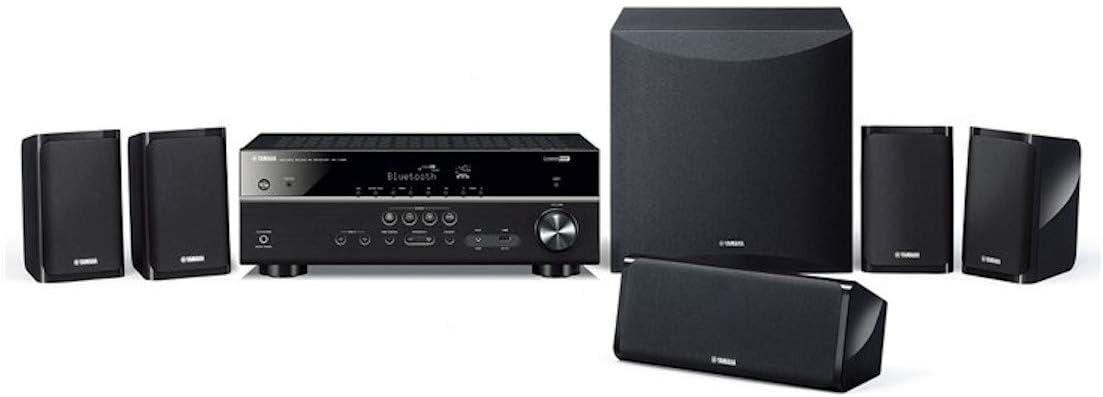 Visit on Amazon → Visit on Amazon →Yamaha YHT-4950U 5.1 system |
Receiver, five speakers, powered sub | A home you own with a dedicated room | Wire runs to the surrounds | $499.99 |
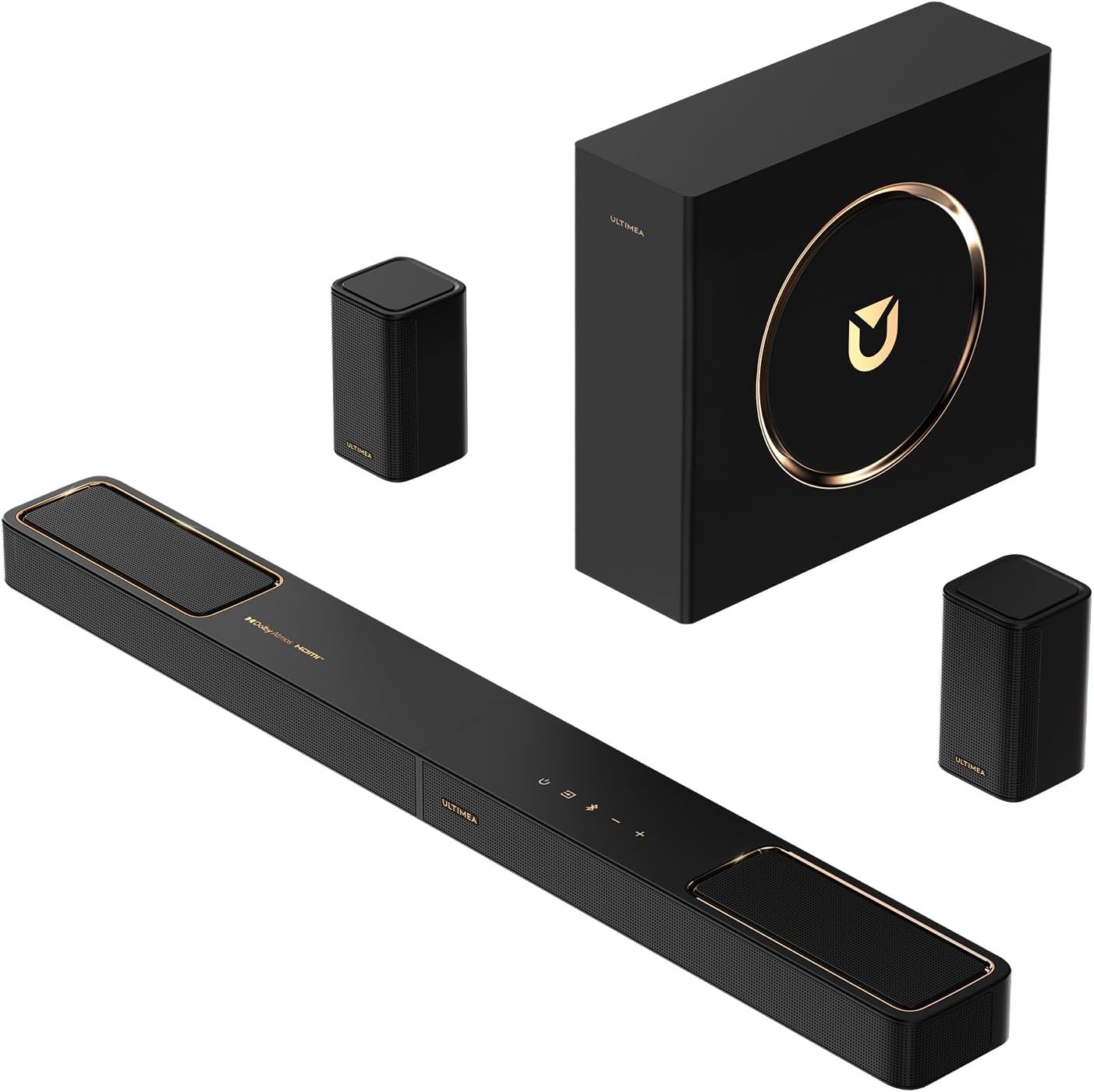 Visit on Amazon → Visit on Amazon →ULTIMEA 5.1.2ch sound bar |
Bar, wireless sub, surround speakers, Atmos | Rentals and rooms where wire is out | Surrounds need power and a spot | $239.99 |
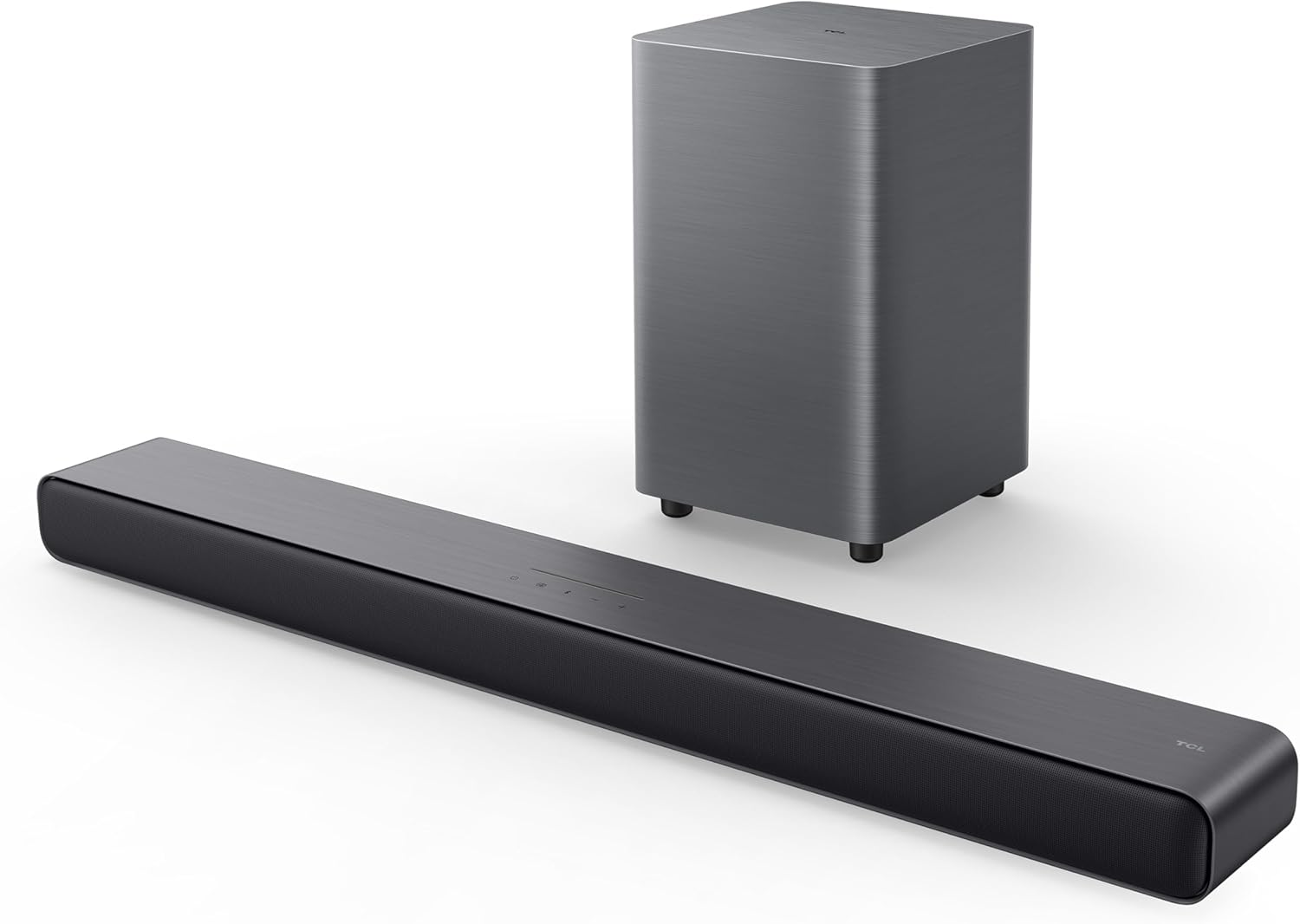 Visit on Amazon → Visit on Amazon →TCL S55H sound bar |
2.1 bar with room calibration | Living rooms, bedrooms, dialogue | Run calibration from your seat | $139.00 |
 Visit on Amazon → Visit on Amazon →HAPPRUN 1080P projector |
Native 1080p smart projector | Backyard and dark-room movies | Control the light, then calibrate | Check current Amazon price |
Where each one lands
If you own the house and can run wire, the Yamaha system is the end of the conversation. Five discrete speakers and a receiver will outlast two TVs and still take new sources, and the placement options are the reason dialogue stays clear when the mix gets busy.
If wire is off the table but you want rear channels, the ULTIMEA system is the closest thing to a real surround layout without an installer and a drill. Just be honest with yourself about the height channels, and put the surrounds where they belong instead of clipping them to the front wall.
If you mostly watch television, sports, and streaming series, the TCL S55H is the one I would buy with my own money. Room calibration does genuine work in a hard room, the sub handles the low end, and there is no wire to hide and no receiver to program.
If the goal is a huge image on a budget, the HAPPRUN projector is the honest entry point, as long as you accept the light rules. Pair it with a soundbar, because the built-in speaker is not the point of that purchase.
Should you buy the Yamaha YHT-4950U?
If you own the room and you can run wire, yes. It is the only option here that gives you discrete channels, a real crossover, and a receiver doing the switching, and it will still make sense after you upgrade the TV or the console. If you rent, or if the surrounds would end up on the floor, skip it and read the next answer.
Should you buy the ULTIMEA 5.1.2ch?
Yes if you want rear channels and Atmos decoding without a receiver, and you are willing to place the surrounds properly at ear height. The height channels are a bonus, not a ceiling array, and a ceiling fan will blunt them. If you mainly watch dialogue-driven TV, a simpler 2.1 bar does the job for less.
Should you buy the TCL S55H?
For most living rooms, yes. Room calibration is the feature that earns its place on a tile floor, and the 2.1 layout is the least fussy way to get real bass and clear dialogue in one purchase. Judge it at 60 percent volume, not at the store demo, and let a 50 Hz tone decide where the sub lives.
Should you buy the HAPPRUN Native 1080P projector?
If your movie nights happen in a dark room or a backyard after sunset, yes, and native 1080p is the honest way to buy at this end of the market. If your room has windows and daytime viewing, buy a TV instead. No projector wins a fight with ambient light, and no spec sheet changes that.